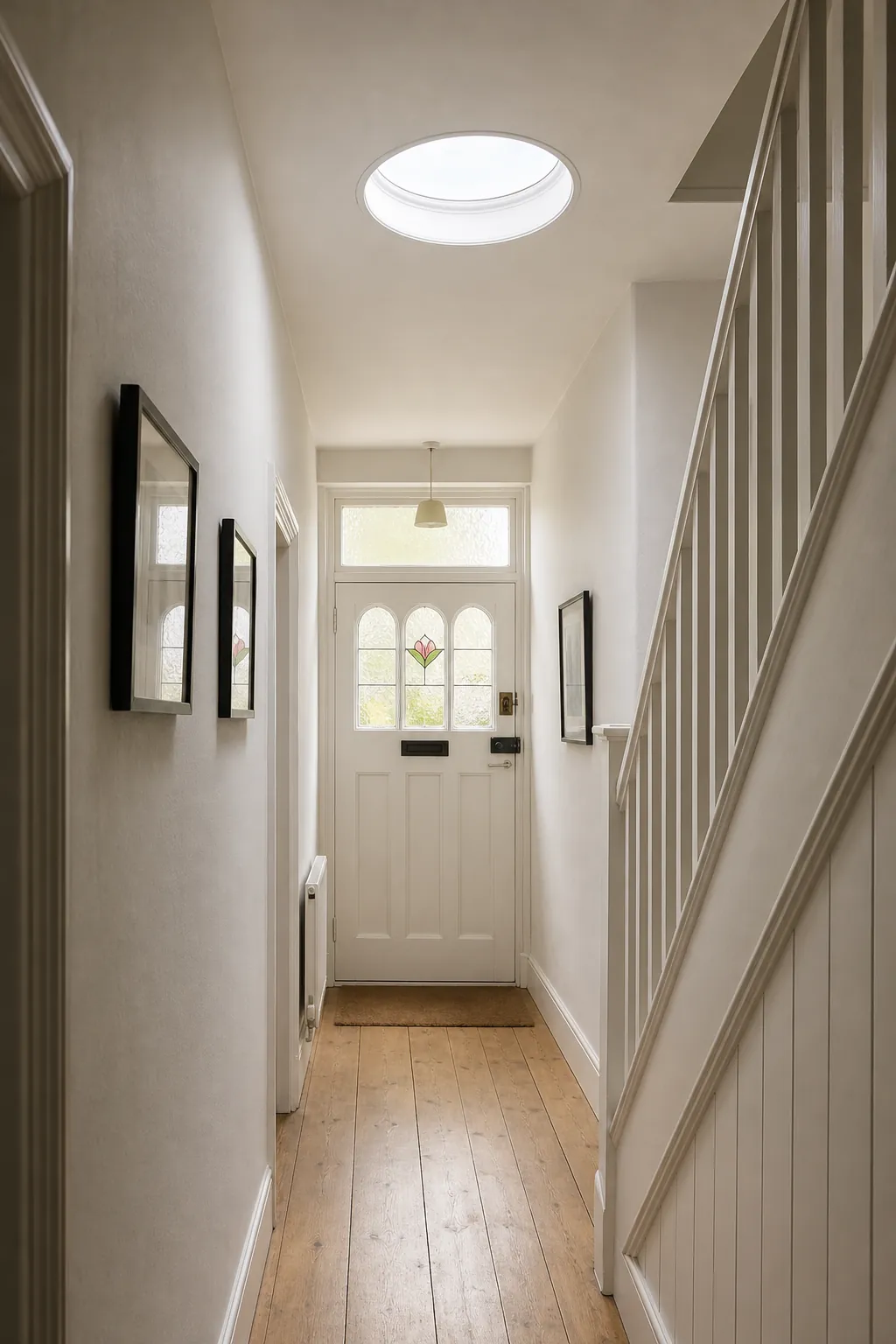
The question behind "sun tunnel vs rooflight" is usually the same: a room is too dark, the roof is above it, and there is more than one way to bring light down. A sun tunnel, sometimes called a light tube, is a small domed collector on the roof joined to a reflective tube that ends in a diffuser on the ceiling. A rooflight, or skylight, is a glazed unit set into the roof itself, with the room opening up to the sky above it. Both are fitted and finished by the same team, and both change how a room feels. They just suit different jobs.
We install and replace both across Coventry and the 30 road miles around it. That means we can tell you which one the roof and the room favour, rather than steering you toward whichever we happen to be selling that week. What follows is how we think it through at a survey.
How each one actually works
A sun tunnel gathers daylight at a dome on the roof, then passes it down a tube lined with a highly reflective surface. At the bottom, a diffuser spreads that light across the ceiling like a plain light fitting. Because the tube can run through a loft void, past rafters and around obstacles, the room below does not need to sit directly under a clear patch of roof.
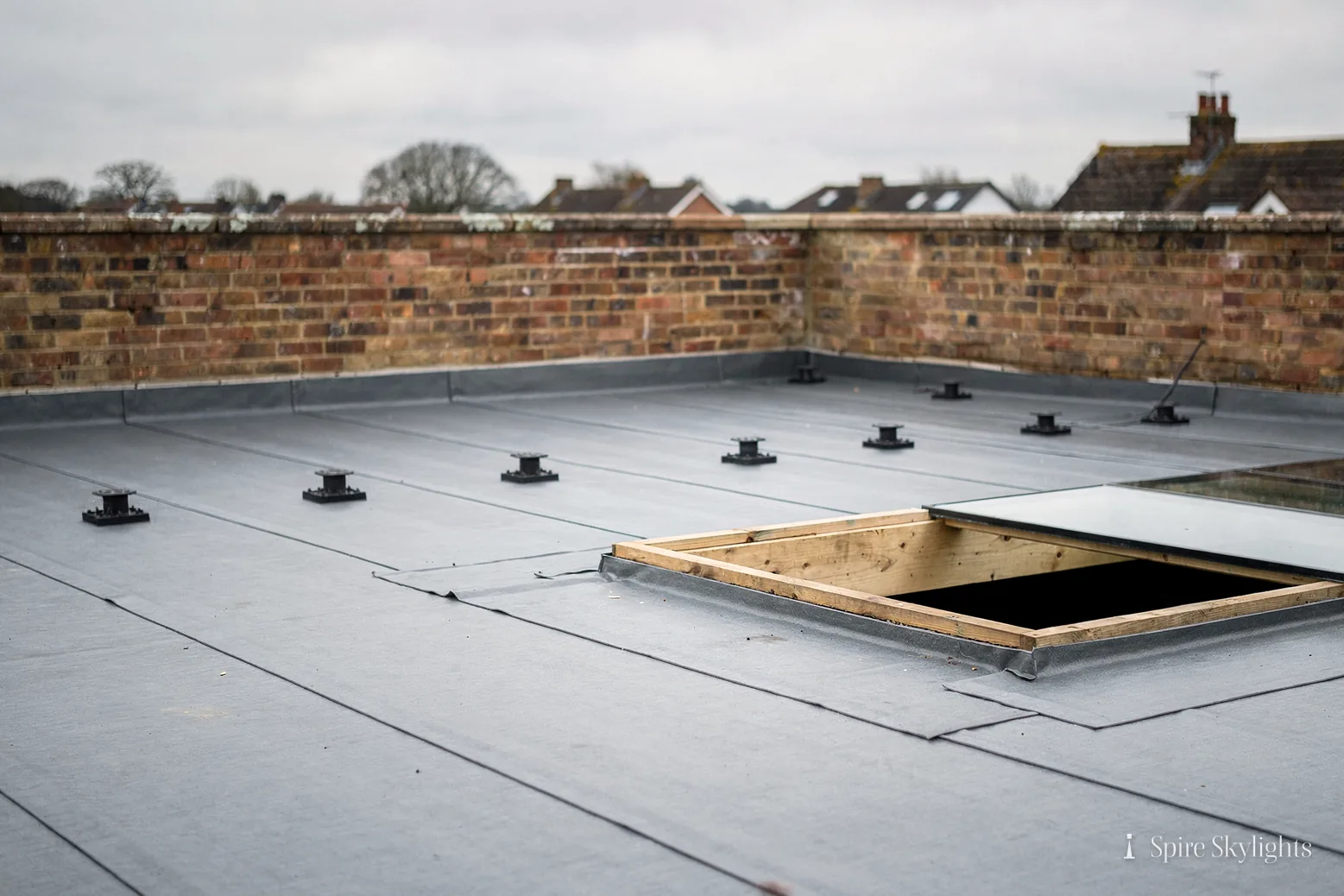
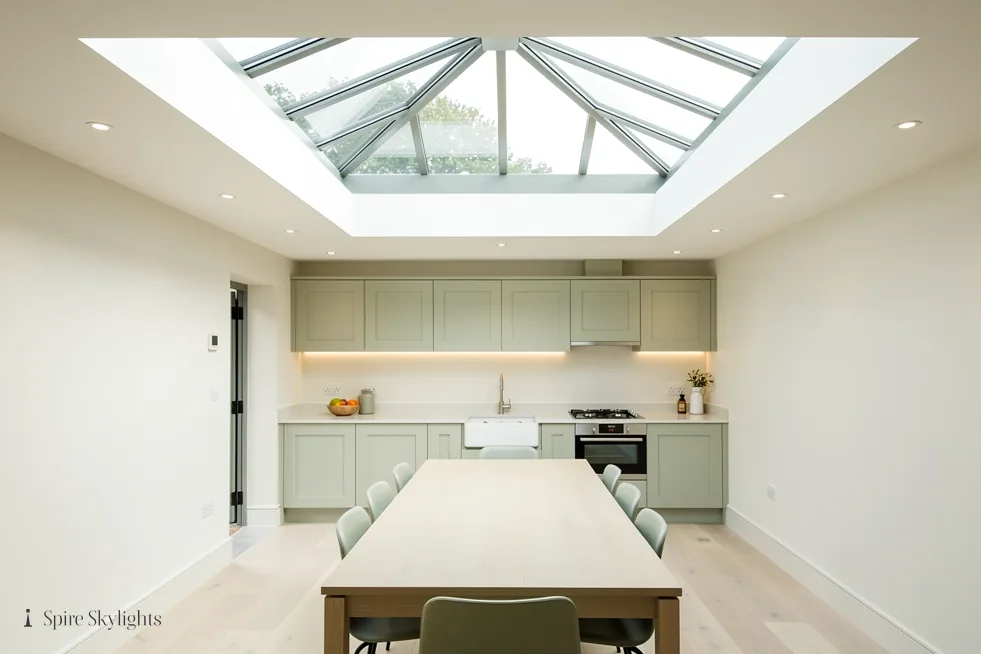
A rooflight works the other way round. The glass is the opening. You look up through it, you see sky and cloud and the movement of the day, and the light comes in directly. In a pitched roof the unit is a roof window; in a flat roof it may be a flat glass rooflight or a lantern. Either way the room needs a clear route from the glass down to the ceiling, which usually means a short shaft, called a reveal or light well, between the roof and the room.
A sun tunnel brings light into a room. A rooflight brings the sky into it. Most of the choice follows from which of those you want.
Side by side
| Question | Sun tunnel | Rooflight |
|---|---|---|
| What you see | A bright ceiling fitting | Sky, cloud and weather |
| Roof opening | Small and round | Sized to the unit |
| Route to the room | Tube, can bend through a loft | Direct shaft or reveal |
| Ventilation | Mostly light only; some vent kits | Opening types available |
| Best for | Hallways, landings, bathrooms | Kitchens, living rooms, lofts |
The table is a starting point, not a verdict. A narrow bathroom under a deep loft may suit a sun tunnel perfectly, while a kitchen extension with a flat roof may suit a lantern or a flat rooflight far better. The survey settles it.
When a sun tunnel is the better choice
A sun tunnel earns its place where a rooflight cannot easily reach. The classic case is the internal room with a loft above it: a hallway, a landing, a cloakroom or a walk-in wardrobe. There is no wall to put a window in, and the ceiling is not at the top of the house, so a rooflight would need a long, wide shaft cut through the loft. A flexible or rigid tube can wind through the same space with far less disruption.
It also suits rooms where privacy matters. A bathroom or a downstairs toilet gains daylight without anyone being able to see in, and nobody looks up at a diffuser the way they might gaze at open sky.
- Rooms with no external wall, such as inner hallways and stair landings.
- Small rooms where a full rooflight would dominate the ceiling.
- Spaces under a loft that is used for storage and cannot be given up to a wide shaft.
- Rooms where you want light and privacy together.
The trade-off is honesty about what the product does. A sun tunnel is a light source, not a window. It does not open, it does not frame a view, and how much light it delivers depends on the model, the length of the run and the weather. We never quote a light-output figure we cannot stand behind, so we explain the likely effect for your room instead, and the page on how much light a sun tunnel gives goes into that in more detail at how much light a sun tunnel gives.
When a rooflight is the better choice
A rooflight is the right answer where the room sits directly under the roof and you want more than brightness. Loft conversions, kitchen extensions, orangeries and open-plan living spaces all benefit from glass you can see through. The room gains daylight, a view of the sky and, with an opening type, fresh air and a way to clear steam and warm air.
It also suits larger rooms. One sun tunnel lights the patch of ceiling beneath it. A large room with a long, flat roof may need a wider source, such as a lantern, a flat glass rooflight or a pair of roof windows, to light the whole floor evenly.
- Loft rooms and attic conversions where head height and a view matter.
- Kitchens and living areas that need light across a wide floor.
- Rooms where ventilation from the roof would help.
- Spaces where the sky itself is part of the appeal.
Our full range of rooflights and roof windows covers pitched and flat roofs. For flat roofs in particular, a lantern or a flat glass unit lets in light from above while the room below keeps a clean, finished ceiling line.
The roof and the loft decide more than you expect
Often the deciding factor is not taste but what sits between the roof and the ceiling. A sun tunnel needs a path for its tube. If the loft is clear and the roof slopes toward the sun, a straight run is simple. If there are water tanks, ducting, a chimney breast or a run of timber in the way, a flexible tube can be routed around them, though every bend takes something off the light that arrives.
A rooflight needs structure. Rafters or joists around the opening are trimmed and framed to carry the load, and that is building work we plan before we cut. Where the roof depth allows, the shaft between the roof and the ceiling is splayed, so the light spreads wider as it falls into the room. The splay is plastered and made good, so the finish indoors looks like it was always part of the house.
If you are weighing the two options for a loft with a low roof pitch, tell us at the survey. A tube can sometimes serve where the space above is too shallow for a splayed reveal. Our guide to where a sun tunnel works best covers the rooms and roofs that suit one most.
Rules, permission and sign-off
Both products are fitted to current Building Regulations. A rooflight in a house is normally permitted development under Class C, which allows low-profile rooflights without planning permission; our planning guide has the conditions. Side-facing ones have an added privacy condition. Conservation area status does not by itself end Class C, but a council direction or a planning condition on the house can, and listed buildings need listed building consent regardless. Flats and maisonettes have no householder permitted development rights.
Replacing a whole rooflight or roof window unit is building work. It is notifiable, and the new unit must meet Part L. Under Part L 2021 for existing dwellings, a roof window and a flat-roof rooflight or lantern each have their own limit, listed in the Part L guide. A unit in a pitched roof, including a conservation rooflight, counts as a roof window. Where the work is notifiable, we handle the Building Control notification. Our full answer on Building Regulations for a rooflight sets out the detail.
Sun tunnel work follows the same logic where it affects the roof structure or its weathering, and we confirm the position at the survey. The planning questions are covered in our rooflight planning guide for Coventry.
What each option looks like when it is finished
The finish is where the two differ most, and it is the part that is easy to forget to ask about. A sun tunnel ends in a diffuser fixed to the ceiling. A neat surround is made good around it, so the plaster meets the fitting cleanly and the room looks resolved rather than patched.
A rooflight ends in a reveal. We splay it where the roof allows, plaster it and make it good, so the edge of the glass blends into a smooth bright surround. Because the opening is wider at the ceiling than at the roof, daylight spreads across more of the wall and ceiling, and the room feels larger. On the roof, the unit is flashed and sealed to the covering, so it sits tidily whether the roof is slate, tile or flat.
For both, the work is finished inside and out: weathertight on the roof, plastered and decorated-ready in the room. That is the standard we hold ourselves to, and it is backed by our 10-year workmanship guarantee.
Cost, in plain terms
We do not publish prices on a page like this, because the real cost depends on things we can only see on site. For a sun tunnel it turns on the model, the length and number of bends in the run, the roof covering and how easy it is to reach the ceiling. For a rooflight it turns on the size, the glazing specification, whether the roof structure needs trimming, the height of scaffold or access needed and how much plastering the shaft requires.
What we do offer is certainty. The survey is free, and after it you receive a fixed price in writing first. If you are comparing the two, ask us to quote both for the same room. Seeing them side by side on paper often makes the decision easy.
A simple way to decide
- Is there a clear patch of roof directly above the room? If yes, a rooflight is possible. If the loft is crowded or the room is internal, a sun tunnel may be the easier route.
- Do you want a view and fresh air as well as light? That points to a rooflight.
- Is privacy important? That favours a sun tunnel.
- Is the room large? A rooflight, lantern or several units may light it better than a single tube.
- Is the room a small, dark hallway, landing or bathroom? A sun tunnel often suits it well.
If the answers conflict, that is a good reason to book the free survey. We look at the roof from outside, the loft from within and the room from below, then tell you what each option would involve in your house. Ask for your free survey and we will give you a fixed written quote for whichever route you prefer. You can also read more about our sun tunnel installation service before you decide.