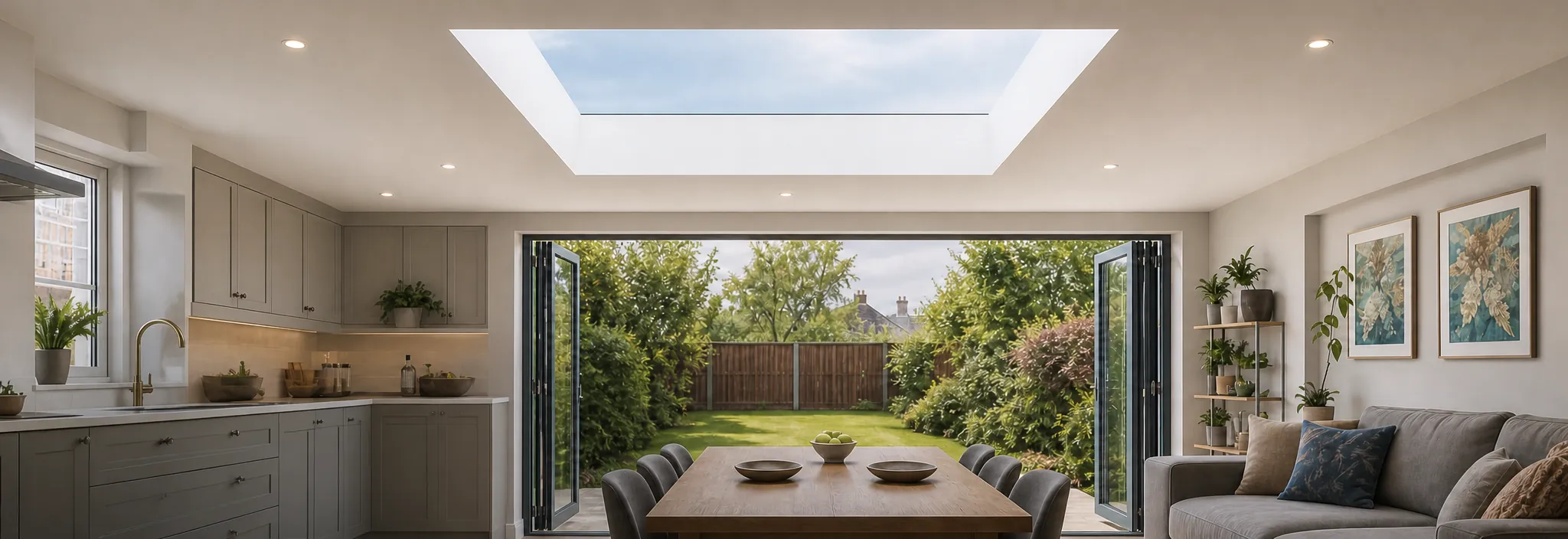
Misted rooflight replacement in Coventry
A clear unit on the roof. A finished reveal in the room.
Fog between the panes is a failed seal, and the answer is a new unit fitted well.
When moisture gets between the panes of a rooflight, the fog cannot be wiped off, and drilling and drying does not restore the seal. The sealed unit has reached the end of its life, and the sound answer is a new one that meets current Building Regulations.
We replace the unit, or the whole rooflight where the frame or upstand is also tired, and we make good the reveal inside so the room is finished when we leave.
- Surveyed free
- Fixed written quote
- Made good inside
Which kind of misted unit you have
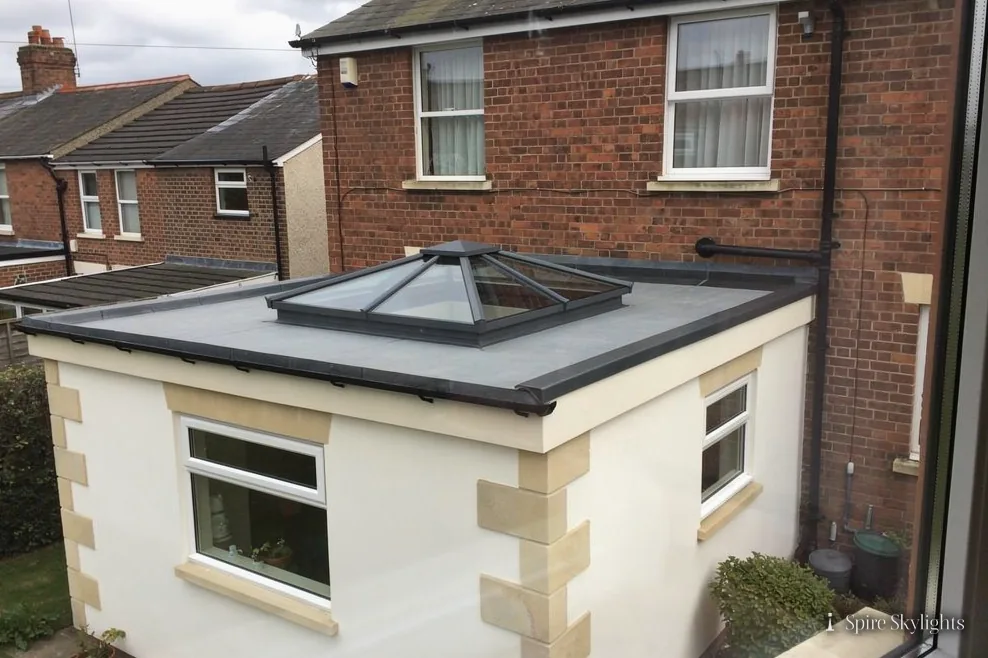
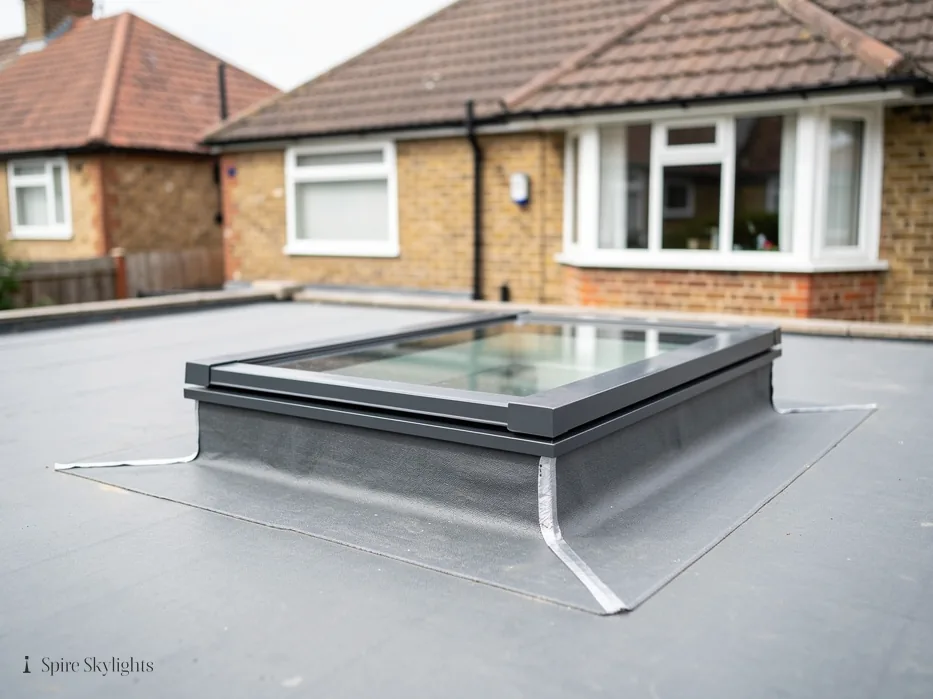
Flat roof rooflight
A sealed double or triple glazed unit on an upstand over a kitchen extension or hallway. Fog here is usually an edge seal that has let go.
Roof window or VELUX window
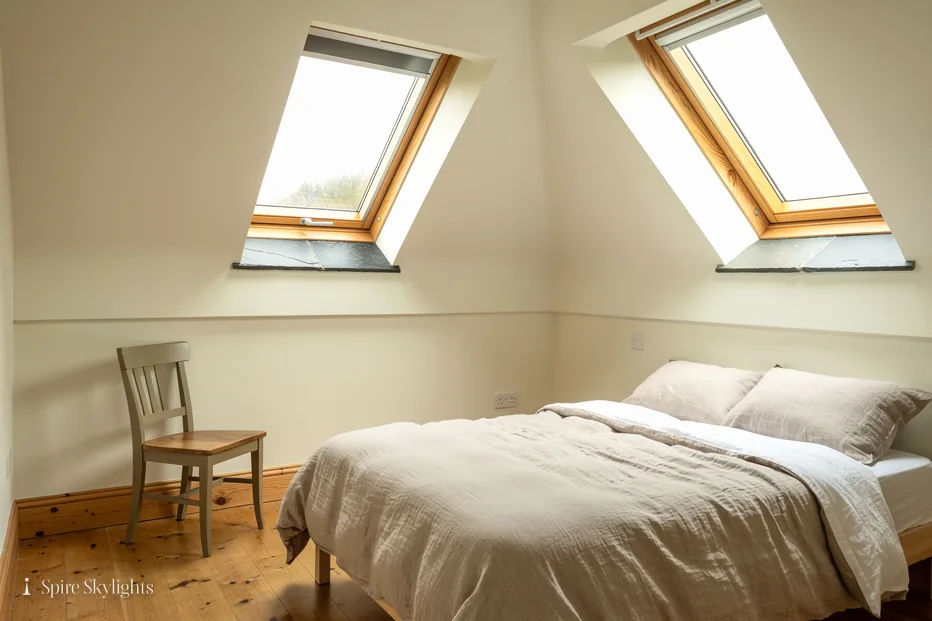
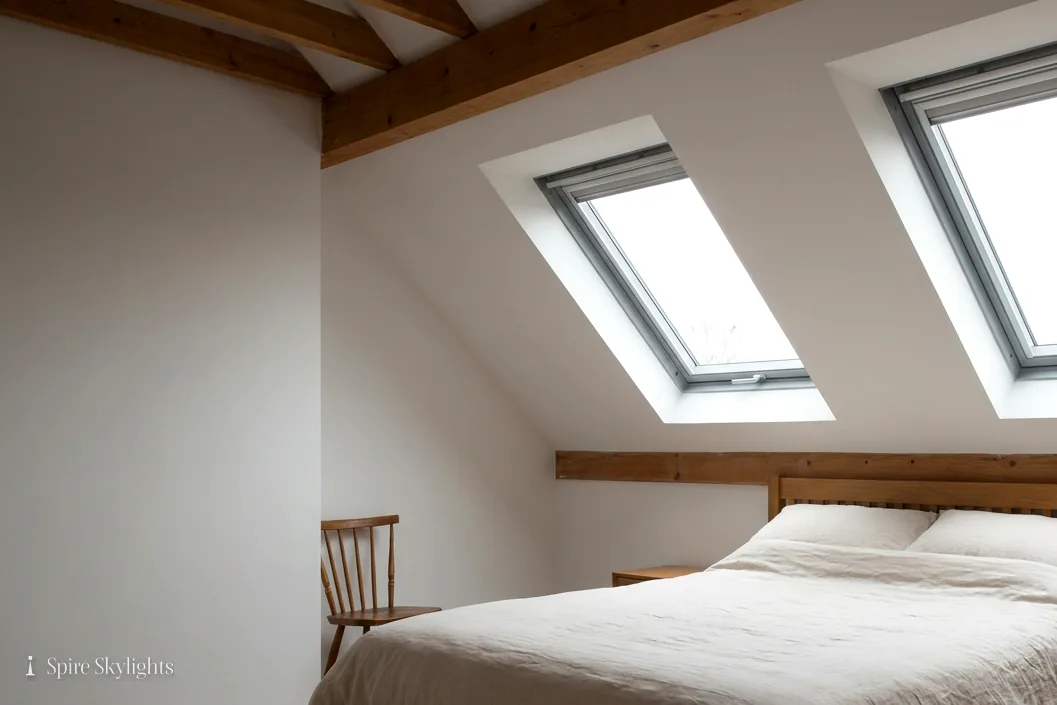
A framed window in a pitched roof, in a loft room or landing. We check the flashing and the lining before we say unit or whole window.
Lantern or older glazed roof
A larger glazed structure where several panes may be tired at once, so we survey the whole frame and the kerb.
The Spire guide to misted rooflights
Misted rooflight replacement in Coventry: the unit, the frame and the reveal
A fogged rooflight is a sealed unit that has stopped sealing, and no cloth or product puts that right. This guide sets out what has failed, what a proper replacement involves on the roof and in the room, and what to ask before you agree a job.
01 Why rooflights mist between the panes
A clouded unit is a failed seal, and the moisture is trapped where nothing can reach it.
On the roof: what has failed
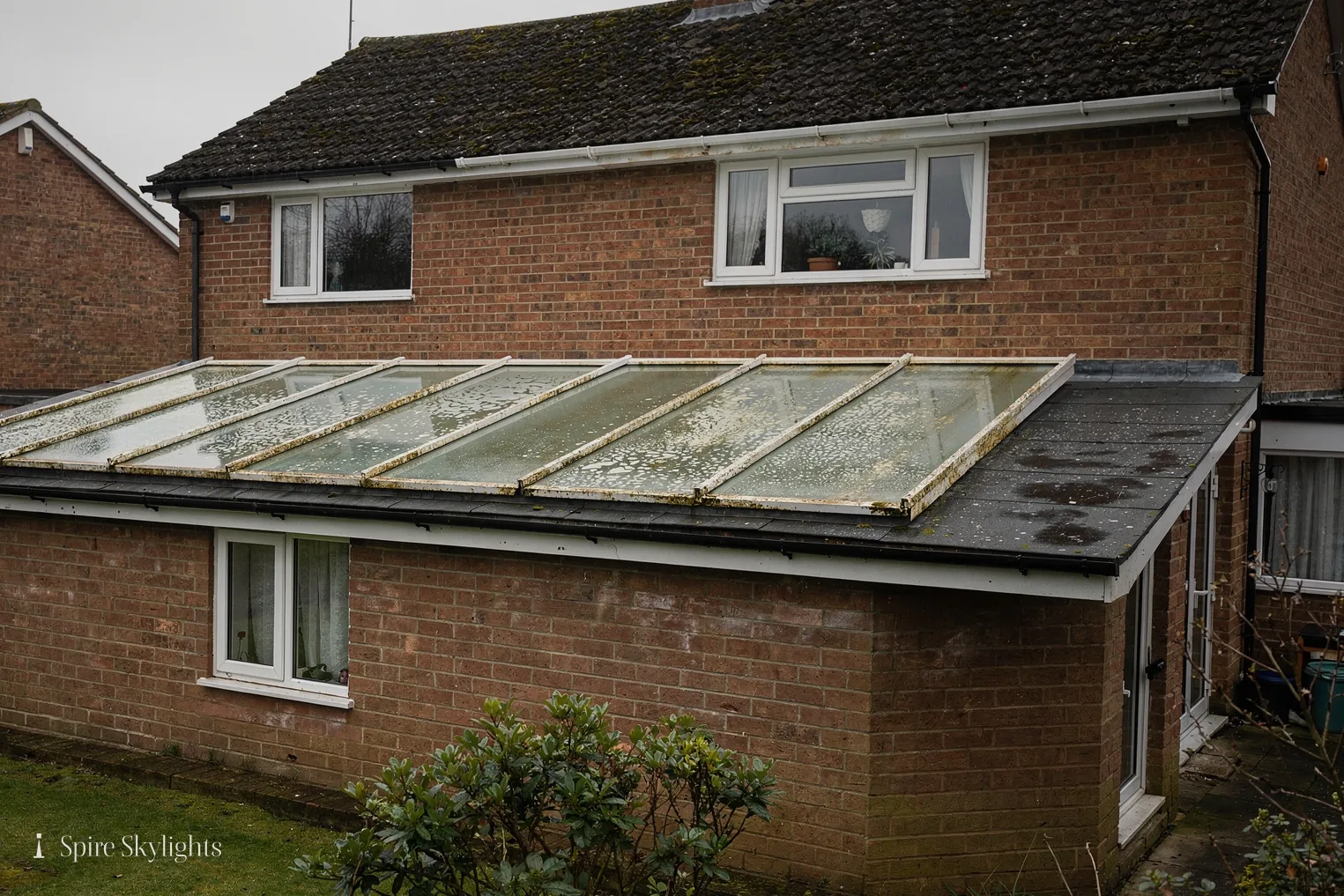
A modern rooflight glazing unit is two or three panes held apart by a spacer bar around the edge, with the gap sealed against the weather. Inside the spacer sits a drying agent that takes up the small amount of moisture trapped when the unit was made. Over the years sun, frost and rain wear at the edge seal until it lets damp air in. Once the drying agent is full, that moisture condenses on the cold inner faces of the glass and shows as a cloud, a film or a tidemark.
Roofs are hard on glass. A rooflight faces the whole sky, so it swings from hot to cold faster than a wall window, and water can sit around the lower edge of the unit where the drainage is poor. That is why a misted skylight is more often a worn edge seal than a flaw in the pane. Our guide to why rooflights mist up between the panes goes through the causes in more detail.
When we survey a misted rooflight we look at the frame, the glazing bars and the upstand as well as the unit. The unit is the part that failed, but it is not always the only tired part, and a quote that ignores the rest only moves the problem along.
In the room: what the fog tells you

From inside, a failed unit looks different from a damp room. Condensation on the room-facing surface comes and goes with the weather and the heating, and wipes away with a cloth. Fog trapped between the panes may come and go with the temperature, it often looks worse in low sun, and it never wipes away. If you can wipe the haze off from either side, the seal has not gone.
The fog also changes the room. A rooflight with a clouded unit lets through less natural light, so the space underneath feels flatter than it did. The loss is gradual enough that it is easy to stop noticing it, and the difference when a clear unit goes in is plain to see.
We also check whether water has been getting in. Stains on the plaster below, soft paint on the splay or a damp patch in the corner point to a leak, and that turns the job from a new unit into a unit and the surrounding finish. Our short answer on whether a misted rooflight can be cleared explains why the fog cannot be cleaned out.
The short version
If the haze will not wipe away from either side, the seal has failed and the unit needs replacing.
02 Replace the glass or the whole rooflight
The honest answer depends on the frame, the upstand and the age of the unit.
On the roof: unit or whole rooflight
If the frame is sound, the upstand is dry and level, and the fixings and seals around the unit are in good order, replacing only the glazing unit can be the right answer. It costs less than a whole new rooflight and it suits a rooflight that is otherwise doing its job. If the frame has warped, the corners have opened, the aluminium has corroded or the timber has softened, a new unit sits in a tired frame and the next failure is already on its way.
Age matters too. An old rooflight may have been made to a standard that no longer exists, with a thin cavity or no coating, and a modern unit may not fit its rebate. Where that is so, we say so at the survey and quote for the whole rooflight instead.
Our guide on replacing the glass or the whole rooflight sets out the decision in full, and our answer on replacing a rooflight on the same kerb covers the case where the upstand can stay.
In the room: what the choice changes
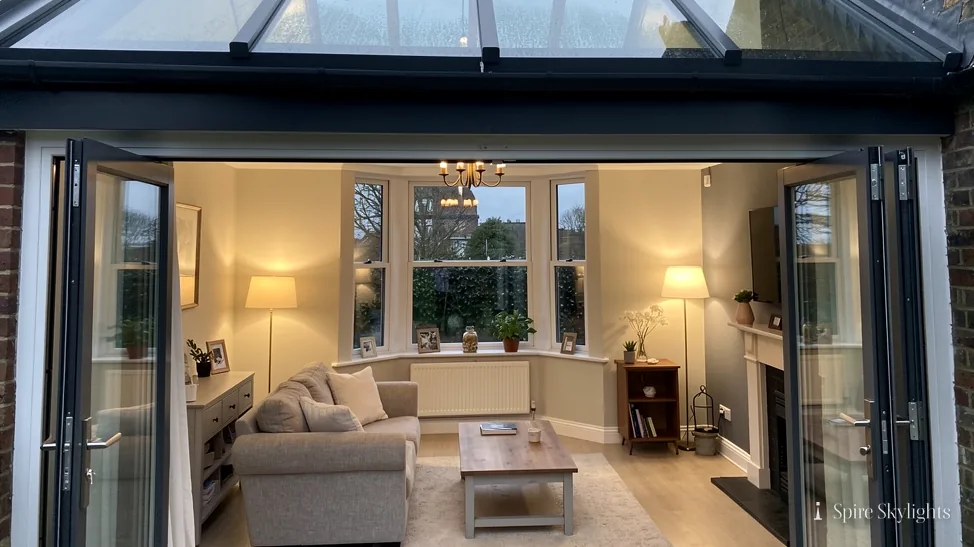
Replacing the glazing unit alone leaves the rest of the opening as it is. That is a short, tidy job inside, with dust sheets down, the lining protected and nothing to plaster. It is the quiet option, and it is the right one when the reveal is sound and the paint is dry.
Replacing the whole rooflight opens up more. The old frame comes out, the upstand and lining are checked, and the reveal is made good afterwards. Where the roof depth allows, we splay the reveal so the light spreads into the room, plaster it and leave it ready to paint. If you want a better-looking opening than the one you had, a whole replacement is the time to ask for it.
Either way, the rule we follow is the same. Whatever is disturbed on the roof is dealt with in the room before we leave, so you do not end up with a new unit and a patch of bare board.
| What we find | Likely answer |
|---|---|
| Sound frame, dry level upstand, clouded unit | New glazing unit only |
| Warped, corroded or soft frame | Whole rooflight |
| Old unit that will not fit a modern one | Whole rooflight |
| Leak at the flashing or upstand | Whole rooflight, with the weathering renewed |
A new unit in a tired frame is only half a job.
03 Roof windows and skylights in a pitched roof
The same fault, a different roof, and a flashing that matters as much as the glass.

On the roof: pitched roofing and the flashing
A roof window in a pitched roof is set into the rafters and surrounded by a flashing kit that lets water run over and around it. When one of these windows mists, the flashing is not the cause, but it is always part of the survey, because lifting the window or its glazing means disturbing the flashing, and an old one rarely goes back as it came out.
Where the window is a VELUX window, the unit and the flashing are usually made as a pair, and a modern flashing kit fits the opening better than the one the house had. We identify the make, the age and the size code from the label on the frame before we quote. VELUX size codes read with the letter as the width and the digits as the height, so in MK04 the M gives the width and the 04 the height, and we match what is in the roof.
If you are looking at the whole window rather than the glass, our pages on roof windows and VELUX windows describe how we fit them.
In the room: the loft and the lining
A misted roof window often lights a loft conversion, a landing or an attic bedroom, so the job has to be tidy inside. We protect the floor and the furniture, release the window from the lining, and keep the work contained to the opening.
The reveal on a pitched roof window is usually a boxed lining, set at an angle to the sloping ceiling. If it is sound it stays. If it has stained or the plaster has blown, we make it good, so the reveal and the window finish together. Splaying a lining is possible only where the roof depth allows it, and we say so at the survey.
One point about loft rooms is worth knowing. A roof window does not count as the escape route for a two-storey house: Approved Document B allows an escape window only for storeys within about 4.5 m of the ground, and a loft conversion on a two-storey house relies on a protected stair. Replacing a misted unit does not change that, but the survey is a good moment to ask us anything about the loft.
- Part L 2021 limit for a replacement roof window in an existing home, or Window Energy Rating band B
- 1.4 W/m²K
- VELUX size code: the letter is the width, the digits the height
- MK04
- Workmanship guarantee on our installation
- 10 years
Read the label and note the make, age and size code
Check the flashing, the lining and the pitch of the roof
Quote the window, the flashing kit and the making good
Fit the new unit or window and renew the weathering
Finish the lining inside
04 Flat roof rooflights and lanterns
On a flat roof the unit sits on an upstand, and the upstand is half the story.
On the roof: the flat roof and its upstand
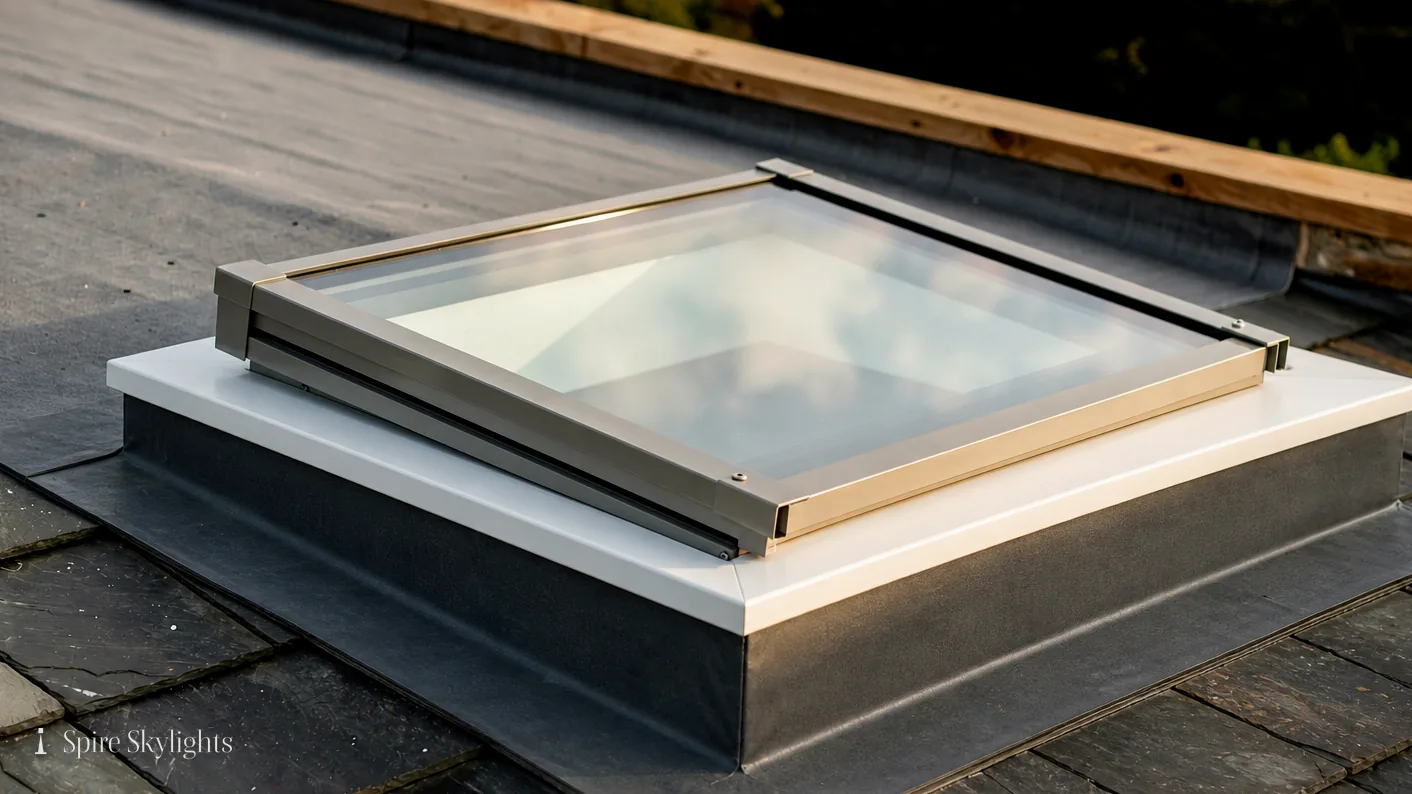
A flat roof rooflight usually sits on a rear or side extension, set on a timber or GRP upstand. Water that cannot run off a flat roof sits at the edge of the unit, and an edge seal that stands in water for years is a seal that fails. Part of the survey is therefore to check the falls around the rooflight and whether the roof covering is still bonded to the upstand.
If the covering has lifted or the upstand has softened, we say so, and the quote includes renewing it. If both are sound, the new unit goes onto the same upstand, bedded and sealed, and the covering is dressed back up to it. Where the old rooflight was a roof lantern, a large glazed structure with several panes, we check the bars and gaskets across the whole lantern, because one clouded pane is often the first of several.
Our pages on flat roof rooflights and roof lanterns describe how we build those from new.
In the room: an extension that is lit again
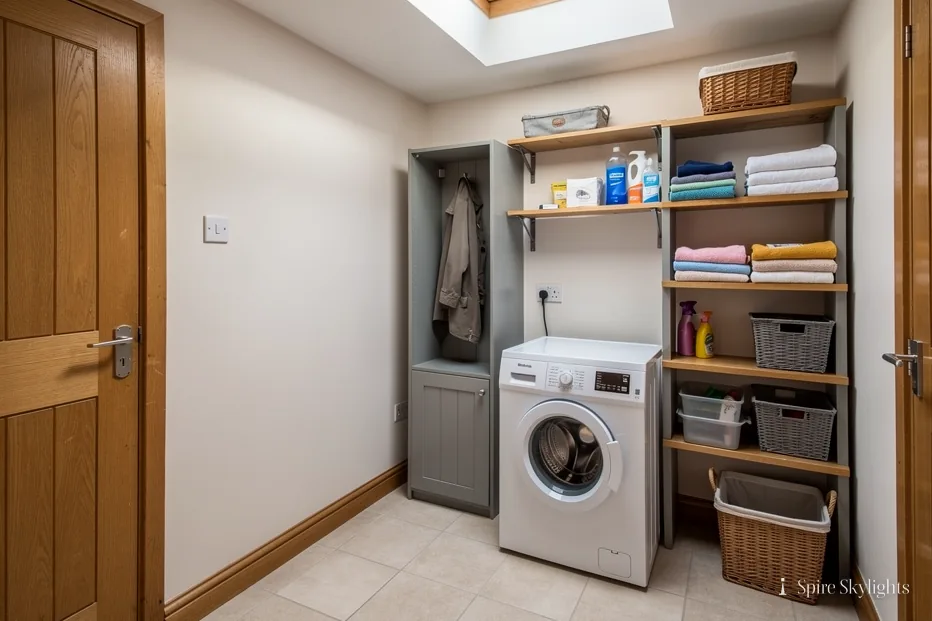
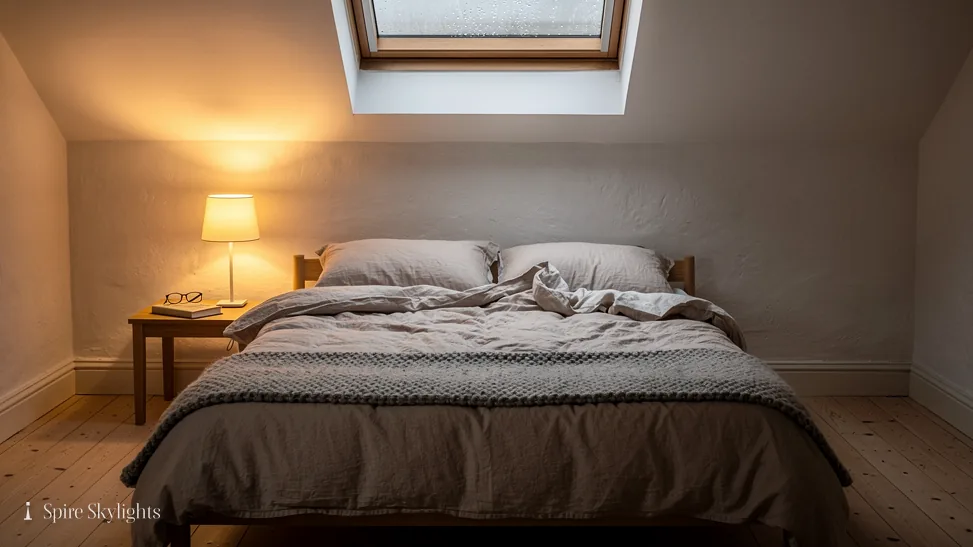
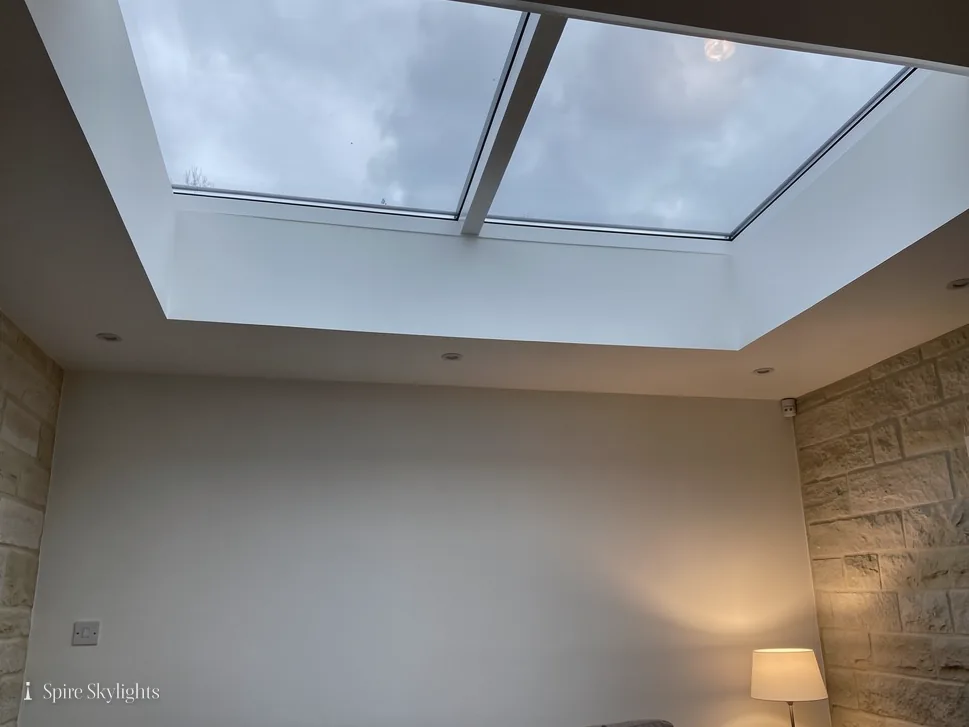
Under a flat roof rooflight sits a kitchen, a utility or a hallway that depends on that light. A misted unit turns a bright space dull, and a leak makes the plaster around it blotchy. We keep the work contained, put the room back together, and make good the lining so it matches the ceiling around it.
If the upstand has to be renewed we line it with insulation, set beads on the corners and plaster it, so the reveal comes out square. A deep reveal can be splayed outward where the roof depth allows, which spreads the light across the room instead of dropping it in a pool on the floor.
The aim is a room that looks as if the rooflight was always like this. If you plan an extension or a new kitchen, a replacement is also a sensible point to compare other options, such as a larger unit or an opening one, which we cover later in this guide.
The short version
On a flat roof the upstand and the falls decide whether a new unit lasts, so we survey them with the glass.
05 Light, brightness and sun tunnels
A clouded unit steals natural light, and a new one can do more than the old one did.
On the roof: glass and the light it passes

A misted unit passes less natural light, and the light it does pass is dull and diffuse. A new unit gives back the light you paid for and lets you revisit the specification. Energy efficiency is the other gain, since modern rooflight glass can carry a low-emissivity coating that cuts heat loss, and a solar control coating on rooflights that take the afternoon sun. We discuss both with you at the survey, because the right choice depends on which way the roof faces and what is under it.
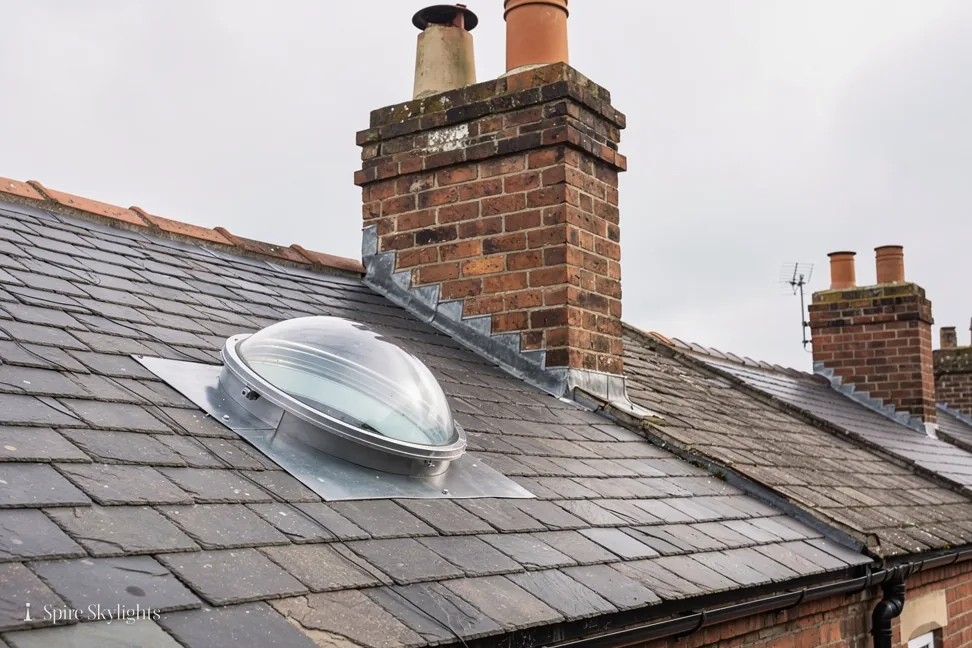
A sun tunnel is a different product with the same fault. It collects light in a dome on the roof, carries it down a reflective tube and spreads it through a diffuser in the ceiling. When the dome crazes or moisture gets into the tube, the light drops and the diffuser looks stained. We look at the dome, the flashing and the tube together, because a worn dome shows in the light below. Our page on sun tunnels shows how we fit them.
Brightness is also a matter of size and position. A like-for-like replacement keeps the opening you have. If you want more light, the survey is the time to ask.
In the room: brightness and the diffuser
Brightness inside depends on the rooflight, but also on what the light meets once it comes through. A white splayed reveal reflects more than a square dark one, so the plaster around the opening works as part of the rooflight. When we make good the reveal, we leave it ready for a light, matt paint.
For a sun tunnel, the room-side parts are the diffuser and the ceiling ring. We replace them as a set, so the finish at the ceiling is clean and the light is even.
It is worth remembering that Building Regulations in England set no daylight requirement for houses. What a rooflight does for a room is therefore a choice and not a rule, and choosing well is mostly about where the light falls. We stand under the opening with you and look at it from the places you use, before we settle the size of any new unit.
How far the light goes
A narrow pool of light
Straight reveal
Light across the room
Splayed reveal
06 Opening, ventilation and electric operation
Some rooflights do more than light the room, and mist for different reasons.
On the roof: opening units and their seals
An opening rooflight or roof window has a moving sash, and the seals around it work harder than the seals on a fixed unit. Rubber gaskets perish and hinges loosen. A sash that no longer closes tightly lets rain and warm air in, and a misted unit in an opening sash can be a sign that the sash has been working loose.
For that reason, the survey of an opening unit includes the operation as well as the glass. We check the hinge, the closing action, any electric motor and its rain sensor, and whether the sash seals still compress. If the unit is electric, the motor and the control are checked before any work begins, so we know what is fed from where.
If you want ventilation where there is none, a replacement is a good moment to change a fixed unit for an opening one. Our pages on electric and opening rooflights and energy efficient rooflights explain the options and the glass behind them.
In the room: ventilation, condensation and control
Ventilation is the other half of the story. A kitchen or bathroom with no way to let warm, damp air out puts a lot of moisture on every cold surface, including the underside of a rooflight. That is condensation on the room side. It is not the same as fog between the panes, but it can make a failing unit look worse, and it can stain the reveal.
An opening rooflight lets that air out at the highest point of the room, where it gathers. A remote or electric control means you can open it when the unit is out of reach, and a rain sensor can close it if the weather turns. We fit and wire these as part of the job and leave the control where you will use it.
Inside, the finish matters as well: a reveal that is sealed, plastered and painted with a suitable paint stands up to steam better than bare board. We tell you if the room needs more extraction than the rooflight alone can give, so you can choose to sort it out.
Check the sash, hinges and seals
Test the electric motor, control and rain sensor
Replace the unit and renew any perished gaskets
Re-seal and test the closing action
Leave the control where you will use it
A fixed unit that fogs is the moment to ask whether it should open.
07 Frames, materials, finishes and the rules
Aluminium, timber, GRP and the Building Regulations that apply to a new unit.
On the roof: frames and materials

The frame decides how long the new unit lasts. Aluminium frames are slim and durable, timber frames suit older and character houses, and GRP or PVC upstands suit many flat roofs. A frame that is corroded, rotten or twisted should not carry a new sealed unit, and we say so before we price anything.
The rules are straightforward. Replacing a whole rooflight or roof window unit is building work. It is notifiable, and the new unit must meet Part L of the Building Regulations. For an existing home, Table 4.2 of Part L 2021 sets roof windows at 1.4 W/m²K or Window Energy Rating band B, and rooflights on flat roofs and lanterns at 2.2 W/m²K. A unit in a pitched roof, including a conservation rooflight, counts as a roof window. Changing only the glass in a sound frame is not a controlled fitting. We handle the Building Control notification where the work is notifiable, and our answer on whether replacing a rooflight is notifiable covers it in full.
In the room: finishes, conservation and listed buildings

Inside, the finish is the plasterwork and paint around the opening. We check the reveal for stains and loose plaster, make it good, and leave it ready to paint. If you prefer a particular lining, timber or plastered, tell us at the survey.
Older houses bring extra questions. A conservation area alone does not take away the usual permitted development right for a rooflight under Class C, which allows a rooflight within 150 mm of the roof plane, no higher than the roof, with side-facing ones obscure and fixed below 1.7 m. An Article 4 direction or a planning condition can remove it, and a listed building needs listed building consent whatever the work. For conservation settings, our page on conservation rooflights describes the slim, flush units that suit them.
Replacing like for like usually keeps the planning position as it is, but we check it for your address before the quote. For the wider picture, see our planning permission guide and the answer on Building Regulations for a rooflight.
- Part L limit for a rooflight on a flat roof or lantern in an existing home
- 2.2 W/m²K
- Class C projection limit from the roof plane
- 150 mm
- Our workmanship guarantee
- 10 years
The short version
Replacing a whole unit is notifiable and must meet Part L; glass alone in a sound frame is not.
08 Safety, installation process and the areas we cover
How the job runs, what it is quoted at, and how far we travel from Coventry.
On the roof: safety, access and the installation process
Working on a roof is where most of the risk sits, so the job starts with access and edge protection. We set up scaffold or towers where the roof needs them, work from a stable platform, and keep the area below clear. A rooflight is also something people can fall through if the unit is not properly supported, which is one more reason the new unit and its fixings matter. For walk-on glass, we specify by the maker's stated load rating and nothing more.
The installation process follows the same order each time. A free survey, a fixed written quote before any work starts, a date, the old unit taken out, the opening checked, the new unit set, sealed and tested, and the weathering made good. For security, we look at the locking hardware on any opening unit and raise it at the survey if it needs attention.
Our answer on how long rooflight glass lasts says what to expect from a new unit, and the cost guide explains what moves the price and how the quote is fixed.
Areas covered, within 30 miles
We replace misted rooflights across Coventry and around it, within 30 road miles. That takes in the city's own suburbs and the towns and villages round it, from Kenilworth and Warwick to Nuneaton, Rugby and Solihull. The full list is on our areas page.
On the day, we cover the floor, protect the furniture and keep the work to the opening. When we finish, the room is made good: the lining sound, the plaster smooth and the surface ready for paint. The price on the quote is the price you pay, because it was fixed in writing before we started.
Every installation carries a 10-year workmanship guarantee. If you have a misted rooflight or roof window, ask for a free survey through our quote page and we will tell you which of the options in this guide fits yours.

| Stage | What happens |
|---|---|
| Survey | Free, unit, frame, upstand and reveal all checked |
| Quote | Fixed and in writing before any work |
| Fit | Old unit out, new unit set, sealed and tested |
| Finish | Reveal made good, ready for paint |
The quote is fixed in writing, and the room is finished when we go.
Our 10-year workmanship guarantee: Ten years.
Workmanship guarantee on every installation
From fogged glass to a finished reveal
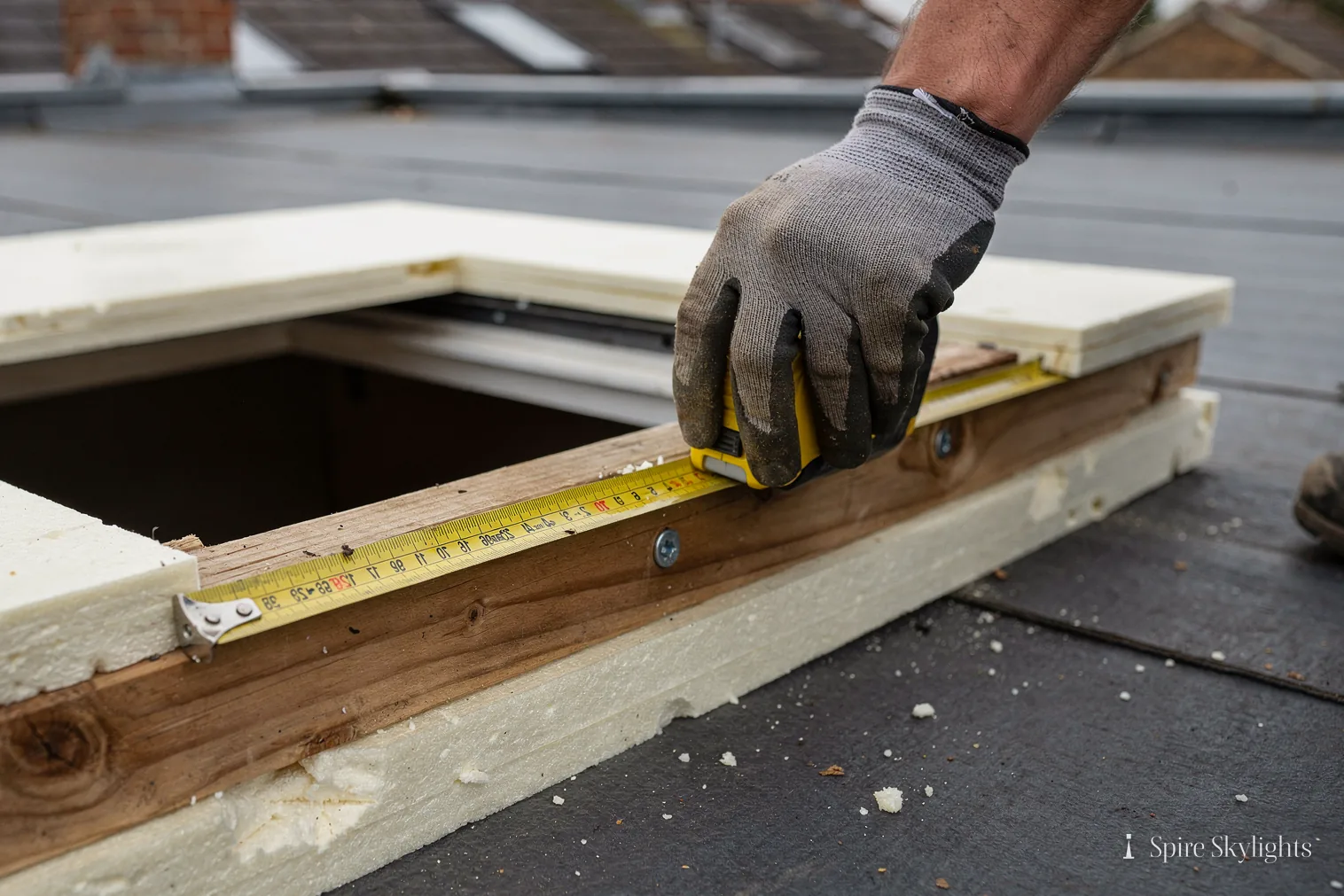
Day 1, morning
Old unit lifted out, the frame and upstand checked, weathering made good
Day 1, afternoon
New unit set, sealed and tested against the weather
Day 2, if the reveal needs it
Lining and plaster made good and the room finished
Misted rooflight questions answered
Why has my rooflight misted up between the panes?
The sealed unit has lost its edge seal. Damp air has entered the gap between the panes, the drying agent in the spacer has filled, and the moisture now condenses on the cold glass. Sun, frost and standing water around the lower edge of the unit all work against the seal over the years. Because the moisture is trapped inside the unit, nothing you do to the outer or inner face will clear it. The answer is a new sealed unit, and at the survey we check whether the frame and upstand can take one or whether the whole rooflight should go.
Can you replace just the glass in a misted rooflight?
Yes, where the frame is sound, the upstand is dry and level, and a modern unit fits the existing rebate. Changing only the glass in a sound frame is not a controlled fitting under the Building Regulations, so it is the simpler job. Where the frame has warped, corroded or softened, a new unit would be sitting in a tired frame, so we quote for the whole rooflight instead. We tell you which at the free survey and put the decision, and the reason, into the fixed written quote.
Is my roof light misted or is it leaking?
They are different faults that can appear together. Fog between the panes is a failed seal in the unit. A leak is water getting past the flashing, the upstand or the frame, and it shows as drips, stains on the plaster or soft paint on the reveal. Condensation on the room-facing surface comes and goes with the weather. We look from both the roof and the room, so we can tell whether the job is a new unit, a new flashing or both, and the quote covers what we find.
Is replacing a misted rooflight notifiable building work?
Replacing a whole rooflight or roof window unit is building work, so it is notifiable, and the new unit must meet Part L. In an existing home a flat roof rooflight or lantern needs 2.2 W/m²K. A roof window needs 1.4 W/m²K or Window Energy Rating band B. Changing only the glass in a sound frame is not a controlled fitting. We handle the Building Control notification where the work is notifiable, so you do not have to chase it.
How long does replacing a misted unit take?
It depends on what the survey finds. A single glazing unit in a sound frame is a short job that is often finished within a day. A whole rooflight, a lantern or a unit where the reveal needs plastering takes longer, because the plaster has to be made good and left to dry before it is painted. We give you the expected timing in the quote and a date before we start, and if a job needs a second visit we say so at the survey rather than on the day.
Can you replace a misted VELUX window or another make?
We replace misted units in VELUX windows and in other makes of roof window and rooflight. Whether the glazing alone can be exchanged depends on the make, the age and the size code on the label, so we read that at the survey. VELUX size codes use the letter for the width and the digits for the height, as in MK04. Where the glazing cannot be supplied alone, we quote for the whole window with a matching flashing kit and make good the lining inside.
Read further on misted rooflight replacement

Book your free survey
No obligation. We survey before we price.