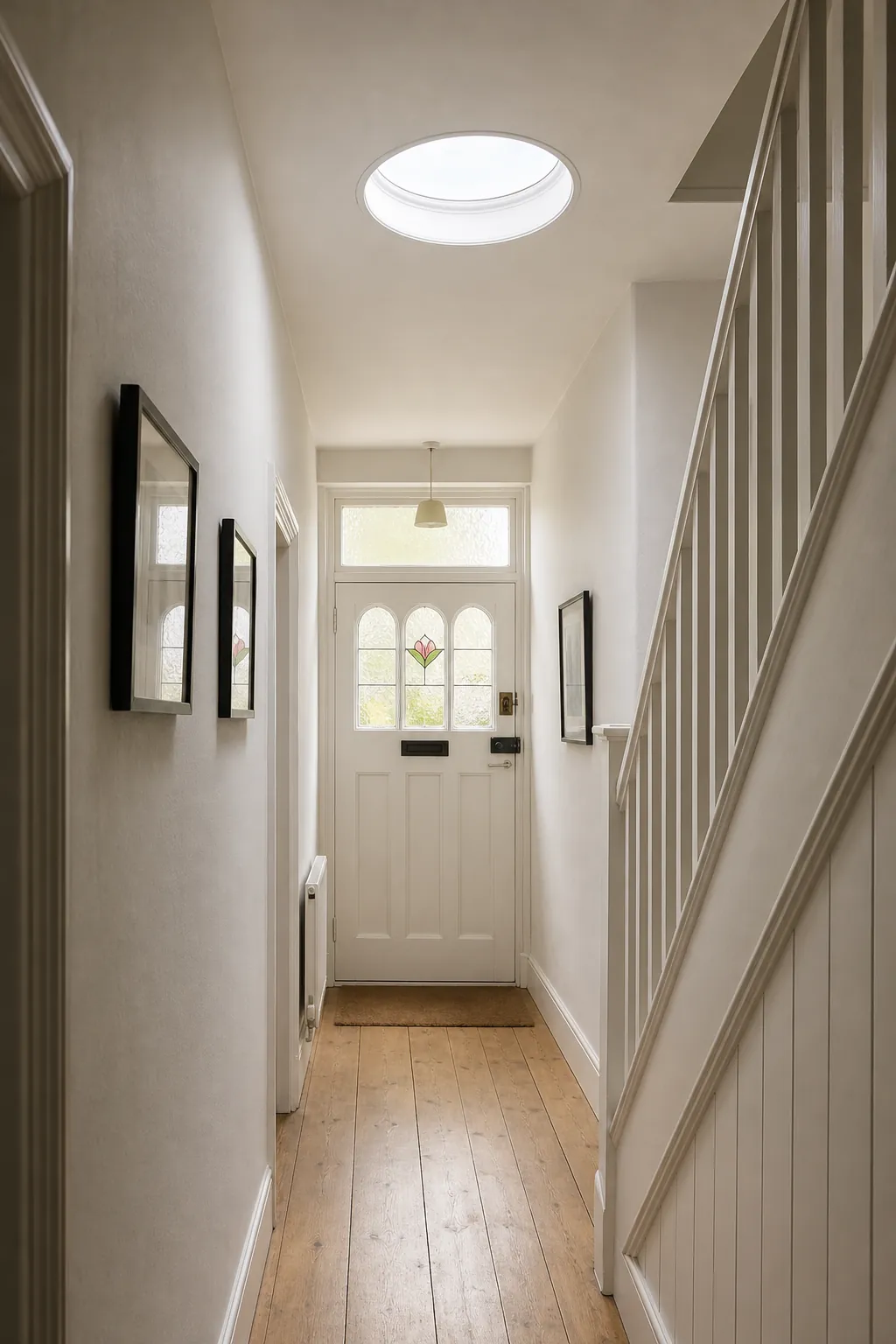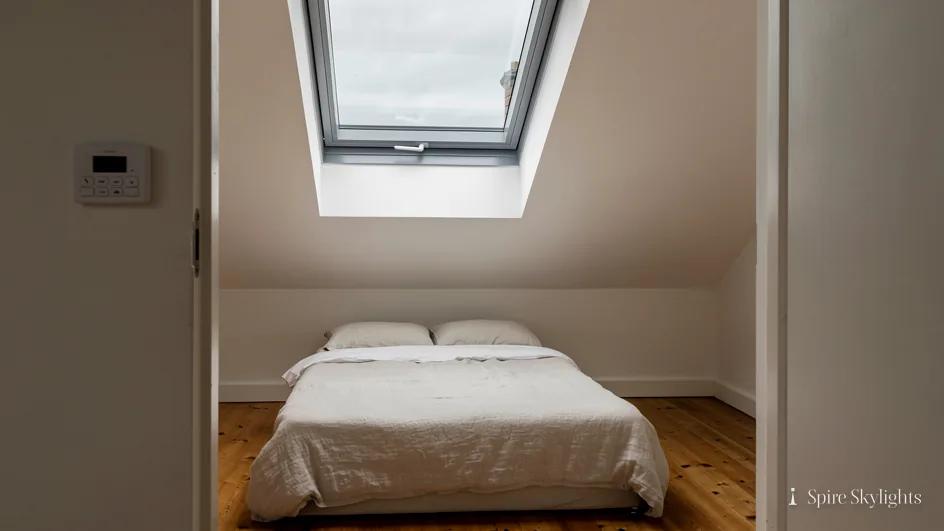

You look up one morning and the glass has a hazy film, or beads of water that wipe away on neither side. That is the typical sign of a misted rooflight, and the cause sits inside the sealed unit, out of reach of any cloth. This guide explains what is going on in the glass, why the seal fails, how to tell it apart from ordinary condensation, and what your options are. If you want the next step straight away, our page on misted rooflight replacement sets out how we deal with it in Coventry and the surrounding area.
How a sealed unit is built
A double glazed rooflight is not two sheets of glass resting side by side. It is a sealed unit: two panes held apart by a spacer bar around the edge, with a gap between them filled with dry air or argon. The spacer contains a drying agent, called desiccant, that absorbs any trace of moisture inside the cavity. Around the spacer, a primary seal keeps gas in and moisture out, and a secondary seal bonds the whole assembly together and holds it in the frame.
While every part of that arrangement is intact, the gap stays dry and clear for years. The unit insulates because the gap is sealed, and the glass looks clear because there is nothing inside to condense.
Why the seal fails
Seal failure is rarely a single dramatic event. It is a slow process, and the causes are well understood:
- Age and thermal cycling. Every day the glass heats in the sun and cools at night. The materials expand and contract at slightly different rates, and over many cycles that flexing opens tiny gaps in the seal.
- Sun exposure. A rooflight faces the sky and takes more direct sun and weather than a wall window, which tests its seals harder.
- Standing water. On a flat roof, or in a poorly drained frame, water sitting against the edge of the unit works at the seal constantly.
- Poor drainage in the frame. If the glazing rebate cannot shed water, the unit sits in damp that attacks the sealant.
- Movement of the structure. A frame that flexes or a kerb that settles puts uneven load on the glass edges.
- A manufacturing or fitting fault. A badly sealed unit can fail early, sometimes within a few years.
Once the seal opens even slightly, humid air enters when the unit cools and pressure falls. The desiccant takes up moisture for a while, then becomes saturated. After that the water is free, and it condenses on the coldest glass surface inside the gap.
The mist is a symptom. The failed seal is the fault, and the unit insulates less well, sometimes even before it looks cloudy.
Is it misting or ordinary condensation?
Before you assume the unit has failed, check where the moisture is. Condensation can form on either outer face, and it has different meanings depending on which.
| Where it appears | What it means |
|---|---|
| Room side of the glass | Humid room air meeting a cold pane; ventilation and a warmer unit help |
| Outside of the glass | A clear night cooling the pane below the dew point; a sign the unit insulates well |
| Between the panes | A failed seal; the unit needs new glass |
A simple test: wipe the pane on the room side with a dry cloth. If the haze clears, it was condensation on that face. If it stays, and you can see the cloud or droplets are behind the glass surface, the cavity has been breached.
Mist or leak: telling them apart
Homeowners often call about a "leaking skylight" when the real fault is a failed seal, and the reverse. The two have different causes and different fixes, so it is worth separating them before anyone climbs a ladder.
- Moisture only between the panes points to the sealed unit. The room stays dry, and there is no stain on the ceiling or lining.
- Drips, damp patches or staining on the lining or ceiling point to water getting past the flashing or frame. That is a weathering problem at the junction of unit and roof, and the glass may be perfectly sound.
- Both at once happen on older units, where the sealant, flashings and frame have all reached the end of their life together. A whole-unit replacement usually makes sense then.
A leak that has run into the lining can leave the plaster damp, so we look at the room side as well as the roof. Any damaged plaster is made good as part of the finished job.
What misting costs you
A misted unit is more than a cosmetic annoyance. Three effects accompany it:
- Poorer insulation. Without its dry gas fill, the unit loses more heat, so the room feels colder under the glass.
- Less light and a worse view. Mineral deposits and residue build up on the inside faces as the water dries, leaving permanent staining that no cleaning can reach.
- A rising problem. The longer the seal stays open, the more moisture enters and the worse the staining becomes.
It is also a sign of the age of the surrounding frame. If one unit has failed, the others of the same age in the roof may follow, and it is worth looking at them while you are at it.
Different roofs, different patterns
Coventry has a wide mix of roofs, and misting shows up differently on each. On a flat roof, a rooflight sits in a kerb where leaves and standing water can collect, and the unit may spend long spells with its lower edge wet. On a pitched roof, a roof window sheds water more easily, but it faces the weather on a slope and takes strong sun on its upper face. Roof lanterns over extensions have many panes and many seals, so a single failed pane is common while the rest remain clear.
Loft conversions from earlier decades often carry units fitted before warm-edge spacers were standard, and these tend to show their age first. If your house is an interwar semi in Whoberley or a later extension in Cheylesmore, the fault pattern is similar: the original sealed unit simply reached the end of its working life.
On a conversion or extension that has several units of the same age, we suggest looking at the others while the scaffold or access is in place. Dealing with two or three together can be more convenient than returning for each as it fails.
One further point is worth knowing before you decide anything. Because a failed seal reduces the unit's insulation, a misted rooflight in a bedroom or living room often feels colder than it did, and the heating works a little harder to compensate. Fitting a new unit restores the thermal performance, and a modern one will usually insulate better than the original did. That makes the work a gain in comfort as well as a return to a clear view.
The options once it has misted
There are three realistic routes, and which one fits depends on the frame and the unit.
- Replace the sealed glass unit only. If the frame is sound and square, a new sealed unit can be made to size and fitted into it. A glass-only job in a sound frame sits outside the controlled fittings.
- Replace the whole rooflight or roof window. If the frame is worn, the flashings are tired or you want better performance, a new unit is the answer. This counts as building work, so it is notifiable and Part L applies to the new unit.
- Treat the mist without replacing glass. Some services drill the glass and flush the cavity. Our answer on whether a misted rooflight can be cleared covers that.
Choosing between the first two is the focus of our guide on new glass versus a new unit.
How to slow it down on the next unit
No seal lasts for ever, but you can influence how long it does. A well-made unit with a warm-edge spacer and proper secondary sealant lasts better than a cheap one. Good drainage in the frame keeps water away from the edges. A roof that sheds water cleanly protects the seals below it. And a unit fitted square, without twist or pinching, avoids the uneven stress that opens seals early. These are details of the fitting as much as the product, and we deal with them on every job.
What to do while you wait for a survey
A misted rooflight is not an emergency, and there is no need to cover it or take it out. A few sensible steps in the meantime keep things tidy:
- take a photo of the mist in daylight, so we can see the pattern before we arrive;
- note the size of the unit if you can see a label on the frame, or a rough measurement of the opening from inside;
- check the lining and ceiling for any staining, and mention it if you find some;
- keep the room ventilated, particularly a kitchen or bathroom, to ease condensation on the room side while you wait;
- do not try to drill or force the unit, because a cracked inner pane turns a straightforward job into a bigger one.
None of this stops the mist, but it gives us the information to quote accurately, and it means the survey visit can be short and productive.
If you are unsure which category your unit falls into, send us the photo and we will tell you what we see before the survey. It saves a visit and gives you a straight view of the likely route.
What we do on a Coventry roof
At the free survey we examine the failed unit, the frame, how water drains from it and the state of the flashings. We tell you plainly whether new glass will do or the whole unit should be replaced. A fixed written quote reaches you before any work begins.
The work is carried out so that it is finished inside and out. Up on the roof, new glass goes in with fresh seals, and a new unit with fresh flashing too. Inside, when a whole unit is replaced, we splay the reveal where there is depth to do so and finish it in plaster. Where the work is notifiable we handle Building Control ourselves, and the job is covered by a 10-year workmanship guarantee.
For a replacement, the energy cap is 2.2 W/m²K on a flat-roof rooflight or lantern, and a pitched-roof unit, treated as a roof window, needs Window Energy Rating band B or 1.4 W/m²K. The maker confirms the figure for the exact size we quote.