

A roof window should look as if the house was built with it.
A roof window sits in the slope of the roof, so it has to shed rain, hold the heat in and open and close for years. We set each one in a flashing kit made for your roof covering, then line the opening inside so the reveal is plastered, made good and square.
You get a free survey, a fixed written quote before any work starts, and our 10-year workmanship guarantee on the fitting.
- Fitted
- Flashed and sealed
- Made good inside
Which roof window suits the room
Centre-pivot roof window
Hinged at the middle of the sash, so it turns through a half circle. A good fit for a loft room where you can reach the handle at the top.
Top-hung roof window
Hinged along the top edge and pushed out from the bottom. Suits a window set higher in the slope and gives a clear view out.
Fixed roof window
Does not open, so it costs less to build and has fewer moving parts. For a stair, a landing or a spot where ventilation comes from elsewhere.
The Spire guide to roof windows
Roof windows in Coventry: the slope and the reveal
A roof window is the most common way to light a room under the roof, and the one that is easy to fit badly: a frame that leaks at the corners, or a reveal left as bare board. This guide covers both halves of the job, on the roof and in the room.
01 Light and brightness: natural light for a dark room
What a window in the slope does for a room that has only a gable wall or a small dormer.
On the roof: roof windows and skylights
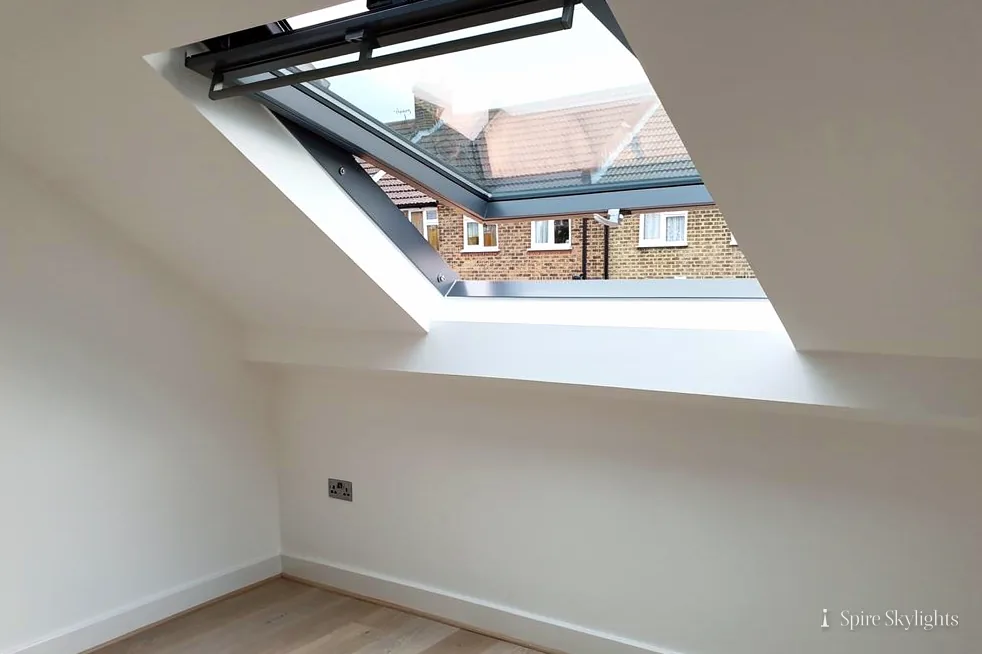
People say roof window, skylight and rooflight as if they were one product. In practice a roof window is a framed, opening unit built for a pitched roof, and you will meet it in a loft, a landing or an upstairs bathroom. A skylight is the older, looser word for any glazing in a roof, and a rooflight is the word we use for products on a flat roof and for lanterns. This page is about the pitched-roof unit.
Glass in the slope faces more of the sky than a wall window, which is why a roof window lights a room more strongly than a wall window of the same size. It also sees the brighter sky overhead, so daylight reaches further into the room on a dull day as well as a bright one.
Where the roof faces north, you get an even, cool light that suits a study or a workroom. Where it faces south, you get warmth and strong sun, which we manage with the glass and the blind. We note the aspect at the survey, because it shapes both the size we suggest and the specification we put in the quote.
In the room: brightening the space
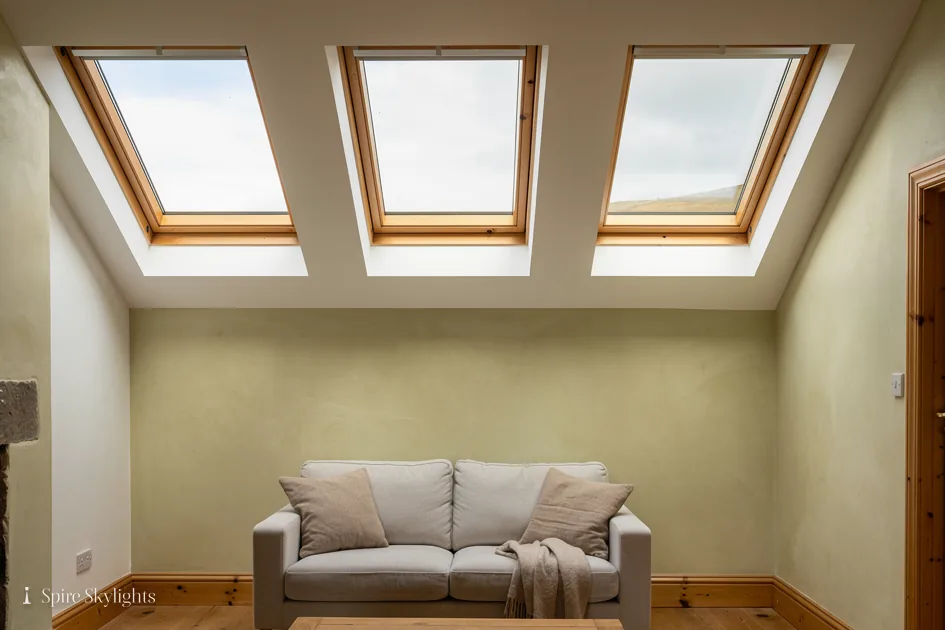
A roof window means the lamp is needed far less in the day. A dark loft room, a landing with no outside wall or a bathroom under the eaves can feel like a different house once it has daylight from above.
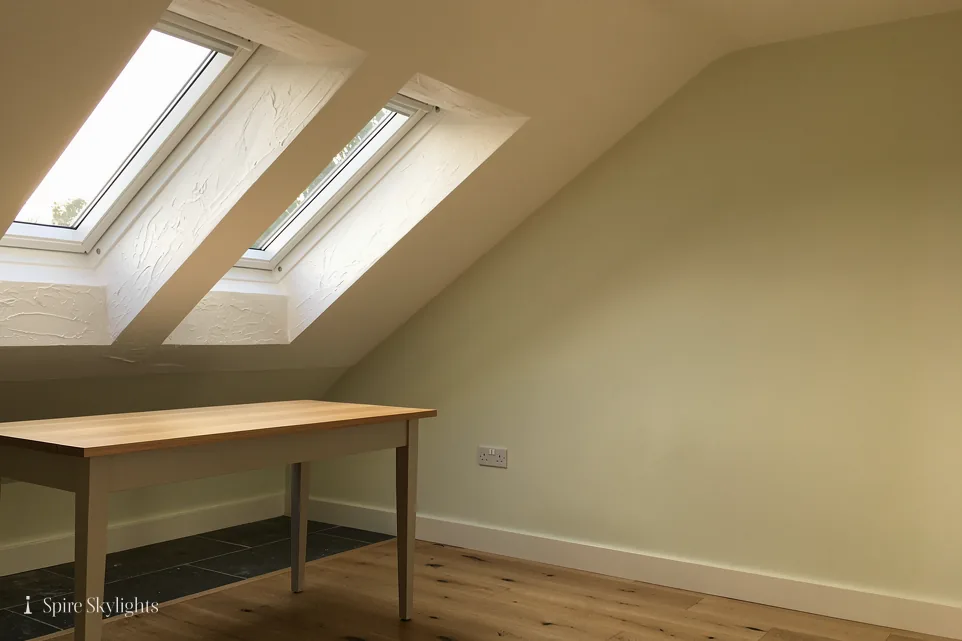
Position matters more than size. A window set too high in the slope lights the ceiling and leaves the floor in shade. We mark the opening from inside the room, standing where you will stand, and check where the light will fall on the bed, the desk or the basin before a single tile is lifted.
Not every dark space has the roof depth for a window. A hallway or a bathroom with a loft above it may suit a sun tunnel instead, a tube that carries daylight down from a small dome on the roof. We cover that product on its own page, and we will say at the survey which of the two is the better fit.
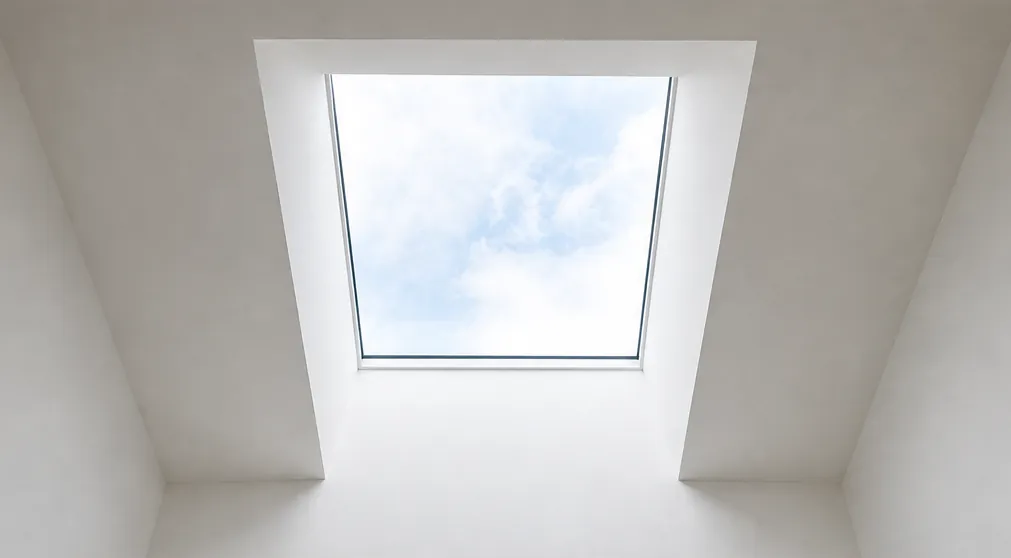
Finally, the walls around the window decide how much of the light reaches the room. We splay the reveal where the roof depth allows, so the light spreads outwards, and a pale, matt paint finish suits it. A boxed-in, square reveal swallows light; a splayed one passes it on. See our sun tunnels for the case where a window will not fit.
The short version
A roof window earns its place by what it does to the room, so we choose the position from inside the room, not from the roof.
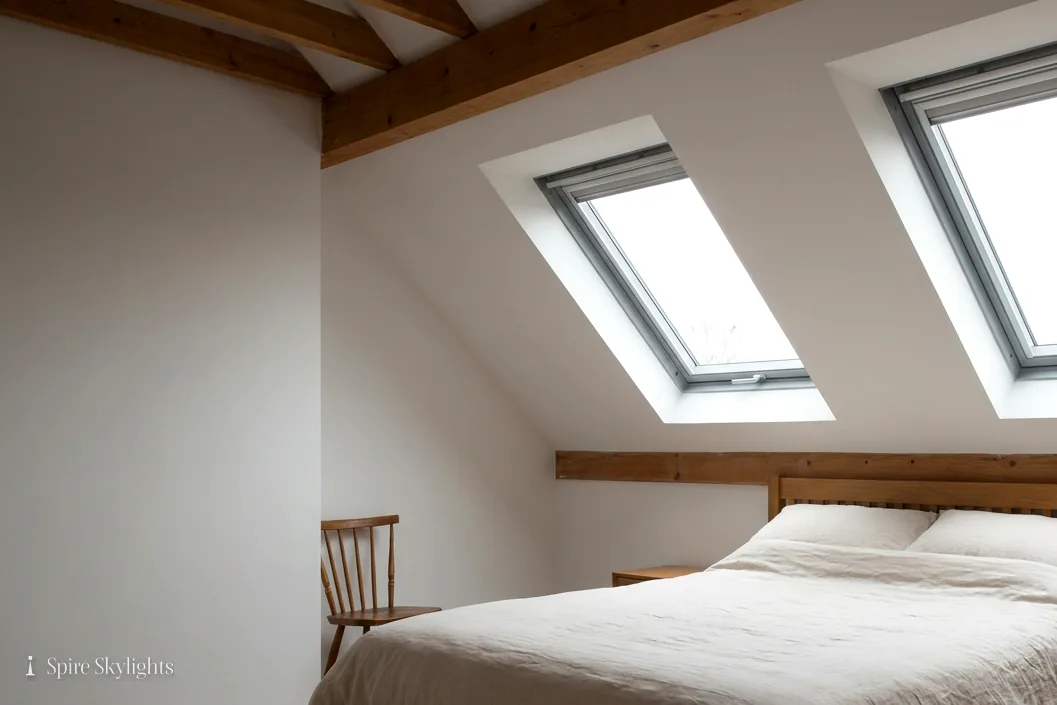
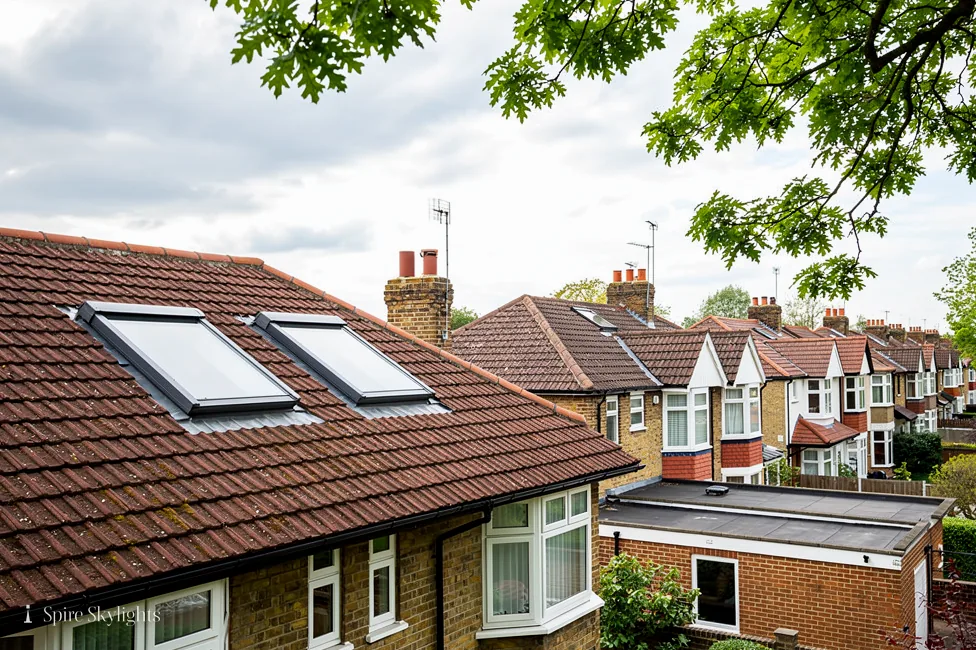
02 VELUX and other makes of roof window
The brand on the frame matters less than the fit around it, but the brand does decide what you can buy later.
On the roof: choosing the make
VELUX is the best-known name in roof windows, and a VELUX window is a familiar sight on Coventry roofs. The company makes roof windows in a wide range of sizes, in timber and in white polyurethane, with a flashing kit for every common roof covering. That breadth is the reason a VELUX roof window is easy to match, easy to get a replacement sash for and easy to find accessories for years after the day it goes in.
It is not the only good choice. Other makers sell well-built roof windows, and some suit a particular job better: a conservation rooflight with a slim steel-effect frame for a period house, or a very large unit for a long slope. We quote the make that fits the roof, the budget and the look you want, and we explain the reason.
The flashing kit matters as much as the window. A kit is a set of metal pieces that fit the window to a particular roof covering, whether plain tiles, concrete interlocking tiles, slate or profiled sheet. Pairing the wrong kit with the covering is a common cause of leaks, so the kit is on the quote line by line.
In the room: what to look for
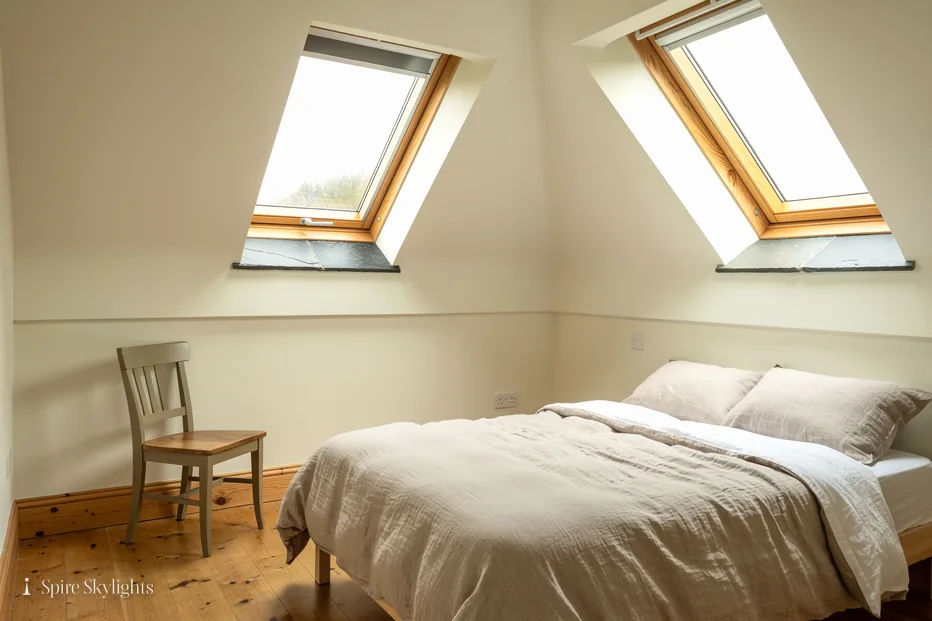
From inside, a good roof window is mostly quiet. The sash closes with a firm, even push, the seals sit evenly all the way round, and the handle sits where your hand expects it. Test those three things on any window before you pay for it.
Blinds and accessories also belong to the brand. Each make of window has its own range of blinds, and a blind made for one will not fit another. If you want a blackout blind for a bedroom, tell us at the survey and we will price it with the window. We also fit blinds to an existing VELUX window; see our answer on fitting blinds to a VELUX window for the details.
If you already have roof windows and want a matching pair, we measure the existing frames and match them. A set of mismatched sizes looks untidy from the garden and from the landing, and matching is a small job at the survey that saves a lot of regret afterwards.
For the full picture on one brand, from its sizes to its sash types, our page on VELUX windows in Coventry goes further.
| Type | Best for | Watch for |
|---|---|---|
| Centre-pivot | Loft rooms where you reach the handle at the top | The sash swings, so allow space inside |
| Top-hung | Higher positions and clear views | Needs room outside for the sash to rise |
| Fixed | Stairs and landings with other ventilation | Cannot be opened to cool the room |
03 Glass, glazing and energy efficiency
What the glass does for warmth and sound, and the figure the law sets for a new unit.
On the roof: glass and the rules
A roof window takes more weather than a wall window. It faces the sky, so it sees rain, sun, hail and the coldest night air. Modern units use a sealed double-glazed unit, with a toughened outer pane that stands up to hail and a laminated inner pane that holds together if broken. A coating on the glass lowers heat loss, and a gas fill between the panes helps further.
Replacing a whole roof window is building work, so the new unit has to meet Part L. For an existing home, Table 4.2 of Part L 2021 sets roof windows at 1.4 W/m²K or Window Energy Rating band B. A window in a pitched roof counts as a roof window, conservation rooflights included. We confirm the figure with the maker before we quote, and our answer on the U-value a roof window needs explains how to read the number.
Planning permission and Building Regulations
A roof window on a house can fall under Class C permitted development in England. The window may project no more than 150 mm from the roof plane, may sit no higher than the highest part of the roof, and a side-facing one must be obscure-glazed and non-opening below 1.7 m from the floor. A conservation area alone does not remove Class C, but an Article 4 direction or a planning condition can, and a listed building needs consent whatever the window. Flats and maisonettes have no householder permitted development rights. Our planning guide and our answer on Building Regulations for a rooflight cover the detail.
In the room: warmth, sound and condensation
Glass is the coldest surface in most rooms, and a window in the slope is no exception, so the specification is what separates a cosy loft from one where the air chills near the sash. Good double glazing with a warm edge spacer keeps the inner pane closer to room temperature, and that makes a bed or a desk near the window comfortable in winter.
Energy efficiency is more than the glass. A roof window leaks heat at the gap between the frame and the insulation around it, so we pack that gap with insulation and seal it with a vapour barrier collar. Done properly, this is what lets an energy-efficient window perform to its rating. Our page on energy efficient rooflights goes into the full glass options.
Condensation on the room side of the glass is a sign that moist warm air is meeting a cold surface, usually in a bathroom or a bedroom with the door closed. Better glass reduces it, and the right ventilation removes the cause, which is why the opening sash matters as much as the coating.
Sound is the other thing rain does to a roof window. A laminated inner pane deadens the drumming noise a heavy shower makes on glass, and we specify it for bedrooms by default. Ask us about the options if the window is above a bed.
- Part L limit for roof windows in existing homes, or Window Energy Rating band B
- 1.4 W/m²K
- Class C projection limit from the roof plane
- 150 mm
- Our workmanship guarantee on the fitting
- 10 years
The short version
A new roof window must meet Part L, and the fitting around the glass decides how well it performs.
04 The installation process, day by day
From the free survey to a painted reveal, with honest times for each step.
On the roof: how a window goes in
Installing a roof window starts with a survey, not a tape measure on the day. We look at the roof covering, the rafters, the insulation, the felt, the height of the opening inside and the access to the roof. We also check where the existing tiles lap, because the flashing has to sit over them correctly.
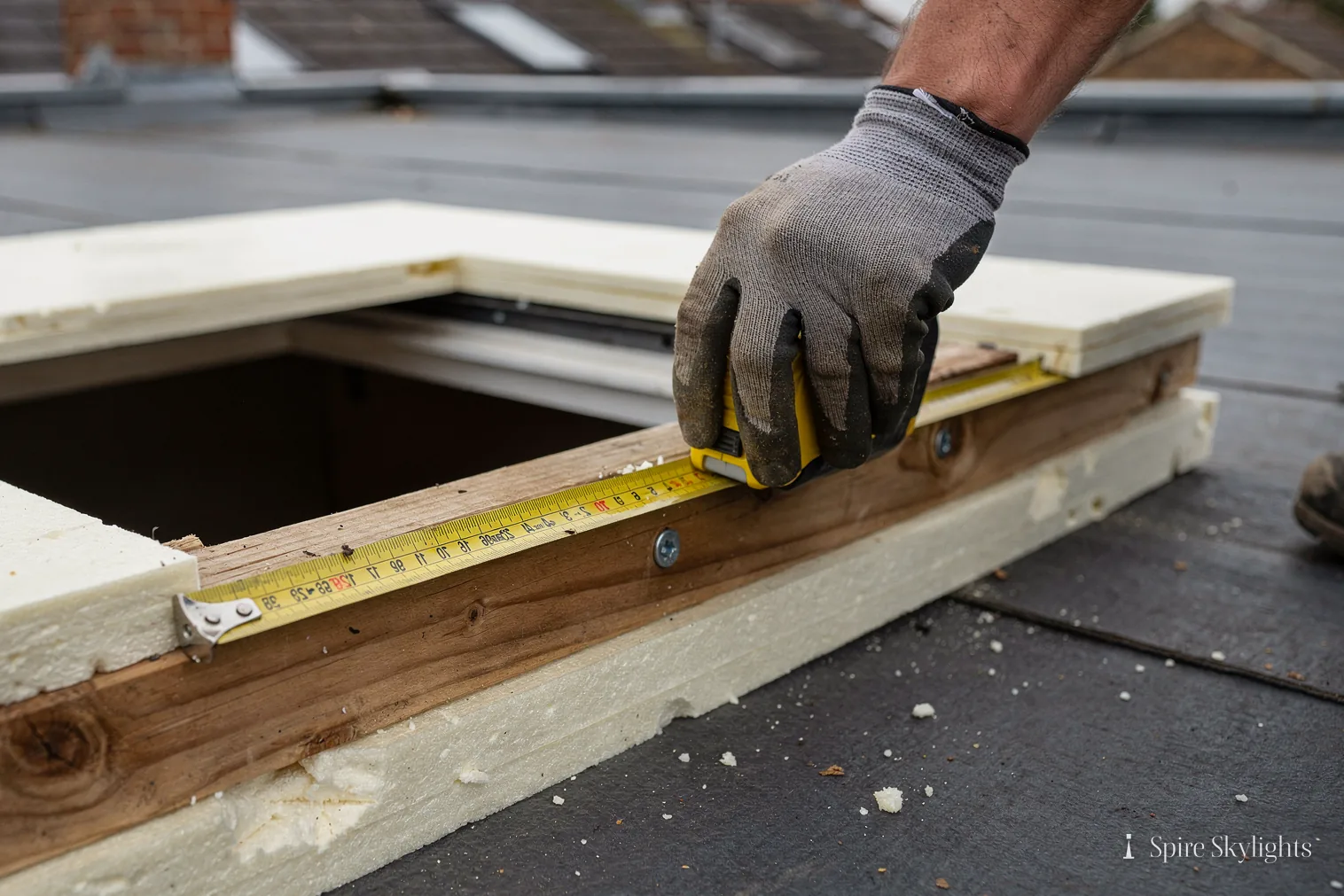
On the day, we take the tiles off round the opening, cut the rafters to size where the plan allows and fit a trimmer to carry the cut ends. If the roof needs a new rafter or a doubled one, we show you at the survey. The frame is fixed to the structure with brackets, never to the covering alone.
The flashing goes in before the window is glazed, working from the bottom up so each layer laps over the one below. That order is what keeps rain out for years, because water falling on the roof can only run over the laps, never under them. The tiles go back last, and the roof is weathertight by the end of the first day.
Where the roof is old or the felt has failed, we tell you before the cut, because a new window on a tired roof is a costly place to find a leak later. Lifting the tiles round the window gives us the best look at the roof you will ever have, and we note what we see.
In the room: the free survey and the finish
The free survey is where the job is won or lost. We stand in the room with you, mark the opening on the ceiling and check the roof depth to see how much splay is possible. We note the position of any wiring, pipework or boarding, and we ask where the furniture will go.
You then get a fixed written quote with the make, the size, the flashing kit, the finishes and the days involved. The price is fixed in writing before any work, and it does not move with the weather. If the plans change after the survey, the quote changes in writing too, before we start. You can ask for a survey through our contact page or the quote form.
Inside, the work is protected with dust sheets, and the ceiling is opened only once the roof above is ready to take the frame. After the window is fixed, we insulate the gap, board the reveal, plaster it and make good the ceiling and walls around it.
The reveal is the part you see every day, so it gets the time. We splay it where the roof allows, bead the corners and leave it ready for paint, or painted if you ask us to. Our page on finishing inside shows what we mean by made good.

Free survey of the roof and the room
Fixed written quote with every item listed
Tiles lifted, opening trimmed, frame fixed
Flashing dressed from the bottom up and the roof weathered
Reveal insulated, plastered and made good inside
The roof should be tight by the evening, and the room should be finished before we go.
05 Opening, ventilation and electric operation
A window that opens is a ventilation system for the room, and it can be a very good one.
On the roof: how the sash opens
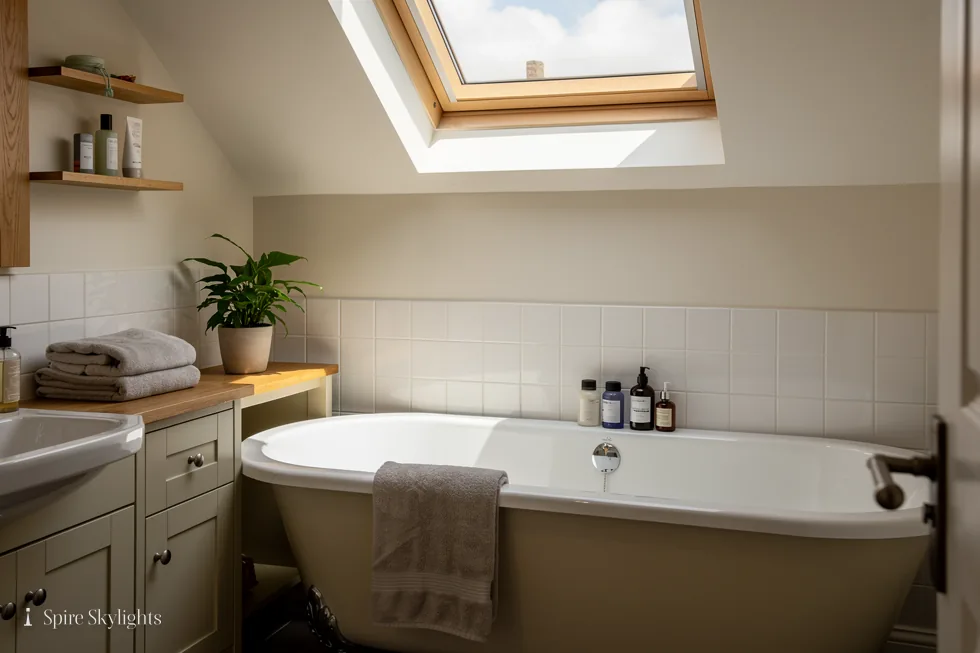
The way a roof window opens decides how the room will breathe. A centre-pivot sash turns on a central axis, so warm air leaves at the top and cool air comes in at the bottom, which is the natural flow of air in a loft. A top-hung sash lifts out from the bottom edge and acts like a small canopy, letting you keep it ajar in light rain.
For a long comparison, our guide on top-hung or centre-pivot roof windows sets them side by side. For the choice that matters most to you, the answer depends on how high the slope is, what is beneath it and who will use the handle.
Electric and solar operation take the handle out of the equation. A motor opens and closes the sash, and a rain sensor closes it by itself if a shower starts while you are out. That is the best choice for a window out of easy reach, over a stair or above a bath. Our page on electric and opening rooflights covers the controls and the wiring.
In the room: ventilation and reach
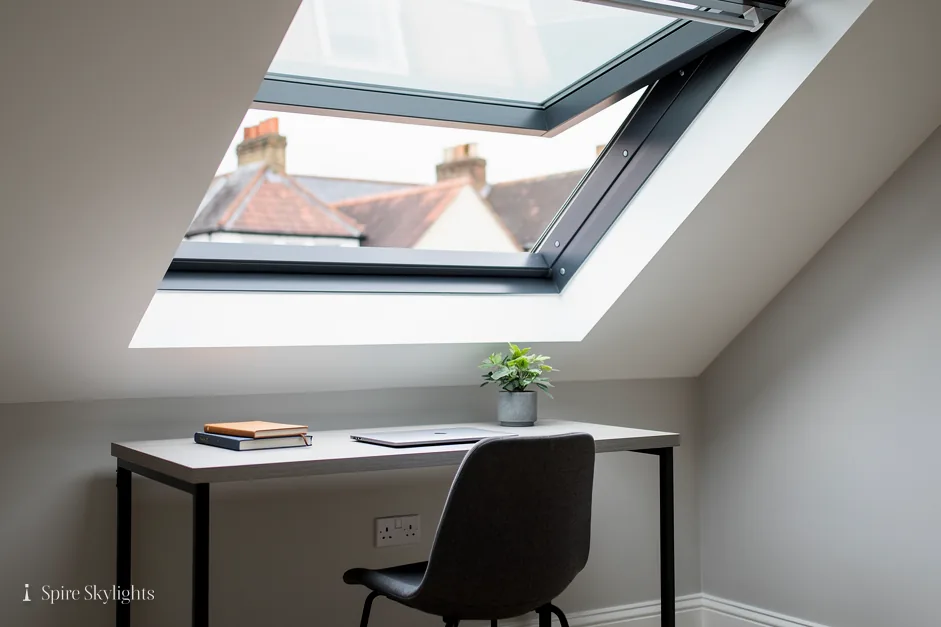
Ventilation is the second job of a roof window. Warm, moist air rises to the highest point in a house, and an opening window at the top lets it escape. In a loft bedroom, this can be the difference between a room that holds the heat on a summer night and one you can sleep in.
Where you cannot reach the sash comfortably, a rod or a remote control does the work. Remote and wall-switch controls are neat in a bathroom, where you want the window to open for a few minutes after a shower without climbing onto a chair.
Opening size also matters for safety. A roof window must not become a trap or a hazard, so we position the handle and the opening limit with the room in mind, and children's rooms get special attention. Ask us about child safety stops at the survey.
We are often asked whether a roof window can serve as a fire escape. Only in the right place: an escape window serves storeys within about 4.5 m of the ground, and a loft conversion on a two-storey house needs a protected stair, not an escape roof window. Our answer on whether a roof window can be a fire escape sets out the rule.
How far the light goes
A narrow pool of light
Straight reveal
Light across the room
Splayed reveal
06 Replacement and maintenance of roof windows
When an old window has had its day, and what looking after a good one involves.
On the roof: window replacement
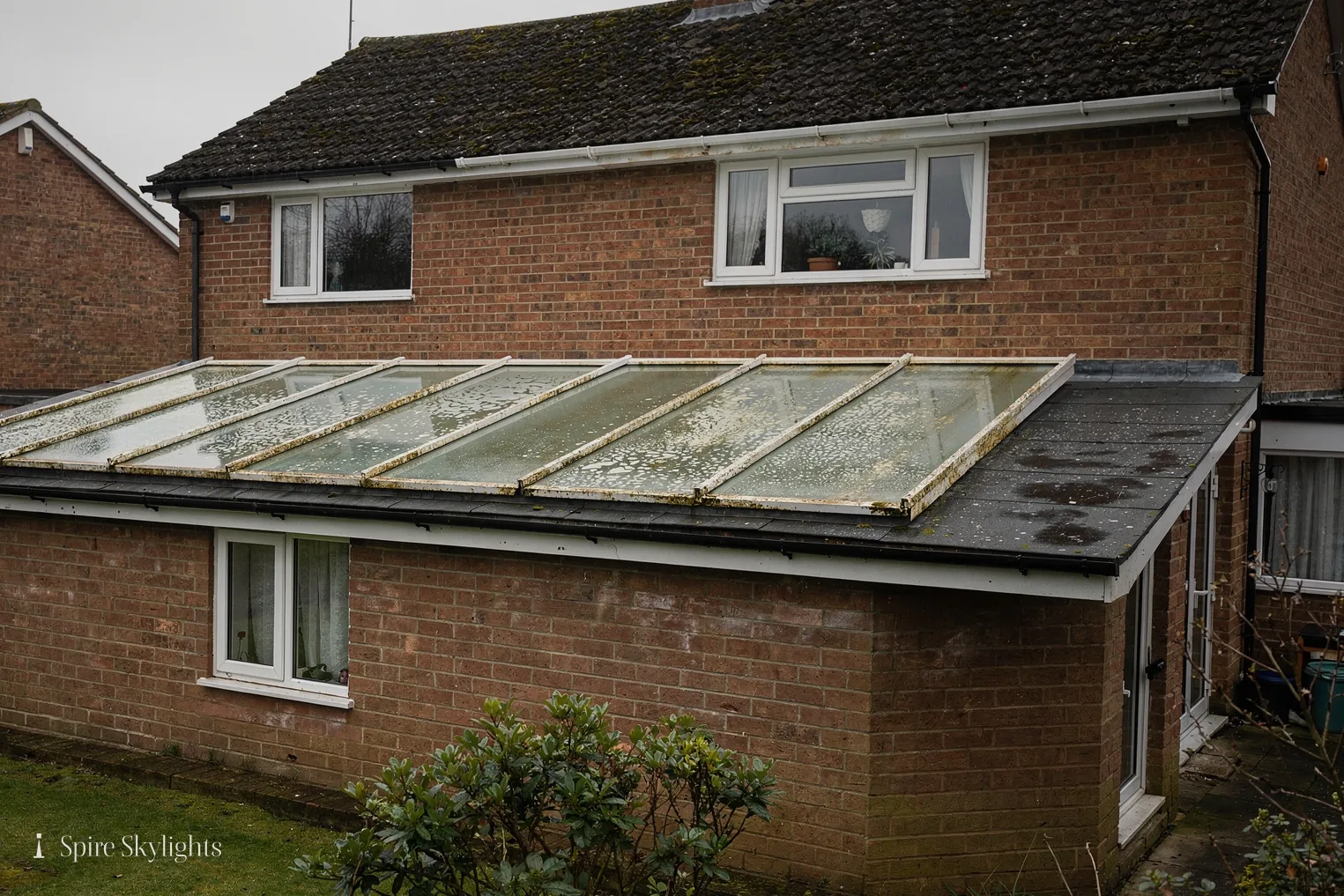
Roof windows last a long time, but not for ever. Seals harden, a coating on the glass fades, a flashing lifts at the corner and a handle wears. We check the frame, the sash, the glass and the flashing on any window you ask us to look at, and we tell you what is worth keeping.
A sash with a failed seal that has let the glass mist can often take a new sash or a new sealed unit in the existing frame. Changing only the glass in a sound frame is not a controlled fitting. Replacing the whole window, frame and all, is building work, so it must be notified and the new unit must meet Part L. We handle the Building Control notification where the work is notifiable.
Window replacement is also the chance to improve things: a better flashing, a better window in the same opening or glass that reaches today's thermal standards. For a misted or failed sealed unit, see our page on misted rooflight replacement.
In the room: looking after it
A roof window needs very little care. Wipe the inside glass with a mild cleaner, and clear the condensation channel at the base of the sash if it collects dust. Do the same for the seals, which stay supple if you wipe them gently once or twice a year.
Check the reveal now and then for staining. A brown mark on the plaster around the window is a clue that water or condensation is getting in, and it is far easier to deal with early. Tell us if you see one, and we will find the cause.
The handle and the hinges need to move freely. If the sash grows stiff, a little silicone spray on the hinges usually helps. If it is heavy to lift, the springs or the counterbalance may have worn, and that is a job for a fitter rather than a DIY fix on a ladder.
On a loft conversion, a roof window may be the main way to see out. Our guide on roof windows for loft conversions covers how many you need and where, and our answer on a roof window or a dormer for a loft helps you decide between them.
| Sign | What it suggests | What we do |
|---|---|---|
| Mist between the panes | The sealed unit has failed | New sealed unit or sash |
| Stained reveal | Water or condensation getting in | Find the cause, then make good |
| Sash stiff or sagging | Hinges or springs worn | Adjust or replace the parts |
| Frame rotted or flashing lifted | The whole window is at its end | Full window replacement |
The short version
A sound frame can often keep its place while the glass is renewed, and we say so when it can.
07 Cost and pricing of a roof window
What moves the price, and how our fixed written quote works.
On the roof: what drives the cost
The price of a roof window job depends on a handful of things, and we write each one into the quote. The first is the window: its size, its make, its glass and whether it opens by hand or by motor. The second is the roof covering, because slate, plain tile and profiled sheet each need a different flashing kit and a different method.
The third is structural. If the opening is a new one, the rafters must be cut and trimmed, and a doubled rafter or a new header adds timber and time. If we are swapping an existing window of the same size, the structure is already there, and the job is quicker.
Finally there is access. A single-storey roof reached by a short ladder is simpler than a three-storey house that needs scaffold. We measure all of this at the survey, so the figure we give you is based on your roof, not an average.
You will not find a headline price on this page, because a number without a survey is a guess. Instead you get the facts that decide the price, and a quote that holds. For wider reading, see our cost guide and our page on skylight and rooflight costs in Coventry.
In the room: the fixed written quote
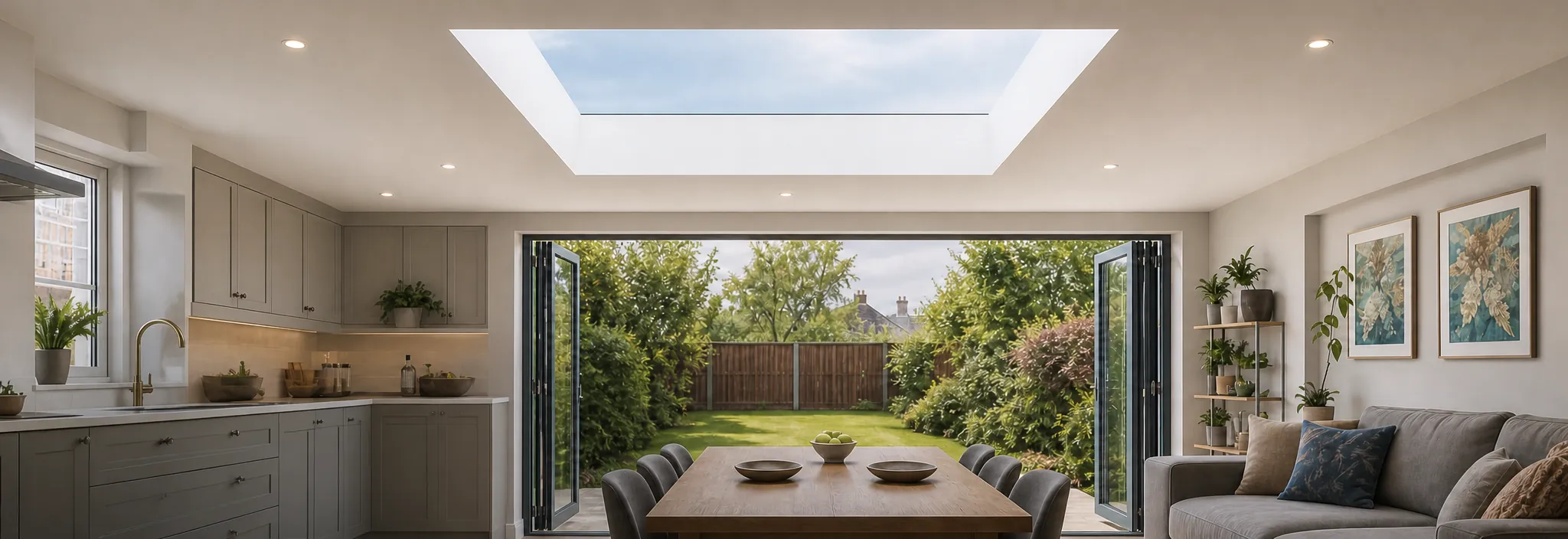
Our quote is fixed and in writing before any work starts. It lists the window, the flashing kit, the glass, the finishes inside, the Building Control notification where the work needs it, and the days we expect to be on site. It is the price you pay, unless you change the job.
Inside the room, the cost depends on the reveal. A shallow splay in a thin roof is quick; a deep, plastered, painted reveal in a thick roof takes a plasterer a full visit. We price the finish you want, and we show it so you can see what the extra effort buys.
If you are weighing a roof window against a dormer, remember to compare the whole job, not the window alone. A dormer adds structure, roofing, windows and finishing. A roof window adds the window and the finish. Our answer on roof window or dormer walks through it.
Ask for the quote in two versions if you like, one with a basic finish and one with full decoration, so you can choose with the figures in front of you. We are glad to do that at the survey, and there is no charge for the survey itself.
A fixed price is only worth having if it is in writing before the first tile is lifted.
- The survey, with no obligation
- Free
- The written quote, before any work starts
- Fixed
- Workmanship guarantee on our fitting
- 10 years
08 Areas covered across Coventry and 30 miles
From the city's suburbs to the market towns and villages around it.
On the roof: the housing we work on
We fit roof windows across Coventry and within about 30 road miles of the city. That takes in suburbs such as Tile Hill and Earlsdon, towns such as Kenilworth, Warwick, Rugby, Nuneaton and Bedworth, and the villages between them. The full list is on our areas page.
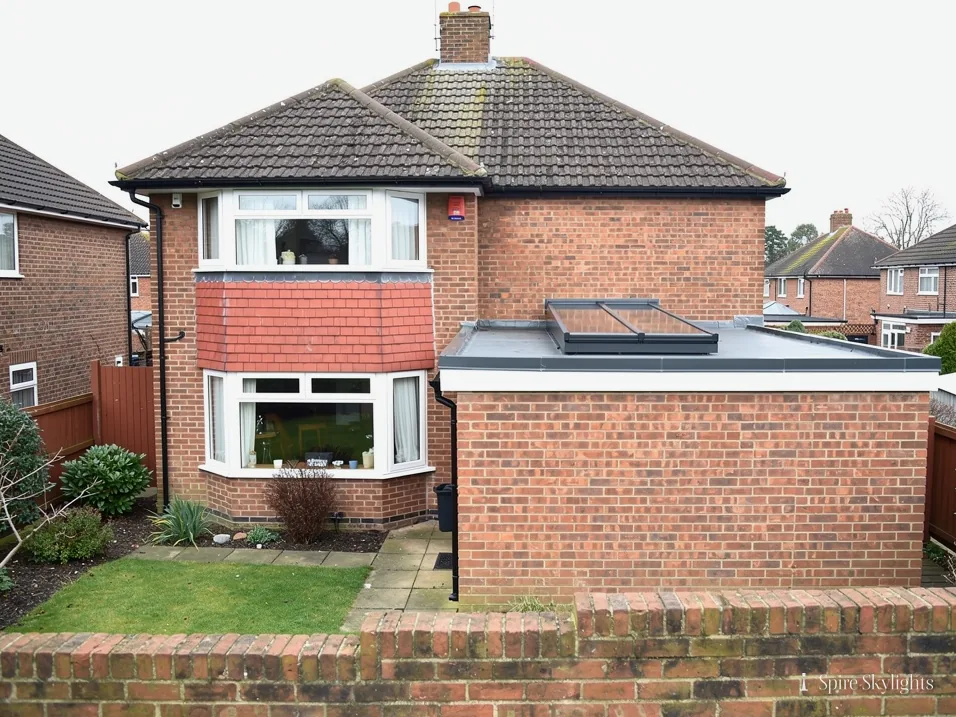
The housing varies a great deal, and so does the roof. Post-war semis in the suburbs often have concrete tiles on a simple pitched roof that suits a window well. Older terraces and Victorian villas may have slate, plain clay tiles and tighter rafter spacing, which calls for a different flashing and more care with the cuts.
In the towns, where a loft has been converted, and a roof window is the way to add light to a loft room that never had enough. In the villages, older stone-tiled roofs call for more care with the cuts and the flashing, and we say at the survey what the roof needs.
In the room: why choose us
Choose us because we treat the room as part of the job. A roof window that leaks at the corner is a roofing failure; a reveal left as bare plasterboard is a finishing one. We take responsibility for both, and the same team does both.
You also get a clear process. The survey is free. The quote is fixed and written. The work is fitted to current Building Regulations, and we deal with the Building Control notification where the work is notifiable. Our 10-year workmanship guarantee covers the fitting.
The manufacturer's warranty on the window itself sits alongside our guarantee, and we hand you the paperwork for both. That means you know who to call about the glass and who to call about the work, and the answer to the second question is always us.
When you contact us, you speak to someone knowledgeable about roofs and rooms, who can tell you whether a roof window is right before you spend anything. Use our contact page to arrange a survey, or the quote form if you would prefer to write.
Tell us about the room and the roof
We survey both, free of charge
You receive a fixed written quote
We fit the window and finish the reveal
You hold the guarantee and the manufacturer's warranty
Our 10-year workmanship guarantee: Ten years.
Workmanship guarantee on every installation
From the slope to a finished reveal
Day 1, morning
Tiles lifted, the opening trimmed and the new frame set
Day 1, afternoon
Flashing dressed, the window glazed and the roof made weathertight
Day 2
Reveal lined, plastered and left ready for paint, the room clean
Roof window FAQs
How much does it cost to install a roof window?
The price depends on the window, the roof covering, whether the opening is new and how you reach the roof, so a figure only makes sense after a survey. After the free survey you get a fixed written quote that lists the window, the flashing kit, the finish inside and the days on site. That quote is the price, and it does not change unless you change the job. Our cost guide explains each factor, so you know what you are paying for before you ask us round.
Do I need planning permission to install a roof window?
Usually not for a house in England. Class C permitted development allows a roof window if it projects no more than 150 mm from the roof plane and sits no higher than the highest part of the roof. Side-facing windows must be obscure-glazed and non-opening below 1.7 m from the floor. A conservation area alone does not remove these rights, but an Article 4 direction or a condition can. Flats, maisonettes and listed buildings are different, so we check your case at the survey.
What is a window installed in a roof called?
It is called a roof window when it is a framed, opening unit in a pitched roof, and a skylight is the older, general word for glazing in a roof. Rooflight is the term for flat-roof and lantern products. In daily talk the three get mixed, and VELUX has become a shorthand for the whole idea. What matters is the type of roof you have, because the roof decides which product, flashing and finish the window needs.
Do roofers install VELUX windows?
Many roofers do, but a window is only half the job. A good installation also needs the opening trimmed properly, the flashing kit matched to the roof covering and the reveal inside plastered and finished. We fit VELUX windows and other makes, and we do the roofing and the room finish together, so one team is responsible for the whole result and you do not need to bring in a plasterer afterwards.
How long does it take to fit a roof window?
A single window in an existing opening is usually fitted and weathertight on the first day, with the reveal plastered and made good on the second. A new opening, a pair of windows or a deep reveal may take longer, and your quote states the days before we start. We state only a time we can keep, and if the roof surprises us, we tell you the same day.
What warranty or guarantee do you offer?
We give a 10-year workmanship guarantee on the fitting, covering the flashing, the frame installation and the finish we make inside. The manufacturer also gives a warranty on the window itself, and we pass on the paperwork for both. That way you know exactly who stands behind the glass and who stands behind the work, and both are written down on the day we finish.
Read further on roof windows
Book your free survey
No obligation. We survey before we price.