The short answer
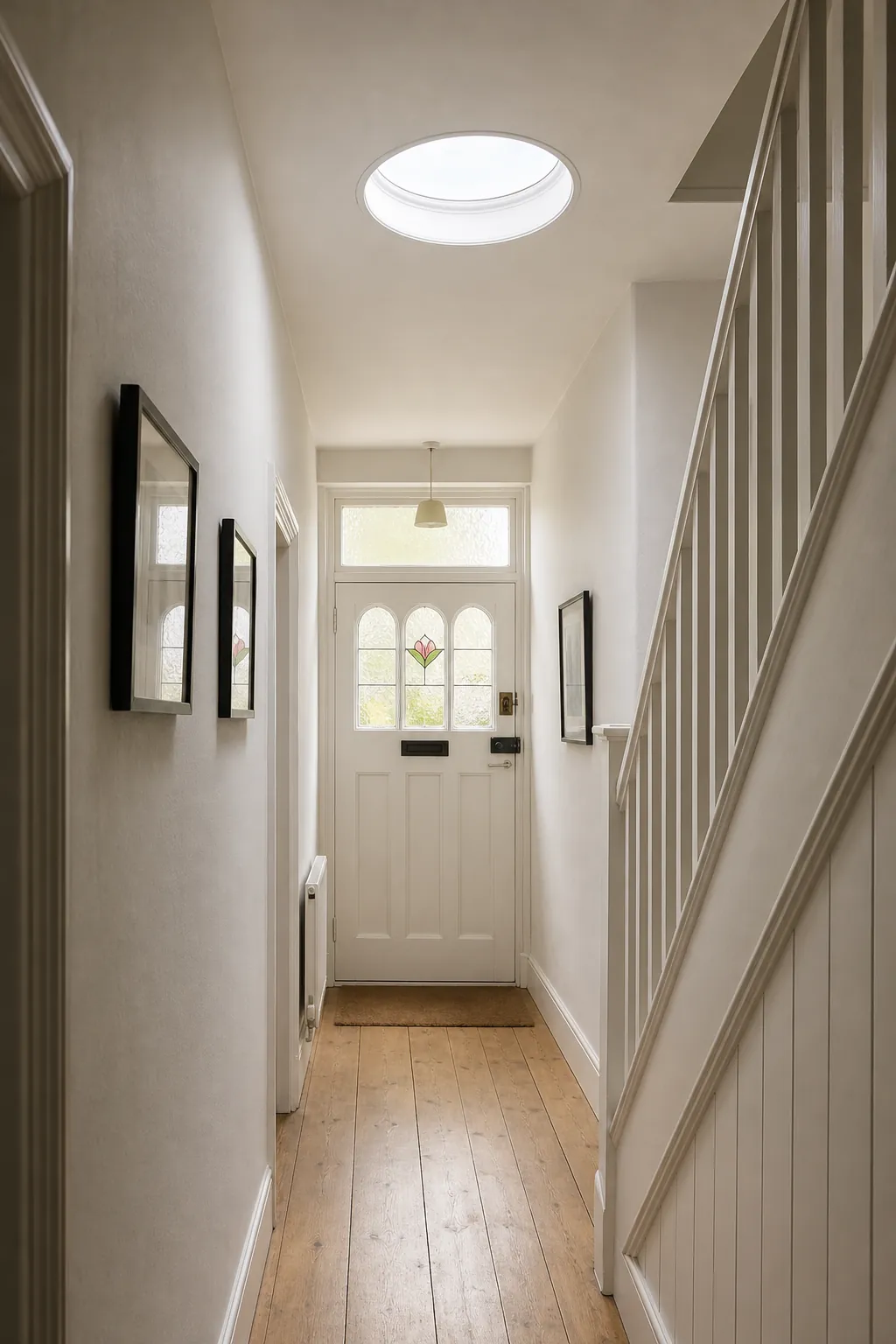
Yes. A sun tunnel runs on daylight, not direct sunshine, so it keeps giving a soft glow under cloud. It will be dimmer on a heavily overcast day than on a bright one, and winter days are shorter, but in the daytime a hallway or bathroom with a sun tunnel stays noticeably lighter than the same room without one.
Daylight, not just sunshine
A sun tunnel collects the light of the whole sky, not only the sun itself. Cloud scatters daylight rather than blocking it entirely, so the dome on the roof still gathers light on a grey day. The tube carries that light down, and the diffuser spreads it across the ceiling. This is why a sun tunnel on a cloudy day still does its job, though the effect is gentler than in clear weather.
What changes under cloud
The amount of light reaching the room rises and falls with the sky. On a bright day the room glows. Under thick cloud it is softer. Early on a dark morning or late on a winter afternoon there is simply less daylight to collect. That is true of every window and rooflight, and a sun tunnel is no different. What it does is capture light from above, where the sky is brightest, and place it in a room that would otherwise rely on the switch.
Light tube in winter
Winter light tube performance is a fair thing to ask about in the UK. Days are shorter and the sun sits low. A dome facing a clear part of the sky gathers what is available, and a short straight tube loses less of it than a long winding one. We will not quote a figure for winter output, because it depends on your roof, your loft and the day. What we can say is that people usually fit a sun tunnel for the dark rooms they use daily, and those rooms still benefit through the colder months. Our page on how much light a sun tunnel gives covers what shapes the result.
Helping it work in dull weather
- Place the dome where trees, chimneys and neighbouring roofs cast no shade.
- Choose the shortest, straightest route through the loft.
- Keep the diffuser and the surrounding ceiling light in colour.
We plan these at the survey, then fit and flash the dome, form the opening and make the ceiling good, so the job is finished inside and out. It carries our 10-year workmanship guarantee.
Cloud, rain and the dome
The dome sits on the roof in the weather, so it is built for it. It is flashed or set on a kerb and sealed to the covering, so rain runs away from it. The curved top helps shed water and allows the dome to catch light from different angles through the day, including the low light of morning and evening. A well-fitted dome needs little attention, and the seal around it is part of the work we guarantee for 10 years.
Comparing with a window on a dull day
A vertical window faces the horizon, and on a dull day the horizon is often darker than the sky overhead. A dome points at the brightest part of the sky, which is one reason a sun tunnel can feel bright in weather when a side window feels flat. That said, a window also gives a view and fresh air, which a fixed sun tunnel does not. Which one matters more depends on the room.
What we tell customers at the survey
We stand in the dark room and talk through how it is used. A hallway used for a minute at a time will gain differently from a bathroom where someone stays far longer. We describe the likely effect on a bright day and on a dull one, and we say what we expect in winter, so the result is no surprise.
Seasons through the year
Spring and autumn bring changeable skies, with bright spells between showers, and a sun tunnel follows each change. Summer gives the longest days and the most light. Winter gives the least, but the rooms a sun tunnel serves are the ones in daily use, so even a modest gain is felt every day. Because the light is diffused, it also avoids the harsh glare and heat that a bright summer sun can bring through an open window or large pane.
Thinking about the room first
Before asking how a sun tunnel copes with grey weather, ask how the room is used. A space that needs light on most days, at ordinary hours, is the one that benefits most. A room used only on bright summer evenings gains less. Talk us through your routine at the survey: when you use the hallway, when the bathroom is busiest and when the house feels gloomiest. That tells us far more about whether a sun tunnel will help than the weather forecast does.
Keeping the diffuser and dome clear
Light needs a clean path. The dome sheds most dirt in the rain, and a wipe of the diffuser inside keeps the ceiling fitting bright. Leaves and moss on the roof near the dome can reduce what it collects, so keeping the roof around it tidy helps. At handover we show you what to look for.
Is it right for you?
If your hallway, landing or bathroom is dark all year, a sun tunnel is likely to help even in dull weather. If you want a view, fresh air or a large bright room, a rooflight may suit better, and we compare them in sun tunnel or rooflight. The survey costs nothing, and the price follows in writing before any work begins. Ask for yours, or read about our sun tunnel installation.