The short answer
Often enough that a dark hallway, landing or bathroom needs no electric light through much of the day. The exact amount depends on the size of the tube, its length and bends, the direction and shade of the roof, and the weather, so we explain the likely effect for your room at the survey rather than quote a figure we cannot stand behind.
What decides sun tunnel light output
People often ask for a number, but sun tunnel light output is not one fixed figure. It is the result of several things working together, and each one is something we can look at on site. A sun tunnel gathers daylight in a dome on the roof, carries it down a reflective tube and spreads it through a diffuser on the ceiling. Anything that changes what the dome collects, or what the tube loses on the way, changes what the room receives.
- The size of the dome and tube. A wider one gathers and carries more light.
- The length of the run. A short, straight tube loses the least.
- The number of bends. A flexible tube that winds through a loft gives up some light at each turn.
- The direction and shade of the roof. An open south-facing slope collects most; a dome in the shadow of a gable or tree collects less.
- The weather and the season, which we cover in do sun tunnels work on cloudy days.
What it feels like in the room
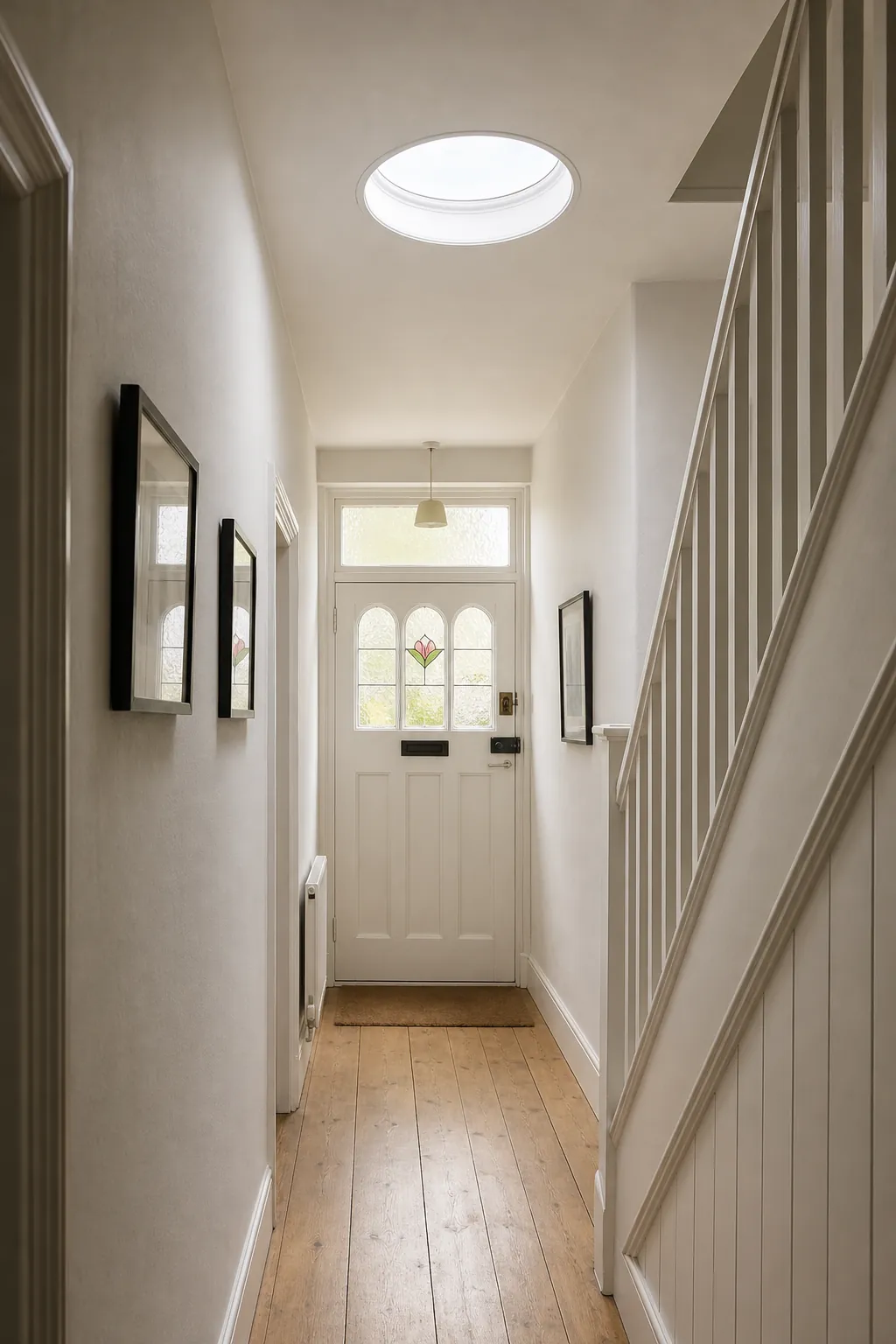
A sun tunnel gives a soft, even glow from the ceiling, a bit like a large, plain light fitting that happens to run on daylight. In a hallway or on a landing the effect is usually obvious the moment you walk in: shadows lift, paint colours look truer and the space feels bigger. In a bathroom it brightens tiles and mirrors. The light is gentler than direct sun through a window and does not bring glare or a view with it.
It is worth setting expectations honestly. A sun tunnel lights the area around its diffuser best. In a long hallway, one near the middle spreads light both ways, though a very long one may want two tubes. That is a question of room size, and it is one of the reasons we compare the options with you, as we do in sun tunnel or rooflight.
Why we do not quote a brightness figure
Light tube brightness depends on so many local factors that a single published figure can mislead. Makers publish tested values for their own products under set conditions, and those are useful for comparing models, but they do not tell you what your hallway will receive on a grey November morning. We would rather tell you what we see at your roof and loft, and show you the manufacturer's own data where it exists, than invent a number.
Getting the most from a sun tunnel
Several choices at the design stage make a real difference.
- Pick the straightest, shortest route that the loft allows.
- Place the dome where trees, chimneys and neighbouring roofs will not shade it.
- Choose a diffuser that suits the room, and have the ceiling around it made good so the finish looks intentional.
- Match the size of the tube to the size of the room.
We fit and flash the dome on the roof, form the opening through the ceiling and plaster around the diffuser, so the result is finished inside and out. The work carries our 10-year workmanship guarantee.
How it compares with other lighting
It helps to compare a sun tunnel with what is already in the room. A ceiling spotlight or a pendant gives a fixed amount of light whatever the hour. A sun tunnel gives a changing amount, brightest in the middle of the day and quieter at the edges of it. People often find the change itself pleasant, because a room that follows the day feels more alive than one lit the same at every hour. Against a small window, a sun tunnel usually wins in a room where the window is tiny or absent, because it spreads light from the ceiling instead of from one side.
Rooms where the effect is strongest
The effect is most noticeable in rooms that were genuinely dark before. A hallway with no window changes the most. A landing that borrowed light from a bedroom door changes a great deal. A bathroom lit only by a spotlight gains daylight on the surfaces that matter, such as the mirror and the tiles. In a room that already has a decent window, the gain is smaller, and a rooflight might be a better use of the roof.
What we do at the survey
We look at the room, the loft above it and the roof over that, then tell you in plain words how bright we expect the result to be, which route we would use and where we would put the diffuser. If the room asks for more light than one tube is likely to give, we say so and suggest a second tube or a different product.
Next step
The most useful way to find out how much light a sun tunnel would give in your house is to have someone look at the roof, the loft and the room. The survey is free, and the price is set in writing before we begin. Book your free survey, or read more about our sun tunnel installation service first.