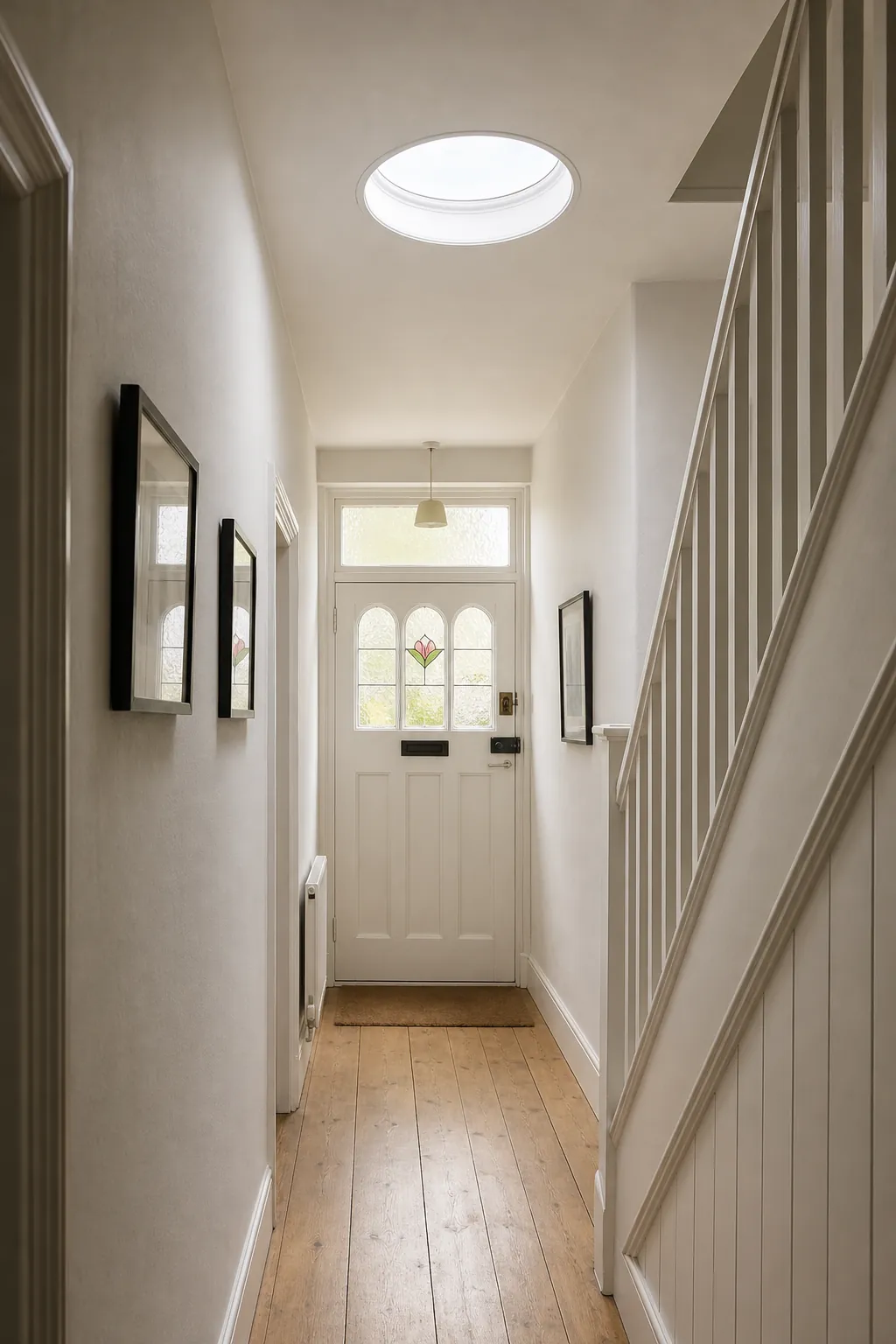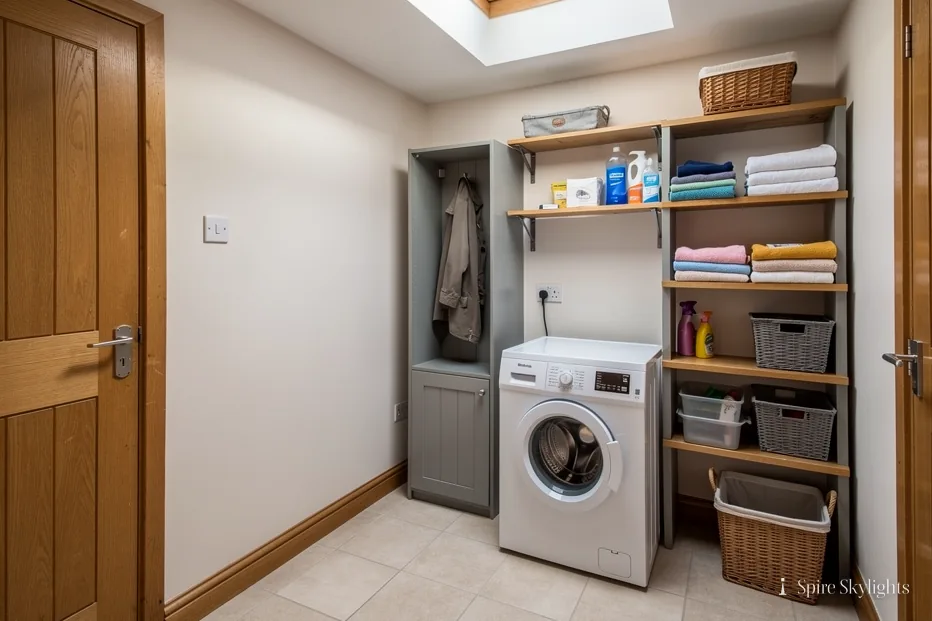

Anyone weighing an electric vs manual opening rooflight is really asking a practical question: who will open it, how often, and from where? A rooflight that is out of reach on a high stair landing is a different proposition from one over a kitchen island. This guide sets out the opening rooflight options for homes in Coventry and the surrounding area, explains what each choice involves on the roof and in the room, and shows where the cost and the complication really sit. It belongs to our work on electric opening rooflights, and we fit and finish both types.
What a manual opening rooflight involves
A manual opening rooflight is operated by hand. Depending on the model, you push the sash open, release a catch and lift, or turn a handle on the frame. On a roof window within arm's reach, this is the simplest option. Nothing runs to the mains, nothing needs programming and the unit has few parts that can fail.
Where the window is higher than you can comfortably reach, a manual opening is usually paired with a pole. A telescopic pole hooks into a fitting on the sash and lets you open, close and tilt it from the floor. Poles work well for a landing or a stairwell, but they are awkward in a busy room and easy to lose.
Manual rooflights also suit places where cabling would be difficult. A flat roof over a finished room, or a detached outbuilding, may not have a convenient power point nearby. Running a new cable through finished ceilings is possible, but it adds work that a manual unit avoids.
What an electric opening rooflight involves
An electric opening rooflight uses a small motor to open and close the sash. You operate it with a wall switch, a handheld remote or a wireless control, and some versions respond to sensors. The attraction is obvious. You can open a window that you could never reach, and you can do it from the sofa.
Electric units come in two broad families.
- Mains-powered units, wired to a supply in the house and controlled by a wall switch or remote.
- Solar-powered units, where a small panel on the roof charges a battery and no mains cable is needed.
Both sit in the same openings as their manual cousins, and both can be finished inside in the same way. The difference is the control and the supply. Our page on whether electric rooflights need an electrician covers the wiring side in detail.
A rooflight you can open is a rooflight you will use. Make opening it as easy as the light switch beside it.
Side by side
The table below compares the two types on the points that decide most choices.
| Point | Manual | Electric |
|---|---|---|
| Reach | Needs a pole if high | Opened from anywhere in the room |
| Power | None needed | Mains cable or a solar panel |
| Moving parts | Few | Motor, control and sensors |
| Best for | Easy-reach windows and simple rooms | High windows, kitchens, landings and lofts |
Where electric earns its place
Electric opening is worth the extra when the window is hard to reach or when you want to ventilate on a schedule. A roof lantern over an open-plan kitchen, a long glazed strip above a stair and a loft window over a bed are all strong candidates.
Ventilation is the main reason. Warm air rises, so an opening unit at the top of a room lets heat and moisture escape. In a kitchen or bathroom, a rooflight that can be opened with a button is used far more than one that needs a pole and a stretch. It becomes part of the daily routine instead of an occasional effort.
Electric operation also helps people with limited reach or strength. A rooflight that opens at the touch of a button is accessible where a pole is not, and a motor does the work of pushing the sash against its own weight.
Where manual is the better choice
Manual is the better choice when the window is within reach, when the room is simple and when you want a unit with fewer parts to look after. A bedroom window you open every night is a good case. So is a loft room with a low eaves window.
Manual also suits a house where the electrics are old, or where the route for a cable is awkward. In those cases, choosing manual keeps the job straightforward and holds back the cost of rewiring for a feature you may rarely use.
Room by room
The room often settles the question before the technical points do.
- Kitchen. Steam and cooking smells rise straight to the ceiling, so an opening unit above the hob area or island earns its keep. Electric suits it, because hands are often full or wet.
- Bathroom. A rooflight over a shower or bath lets moisture escape, and a rain sensor or timer protects the room when nobody is in it.
- Stair and landing. These windows are usually out of reach, so electric or a pole is the only practical choice.
- Loft bedroom. The window is often within reach, and a manual unit with a blind is simple and quiet.
- Home office or playroom. Hot afternoons make a controllable opening valuable, and electric allows ventilation without leaving the desk.
Opening flat rooflights and lanterns
The comparison above applies to roof windows in a slope, but flat roofs and lanterns have their own opening versions. A flat rooflight can be hinged so that one edge lifts, and a lantern can include a vent in one of its sides. These units are normally electric because they sit well above the floor, often in the centre of a room, and the extra height makes a manual arm impractical. A hinged flat rooflight opens at an angle that lets warm air out while a lip keeps the rain off, though it is not designed to be left open during heavy rain.
Because a flat rooflight or lantern is held to its own energy limit under Part L, the choice of opening version also affects the glazing specification. We confirm the figure for the exact unit when we quote.
Safety and the question of children
An electric rooflight moves with force, and it should not close on a hand or a loose cord. Good units have a sensor or a load-limiting feature that stops the motor if the sash meets resistance. We check the safety function of the model we propose and explain it at the survey. In a child's room, we suggest placing the control out of small hands, either high on the wall or in a handheld remote that is kept out of reach.
Manual windows carry their own safety point. A window that opens wide above a bed or a stair needs a restrictor or a safe working height, so that nobody leans out of it. We talk about this where it arises.
Running costs and looking after the unit
An electric opener draws most power while it moves, with a small standby draw. The real difference over the years is upkeep. A manual unit asks for little more than a clean and an occasional check on the hinges and seals. An electric unit asks for the same, plus a test of the controls and sensors every so often. Press the remote once a month, and clean the rain sensor if it is dusty, so the function does not fail when you rely on it.
If the unit loses power, a mains-powered opener may stop where it is. What happens in a power cut depends on the model, and our page on electric rooflights in a power cut explains the usual arrangements.
Planning for later
If you are building or renovating now, the cheapest moment to prepare for electric opening is before the ceiling is finished. A spare cable run, or a point left at the right height on the wall, costs very little when the room is open and a good deal more once it is plastered. Even if you fit manual windows today, we are happy to leave the route ready, so a motor can be added later with the minimum of mess.
Sensors and automatic control
Some electric units can close themselves when it rains or open when the room gets hot. This is the world of sensors and controllers, which we cover on our page about rain sensors and controls for rooflights. If you want the rooflight to look after itself while you are out, an electric unit with a rain sensor is the option to look at.
The finish in the room, whichever type you choose
The choice of opening does not change how the rooflight looks inside, and that is where we put the care. Whatever type we fit, we flash and seal it on the roof, splay the reveal where the roof depth allows, then plaster it and make good the surrounding ceiling. An electric unit has one extra detail. The cable and the control point are planned before the plaster goes on, so nothing is chased out of a finished wall.
If the rooflight is a replacement, the old one comes out as a whole unit, which is notifiable building work, and the new one is held to Part L. Roof windows and flat-roof rooflights have different energy limits for existing dwellings, and the Part L guide lists them. Where the job is notifiable, the Building Control notification comes from us.
Does opening change the planning position?
For a house, rooflights are normally permitted development under Class C provided they stay low on the roof, as our planning guide explains. The opening type matters in one case. A rooflight on a side-facing slope has a privacy condition that limits opening and clear glass low down, so an opening unit there needs to be set high or fixed shut, and we raise this at the survey so the layout is settled before the unit is ordered. Householder permitted development does not extend to flats and maisonettes. Our planning guide covers the rest, and we check your address before we quote.
How to decide
Work through these questions in order and the answer usually appears.
- Can you reach the window without strain or steps? If yes, manual is likely to be enough.
- Do you want to open it daily, or from across the room? If yes, lean electric.
- Is there a sensible route for a cable, or is solar an option? If neither, manual is the simple answer.
- Would you like it to close itself when it rains? If so, electric with a sensor.
We talk through these questions at the free survey, then record the choice on a fixed written quote with the control and the finish spelled out. The work is covered by our 10-year workmanship guarantee.