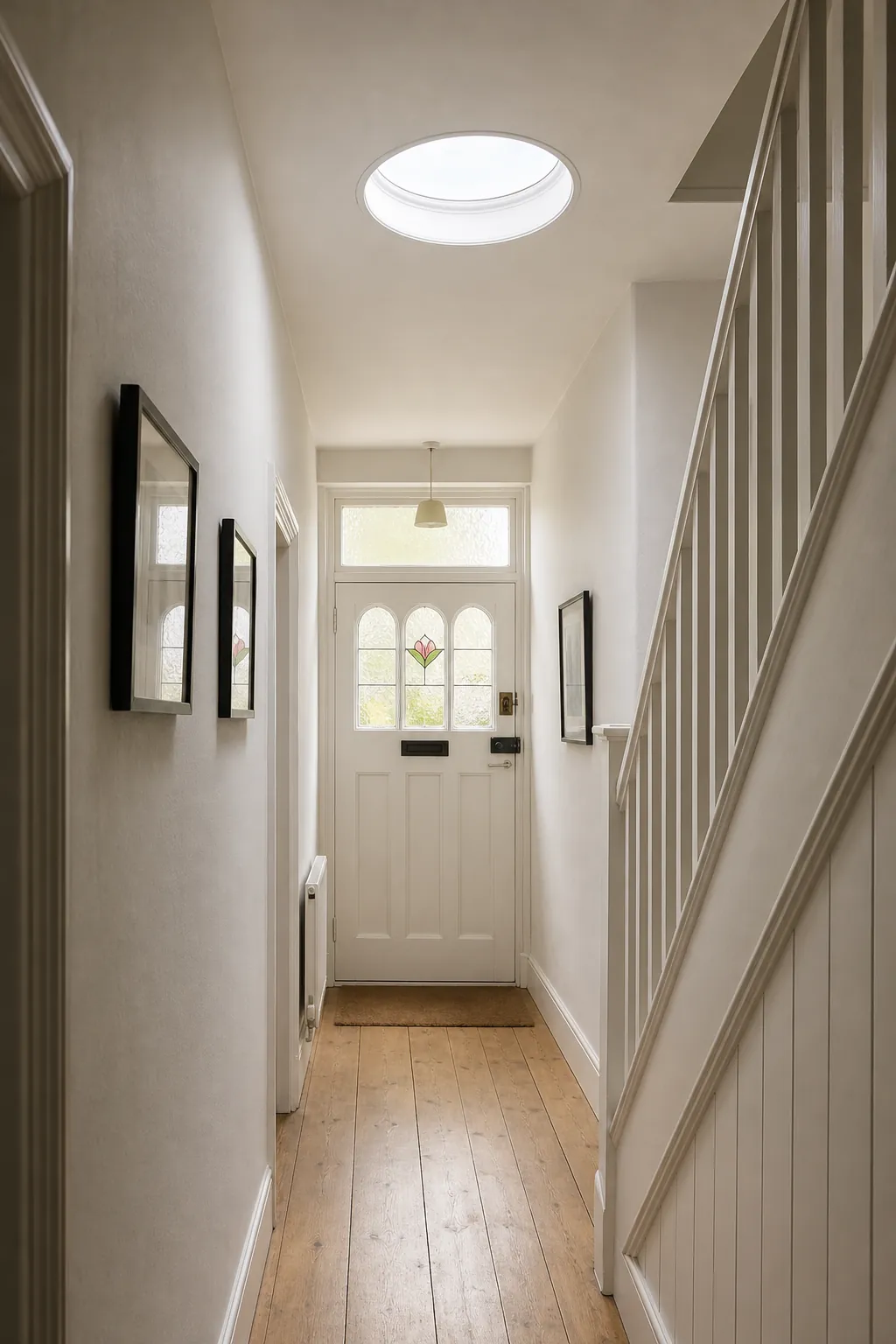
The short answer
In a power cut, an electric rooflight generally stays in the position it was in, and what you can do next depends on the make. Some units carry a manual release or a crank, some have a backup battery that can close the sash, and solar-powered units run from their own battery. We confirm the arrangement for your model at the survey and explain it at handover.
The starting point: it stays where it is
An electric rooflight power cut is mostly a non-event, because the motor holds the sash where it was when the supply stopped. If the window was closed, it stays closed and the room is as weathertight as before. If it was open, it stays open until power returns or you close it by another route. The question worth asking is what that other route is, and the answer differs between makes.
This is why we talk about power failure before the unit is ordered. An open rooflight over a dry room is no great issue. An open rooflight over a bed on a wet night is a different matter, and the design of the control should reflect it.
The ways a unit can cope
Manufacturers deal with an electric skylight power failure in several ways, and the arrangements fall into four groups.
- A manual release. A fitting on the sash or the frame lets you disengage the motor and move the sash by hand or with a pole.
- A crank or emergency handle. A removable handle turns the drive mechanism by hand, slowly closing or opening the sash.
- A backup battery. A small battery in the control unit keeps the system alive for a short time, enough to close the sash when the mains drops.
- A solar and battery system. The unit runs from its own battery, charged by a roof panel, so it is independent of the house supply.
Not every model offers every option, and the one we propose depends on the unit, the size and the room. We write the arrangement for your rooflight on the quote.
What a rain sensor does when the power is off
A rain sensor needs power to send its signal, so with the mains down it cannot close the window. A unit with a backup battery may still close, because the battery supplies the control for long enough. A mains-only unit with no backup cannot. If you are away, this matters, so we suggest you think about it when you decide on the specification. Our guide on rain sensors and controls for rooflights covers the sensor side in more depth.
What to do during a power cut
If the rooflight is open and rain is coming in, there are simple steps to take.
- Check whether the unit has a manual release or a crank, and use it to close the sash.
- If you have a pole for the window, hook it in and close the sash by hand.
- Place a towel or a tray under the opening if you cannot close it straight away.
- When power returns, test the controls before relying on them again.
Keep the manufacturer's leaflet with the house papers, together with any removable crank handle, so you can find both quickly. We show you the release at handover, and we are happy to demonstrate it again.
When the power comes back
When the supply returns, a mains-powered unit normally wakes up in the state it was left in and responds to the control as before. A momentary surge or a brownout can occasionally confuse a control unit, so it is sensible to test the opening and closing once after any outage. If the remote seems unresponsive, pair it again as the leaflet describes, or switch the unit off and on at the isolator.
If the rooflight was open and the weather turned wet while the supply was off, check the sill, the lining and the floor beneath for damp. A little moisture wiped away promptly does no harm. Water that has soaked into plaster or timber is worth showing us, so we can look at it at your next visit.
Rooflights in rooms where it matters most
Some rooms are less forgiving than others. In a bedroom or a child's room, an open window in a storm is a comfort issue. In a kitchen with a lantern, it is a question of water on appliances. In a home office, it is a question of equipment. For these rooms we lean toward units with a manual release within easy reach, and we suggest placing a pole or a crank where the household can find it in the dark.
In a room that is rarely used, such as a spare room or a stair void, the stakes are lower. A simple mains unit with a clear manual release is usually enough there.
Planning for outages when you choose the unit
If outages worry you, a few choices reduce the risk.
- Choose a unit with a manual release or a backup battery.
- Place the control and the release where you can reach them in the dark.
- Think about solar power for a window that serves a bedroom or a landing.
- Ask for a rain sensor with a backup battery if you are often away.
These are small details at the quote stage and large ones on the night of a storm. Our page on manual or electric opening rooflights helps you weigh up whether electric is right for the room at all.
How we finish the job
Whichever unit you choose, it is set in place with its flashing and seals finished on the roof, and the reveal inside is splayed as far as the roof depth allows, with the plaster brought up to a clean finish. The electrical connection is made by a qualified electrician, and replacing the entire unit is building work that must be notified and must satisfy Part L, and we send the notification to Building Control. You get a free survey, a fixed written quote before any work begins and a 10-year workmanship guarantee on the fitting. For the service as a whole, see electric opening rooflights.