

Skylights & rooflights in Radford Semele
Period roofs near Leamington, lit from above.
Radford Semele is an old Warwickshire village on the A425 with a sixteenth-century pub, a Victorian chapel and a thatched past, so its roofs reward a rooflight chosen to sit quietly in the pitch.
- Warwick District Council
- Period roofs checked first
- Listed buildings considered
A pub with a priest hole and a thatch that burned
Radford Semele is a village and civil parish about thirteen road miles south of central Coventry, close to the Regency spa town of Leamington Spa. It lies on the A425, with Leamington two miles to the west and Southam five and a half miles to the south-east. The mix of buildings here is what you would expect of a village that has been lived in for centuries and altered by each generation.
The village pub dates from the sixteenth century and has a priest hole, which gives some idea of the age of the oldest timbers. Its thatched roof burned in 2006, a reminder that older roof coverings need careful handling. The parish church of St Nicholas is Grade II listed, and a second church, the Baptist church, was built in 1874.
For a homeowner, those facts translate into a village where some roofs are very old, some are Victorian and some are much newer, and where a few buildings have listed status. Older roofs are usually clay tile, slate or thatch, framed in timbers of uneven size. Victorian terraces and cottages bring slate and brick with neat, regular pitches.
The Weedon to Leamington Spa line once ran through the village before it closed to passengers in the late 1960s, and the newer houses of the later twentieth century sit among the older ones, with their own concrete-tiled roofs on trusses.
Because the age range is wide, the rooflight is chosen only after we have been up into the loft. The survey tells us the timber, the covering and the room below, and the quote follows from that.
The village sits close to Leamington, Warwick and Southam, so a loft or back bedroom is easily turned into a study, and a dark room is felt every day. A rooflight in the right place can turn a cramped upstairs room into one that is pleasant to work in.
Outbuildings count too. Old barns, stables and garages in villages like this one are frequently converted to workshops, offices or guest rooms, and their roofs, whether pitched tile or flat membrane, can take a rooflight with a little planning. We look at those on the same survey as the house.
The A425 brings plenty of passing traffic, but a few streets back from the road the village is quiet, and the roofs there are the ones you see from gardens and lanes. That is why the appearance of a rooflight from outside matters here as much as the light it gives within.
Old timbers and newer tiles: matching glass to the roof
Radford Semele asks for care with older buildings and a sensible choice for newer ones. Here is where each product tends to fit. If you are unsure which category your roof falls into, a photograph from the garden and one from inside the loft will settle it.
- Conservation rooflightsThe natural choice for clay tile, slate and listed roofs, with a slim frame lying flush with the covering.
- Roof windowsFor Victorian and later lofts, sized to the rafters and finished with a plastered light well.
- VELUX windowsA familiar option on a newer tiled roof, matched to the pitch and the surrounding houses.
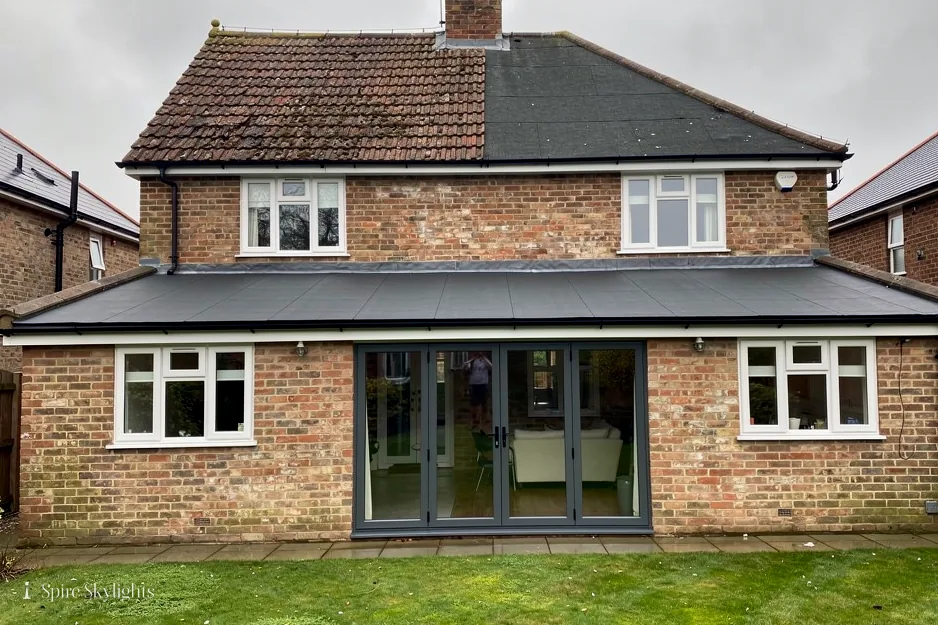
- Flat roof rooflightsFor a rear extension or porch roof where a flat glass unit can replace an old covering.
Also fitted here
Near Radford Semele
- Leamington Spa6 min
- Harbury7 min
- Whitnash8 min
- Cubbington8 min
Drive times from Radford Semele centre.
A listed church, and three questions to ask first
Warwick District Council is the planning authority for Radford Semele. With older buildings in the village, three questions matter: is the house listed, does the street fall in a conservation area, and has the council made an Article 4 direction? Conservation area status is something we look up before pricing, and the council answers the rest for your address.
A listed building such as a period farmhouse or chapel conversion needs listed building consent, and a flush conservation rooflight is the type most likely to win support. Where Building Regulations apply, we manage the Building Control notification. Our rooflight planning guide gives the rules in full.
01 Flush profiles for period roofs
Clay tile, slate and old timbers, and a rooflight that lies in the pitch.
On the roof
A period roof is read before it is touched. We look at the covering, the battens, the rafters and the ridge, because they tell us how much movement is in the structure and how the roof has been altered. A flush conservation rooflight is the usual choice: it has a slim frame and sits close to the plane of the tiles or slate, so from the street it reads as a thin line rather than a bulky window.
The cut follows the rafters. If one has to be trimmed, a new timber is fitted either side of the opening and fixed to its neighbours, sized for the load. We write that detail into the quote, because on an old roof it is the part you will want explained.
The surrounding covering is lifted and relaid course by course, with sound old tiles reused where they can be and matching tiles used where they cannot. Lead or lead-effect flashings are dressed to the profile.
Thatch is a separate case, and where a roof covering is outside what a conservation rooflight can sit in, we say so honestly at survey and suggest alternatives such as a dormer or a rooflight in a rear extension.
Valleys, hips and ridges on period roofs are watched closely, since a rooflight too near one has little room for flashing. We usually move the opening a short way down the slope, which also improves the view from inside.
The work is carried out in short stages, and the roof is closed to the weather at the end of each day, which matters on an older roof that has no modern underlay.

In the room
Inside an older house, a rooflight opening has to meet an old ceiling. That may be lath and plaster, a sloping plasterboard soffit or exposed timber, and each calls for a different finish. We cut back to sound material, frame the light well and line it with insulated board.
Where the roof is deep enough, the reveal is splayed so light spreads across the ceiling and down the walls, which matters in rooms with small old windows and low beams. The plastering is skimmed and sanded flat, and the edge is neat enough to sit beside original features.
Exposed beams are common in the oldest houses, and we plan the position of the opening to keep them undisturbed. If a beam is in the way, we move the window and talk it through with you, rather than altering the frame.
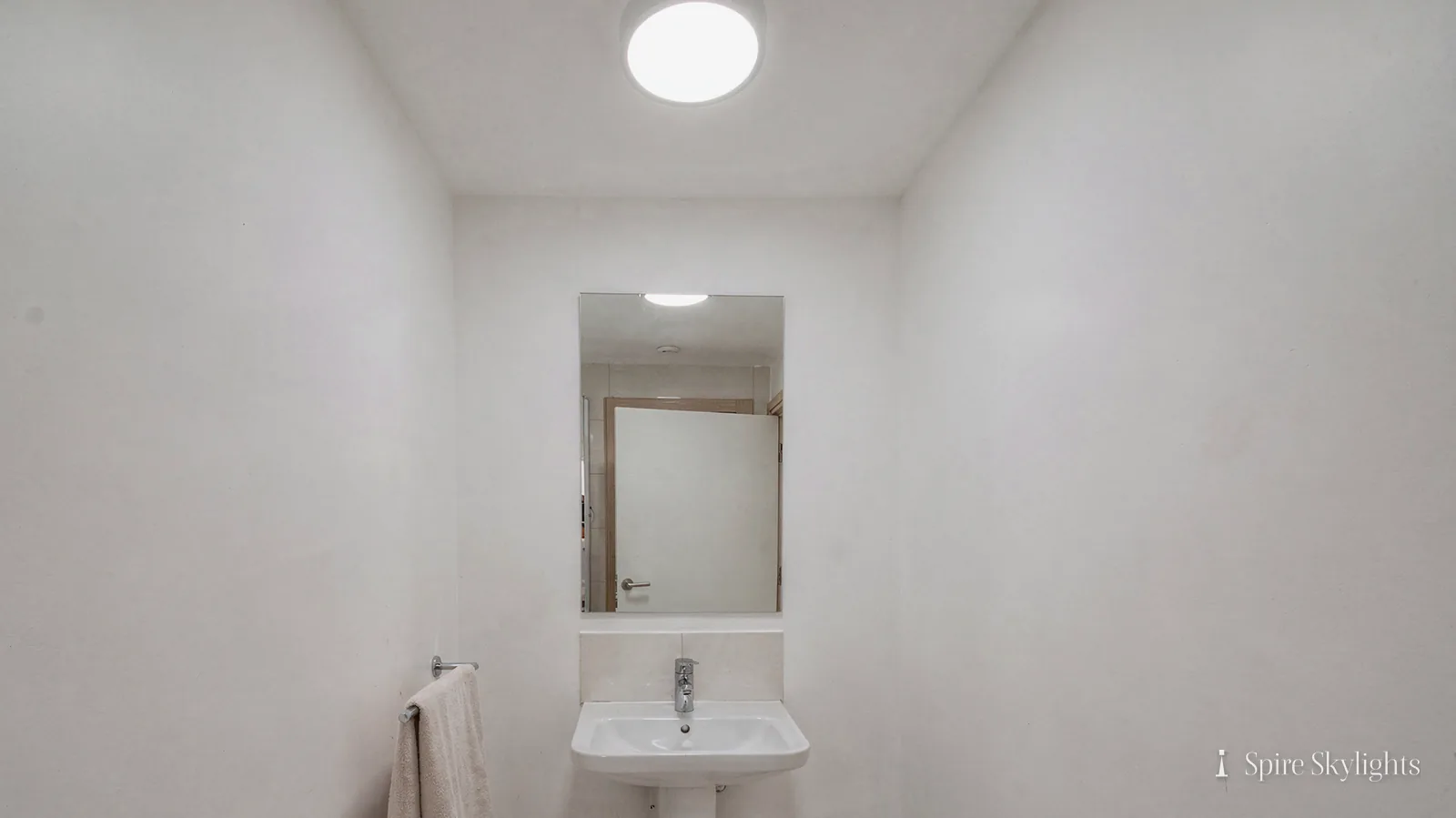
Bathrooms and landings under sloping roofs are common places for a first rooflight, and we also discuss blinds and ventilation at this stage.
Fire stopping and insulation at the reveal are part of the build-up, fitted to the standard current when the work is done. Where the work is notifiable, the Building Control paperwork and the inspection are arranged by us, in step with you.
Where the existing ceiling is cracked or uneven, we agree with you how much of it to skim so the finished room is consistent, and add it to the quote as a clear line.
The short version
On a period roof the covering and the rafters set the terms, and a flush frame keeps the street view calm.
02 Listed buildings and the consent route
Churches, chapels and old farmhouses ask for paperwork before glass.
On the roof
Radford Semele has listed buildings, among them the church of St Nicholas, and owners of older houses are right to treat their roofs seriously. A listed owner has the added step of consent.
Listed building consent is applied for through the council with drawings and a description of the unit. We supply the product details, the dimensions and the position on a plan, and talk with your agent or architect if you have one. The unit proposed is usually a conservation rooflight, because its flush profile and slim bars are in keeping with the roof.
Once consent is in place, the installation follows the approved plan exactly. The flashings, the tile courses and the fixings are installed as described, and the quote reflects the materials agreed.
If a building is listed, we also discuss timing, since consent can take some weeks and the roof should be in good order before the opening is cut.
Old farm buildings and chapel conversions bring their own roofs, often of heavy slate or pantile on substantial timbers. Those timbers can carry a rooflight easily if the opening is planned between them, and we note the size and condition of each at survey.
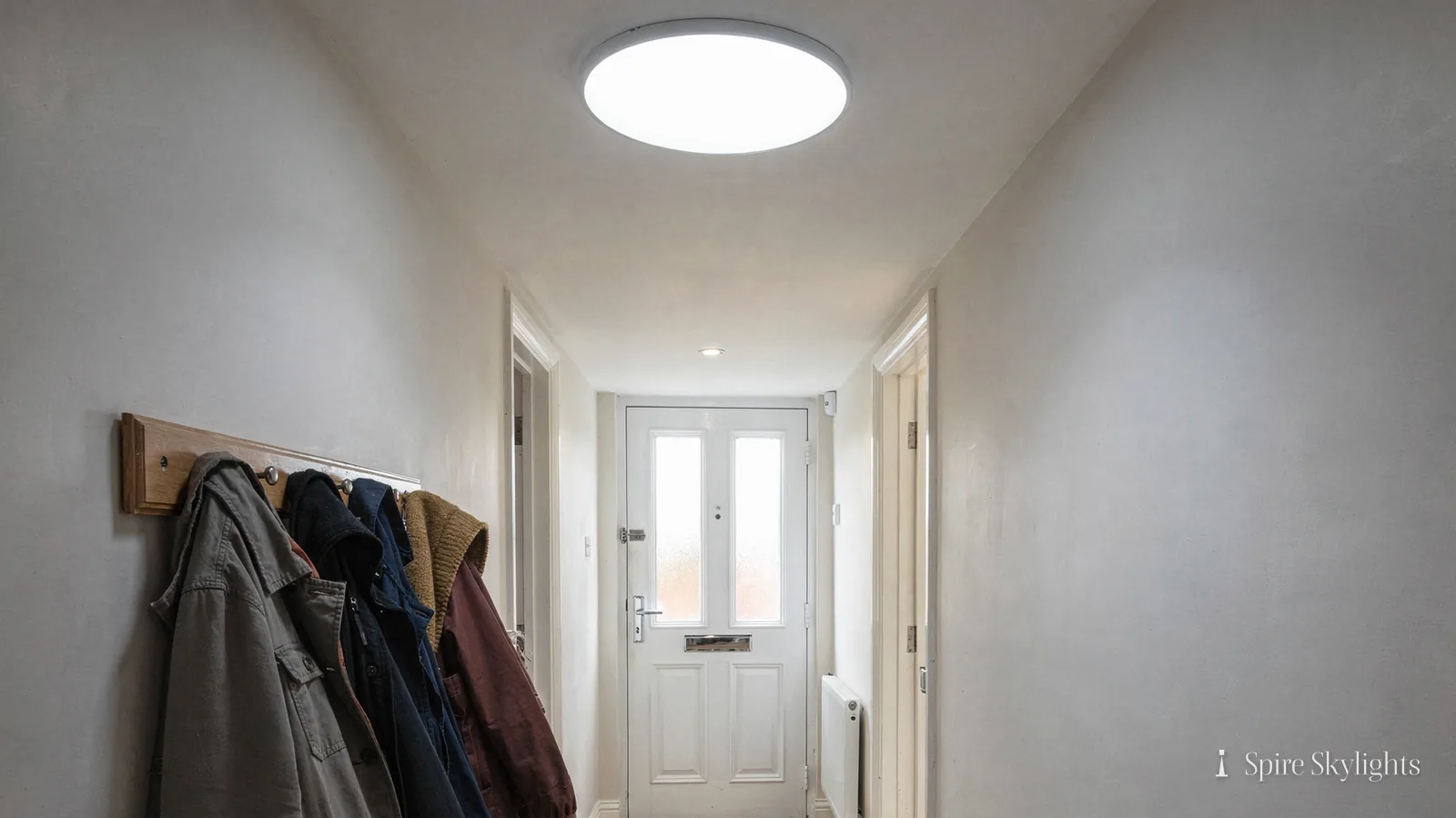
Flat-roofed additions on older houses, such as a porch or a scullery, are also worth a look. A rooflight there brightens a passage that has had no daylight for years, and the work is simpler, since the roof is lower in profile and not usually visible from the road.
In the room

Listed interiors often have details that deserve protection, such as old plaster, moulded cornices, exposed beams and painted boards. The design of the opening takes account of these, and the light well is kept as slender as the structure allows.
We protect floors and furniture during the work and take the dust away. The edges are finished in lime-compatible plaster where an old ceiling calls for it, which lets the wall breathe in the manner of the original.
Natural light in a period room has a gentle effect, since it comes from above and lifts the whole space rather than a single wall. A kitchen, a stair or a landing is often the place where this matters most, because they are the parts of an old house that tend to be darkest.
The final plastering is smooth and ready for paint, and we discuss colour and blind fixings at survey so nothing is drilled later.
We can discuss secondary glazing, ventilation and shading at the same time, so the room under the new rooflight is comfortable in each season. Summer heat is a fair question in an older house, and the answer lies in the glass specification and in blinds, both of which we cover in the quote.
If you are working with a conservation officer or an architect, we will work to their drawings and answer any questions about the product, the frame and the flashing.
The short version
For a listed roof, the paperwork comes first and the glass follows the approved plan.
An old ceiling deserves an opening that belongs to it.
Clay tiles, listing and quick visits: Radford Semele
My Radford Semele cottage has old clay tiles. Can a rooflight go in?
Yes. A conservation rooflight with a slim frame sits flush with the tiles, so the roof keeps its look from the road. We measure the rafters, lift and relay the surrounding tiles, dress the flashing to the profile and plaster the light well inside. You receive a fixed written quote after the free survey. Where thatch or an unusual covering is involved, we explain the options frankly at survey.
Who decides whether my house is listed or in a conservation area?
Warwick District Council holds the answer for your address. We check conservation area status before we quote and flag anything that points to a listing. If consent is needed, we help with the product details the application calls for, and we wait for the decision before work starts. A written outcome from the council is kept with your quote.
Are you close enough to Radford Semele for a quick survey?
The village is about 23 minutes by road from central Coventry, and Leamington is only a few minutes beyond it, so surveys here fit easily into our week. Send a WhatsApp message or the contact form with a photograph of the roof and the room below, and we will offer you a time. Harbury and Cubbington are only a few minutes beyond, so neighbouring surveys are often combined.
We survey before we price.
Then we finish the room.
Free survey · Coventry and 30 miles around
Book your free survey
No obligation. We survey before we price.