
Skylights & rooflights in Chelmsley Wood
Shallow roofs, old domes, better light.
Chelmsley Wood was built in a few years from the late 1960s on former woodland, which means its homes share an age, and many of its homes were built to similar patterns in those years.
- Solihull Council
- Estate roofs of the 1960s and 70s
- Domes and flat roofs replaced
A Forest of Arden overspill estate built in one go
Chelmsley Wood is a town, ward and civil parish in the Metropolitan Borough of Solihull, 12.4 road miles out from Coventry. Its history is unusually well recorded. By the 1950s there was terrific demand for homes in Birmingham, and in 1966 Birmingham City Council compulsorily purchased ancient woodland that had once been part of the Forest of Arden. It built an estate of 15,590 dwellings there, finished in the late 1960s and early 1970s, as an overspill town for the city.
For roofs, that story is a gift. A great many homes built in a short window by one authority tend to share a design vocabulary. Homes of the late 1960s and early 1970s commonly have low-pitched roofs covered in concrete tile, flat-roofed porches and garages, and rear additions with flat roofs of felt or a similar membrane. Where a plastic dome was put into a flat roof to light a hall or bathroom in the years since, it is by now at or past the age when it should be changed.
The structure of a roof from that period is simple. The pitch is shallow, which limits what can be fitted in the slope, and the roof timbers are generally a modern trussed design at regular centres. That does not close the door on a roof window. It shapes the choice, and the survey tells us which unit and which position suit the roof.
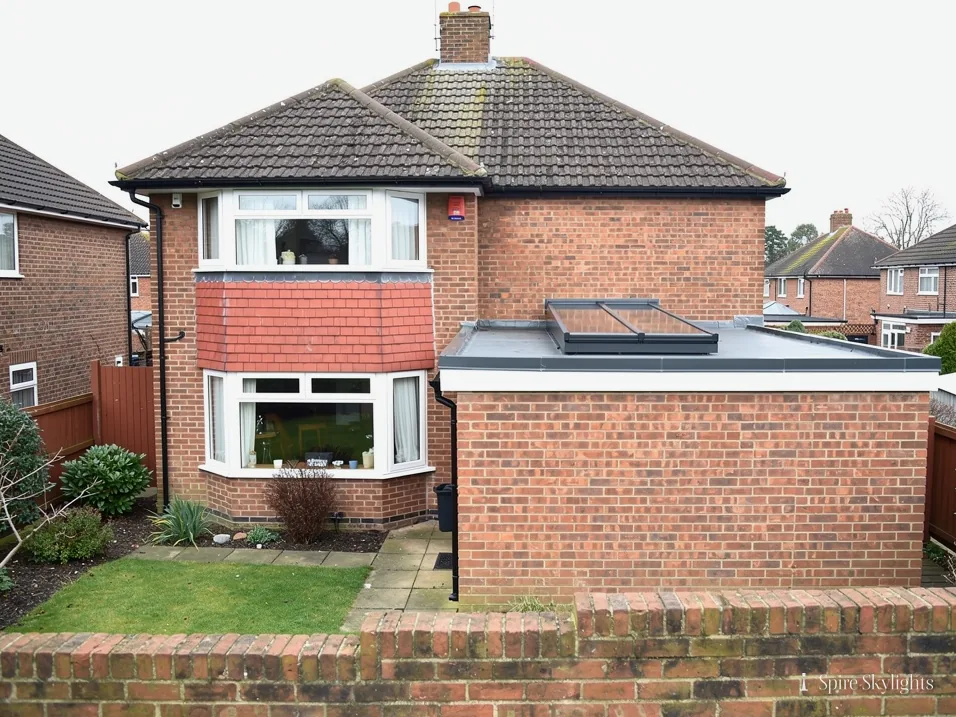
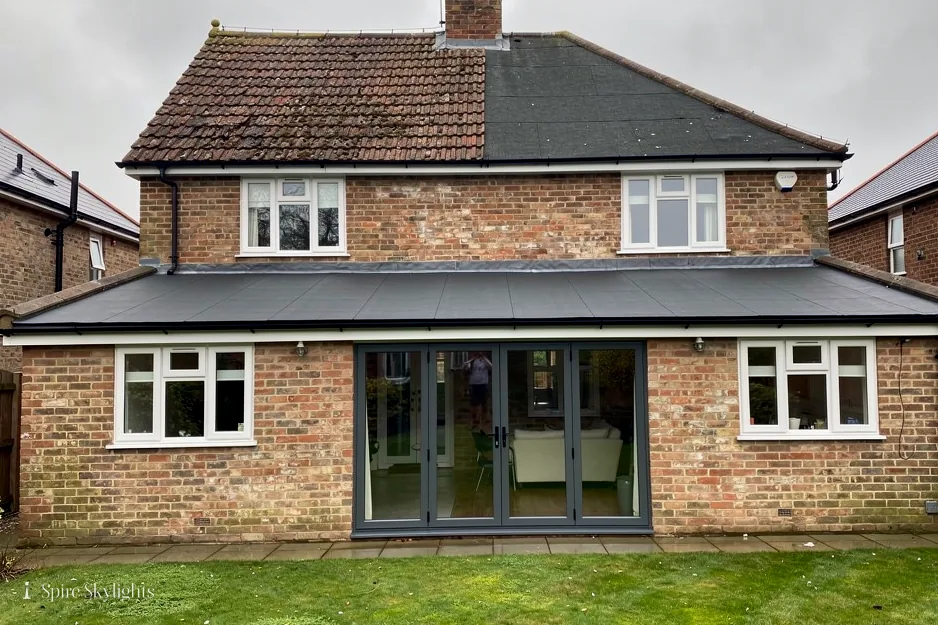
Flat roofs are the other half of the story. After more than fifty years, a flat roof from the original build has probably been recovered at least once, and many have been added to or joined to a later extension. A rooflight needs a sound deck and a proper fall, so we always read the roof first and agree any work to it in the written quote.
The size of the town means the possibilities are wide. Nearby Marston Green station, about a mile from the shopping centre, and the proximity of Birmingham Airport and the National Exhibition Centre make this a place with strong connections, and many households have kept and improved their homes for years. Light from above is among the most effective improvements, and it is often the least disruptive.
The town sits close to both Coleshill and Water Orton in Warwickshire, the county the area was historically part of, and about eight miles east of Birmingham city centre. A home here is within an easy reach of work, shops and transport, and improving a home here can make more sense than moving away. A loft that was never used, a kitchen that has stayed as built, a bathroom with no window: each of these is a candidate for a rooflight.
Low pitches, flat porches, tired domes: three estate jobs
Estate homes of this age bring flat roofs, shallow pitches and old domes. A flat glass rooflight, a roof window and a replacement for a tired dome are the three options that suit roofs of this age.
- Flat roof rooflightsFlat glass on a freshly built insulated upstand is the standard answer to a tired plastic dome or a blank flat roof.
- Misted rooflight replacementA dome or sealed unit gone cloudy comes out, and a new one goes in with the ceiling opening finished afresh.
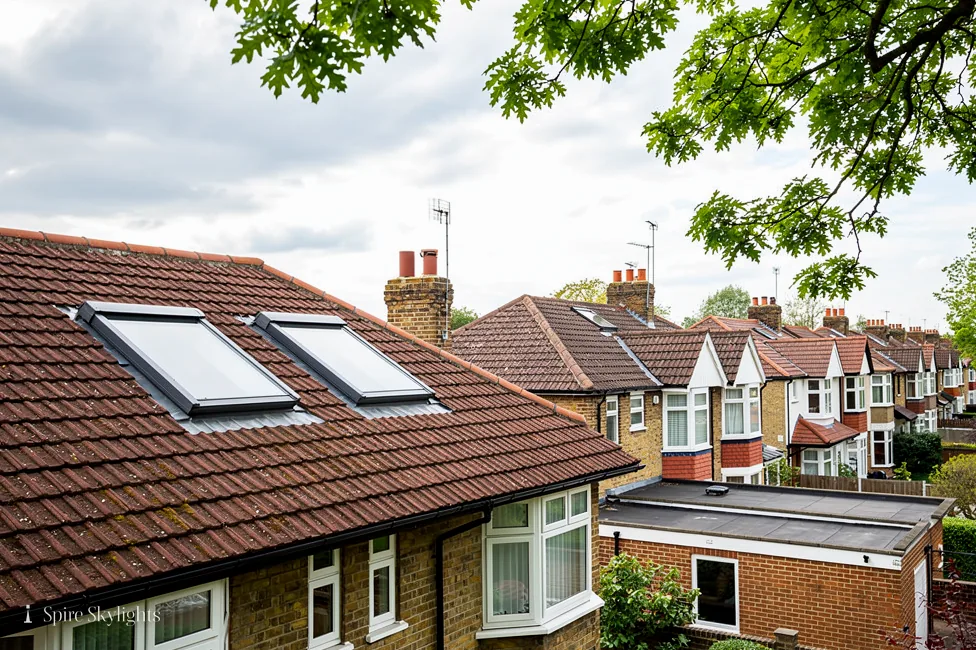
- Roof windowsA low-pitched tile roof can take a roof window chosen to suit the shallow slope.
- Sun tunnelsA landing, hall or bathroom without a window is lit by a sun tunnel through a shallow loft.
Also fitted here
Near Chelmsley Wood
- Fordbridge5 min
- Marston Green5 min
- Kingshurst5 min
- Smith's Wood6 min
Drive times from Chelmsley Wood.
Council-built homes, deeds and tenants' permission
For planning, Chelmsley Wood answers to Solihull Council. We found no conservation area named in the facts for the town and still check each street before quoting. Any Article 4 direction on your address is for the council to confirm; it is the council's call.
A home that began as a council property and was later bought can carry conditions in its title, so look through your deeds before we visit. Tenants need the landlord's permission before any work, and we will supply a written quote for the landlord to review. An old building plan or a Building Control certificate for earlier work helps if you have one, and neither is essential.
Tell us whether you own the freehold, hold a lease or rent, because that shapes the paperwork. We make any Building Control notification the job needs, and the rooflight planning guide explains the rules.
01 Shallow pitches
Low-slope tile roofs and what they allow a window to do.
On the roof
A shallow pitch changes how water behaves on a roof. It runs more slowly, and it travels further sideways under wind-driven rain. A window in a low slope needs the right flashing for that pitch, and not every roof window is designed for every angle. The manufacturer sets a minimum pitch for each unit, and we choose one whose range includes your roof.
Where the pitch is at the low end of what a window permits, we select a flashing detail that gives extra protection at the sill and the head, and we lap the tiles over it with care. This is the kind of decision a survey exists for: we measure the pitch with a gauge and note it, rather than estimating from the ground.
Concrete interlocking tiles on an estate roof are consistent, which helps. A flashing kit made for that profile fits closely, and the tiles can be cut cleanly round the frame. We lay the tiles back to the correct lap and check each junction before we finish.
If the loft has a fixed ladder and a boarded floor, we use that route for access and cover the floor in the work area.
If the loft is accessible, we also look at the underside of the roof covering for signs of damp or condensation. A window is only as good as the roof around it, and we say plainly if something needs attention first.
Where a roof window is not the right answer for a low slope, a flat glass rooflight on a small kerb can be an alternative, and we explain the choice with a sketch at the survey.
In the room
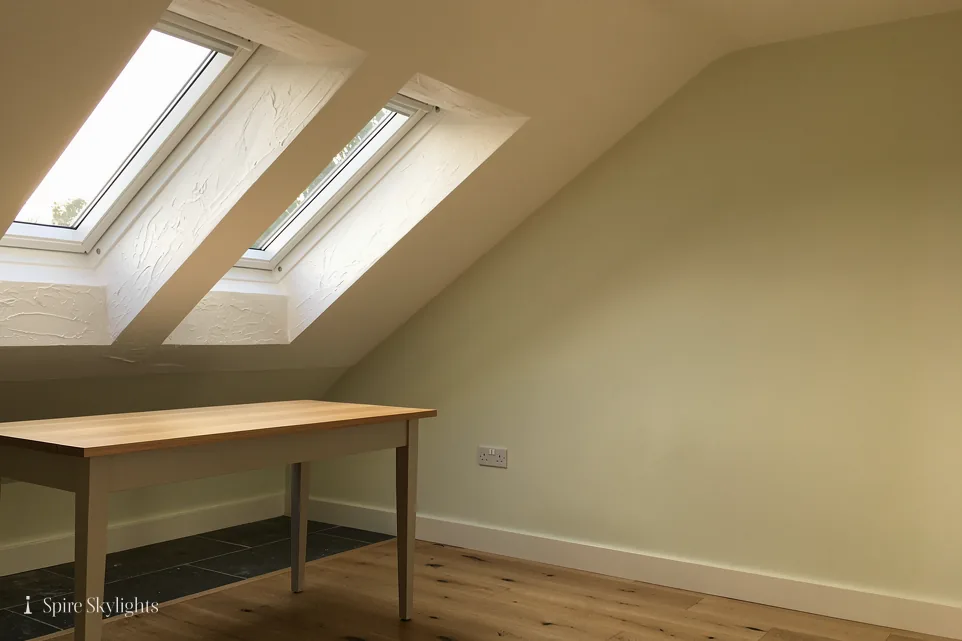
In a house with a shallow roof, the loft is usually a modest space, and the ceilings below are flat and plain. A window in the slope lights the room under it directly, and the reveal can be splayed from the glass to the ceiling wherever the depth allows.
Where the loft is low, the splay may be modest, and we say so. In that case a larger unit, a lighter finish on the reveal and a white ceiling make the most of the light that does arrive.
Stairs and landings in houses of this period often have a window high in a side wall at most, so a rooflight above the stairs makes a bigger difference than one might expect. It lights the stairwell and the rooms leading off it.
We finish with plaster that matches the ceiling and leave the surface ready to paint.
A plain flat ceiling in a house of this age is a good canvas. A clean, splayed opening reads as a deliberate feature of the room, with crisp edges and a bright reveal, and it needs no further decoration beyond a coat of white.
If the house has a bathroom without a window, a roof window or a sun tunnel above it lights the room by day and cuts the need for electric light and extraction at the same time.
The short version
On a shallow roof, the pitch sets which window we can use and the flashing sets how well it lasts.
02 Flat roofs and dated domes
Porches, garages and rear additions with felt roofs and the plastic domes that lit them.
On the roof
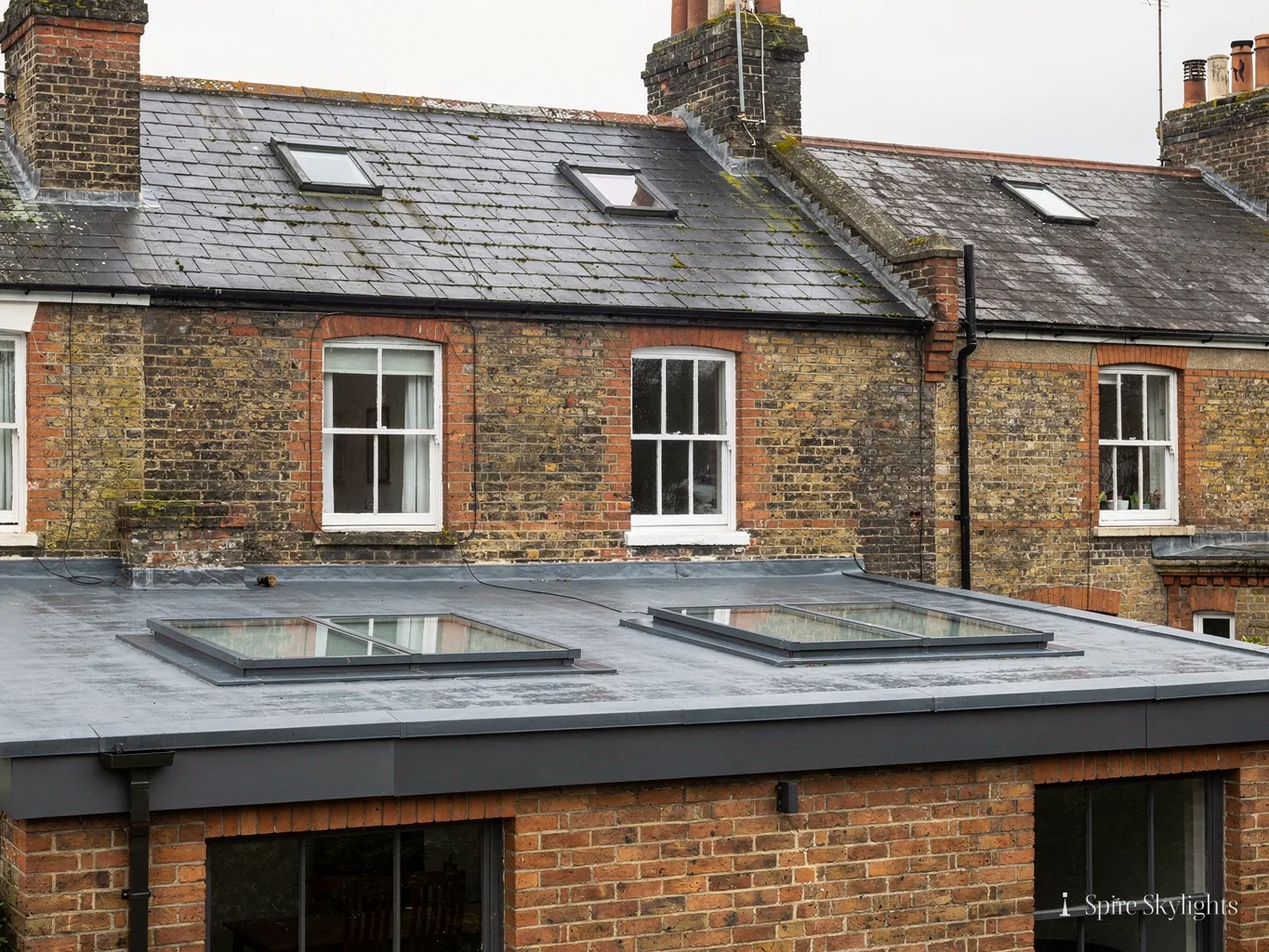
A plastic dome has a working life, and domes fitted decades ago are often cracked, yellowed or leaking at the edge. Replacing one is among the most straightforward jobs we do. We remove the dome and its upstand, inspect the deck underneath, build a new insulated upstand to the correct height and fit a flat glass rooflight to it.
The roof covering is then taken up the upstand and tucked beneath the flange of the unit, so the water has a clear path off the roof. If the old roof covering is near the end of its life, we tell you at the survey and can include the re-covering in the quote, so the new rooflight is not set into a roof that will need to be opened up again.
A flat glass unit gives far more light than the dome it replaces. The glass is clear, the frame is slimmer and modern double or triple glazing keeps heat in.
For a larger extension, a roof lantern is an option, but many estate additions are small, and a flat rooflight suits them better.
Flat roofs on porches and garages are often shared in design from house to house, which means a neighbour who has already had a rooflight fitted can show you what the result looks like. We are always glad to talk through a neighbour's example and say what we would do differently or the same.
In our quote, the upstand height, the glass specification and the covering are all stated, so there is nothing left to decide on the day.
In the room
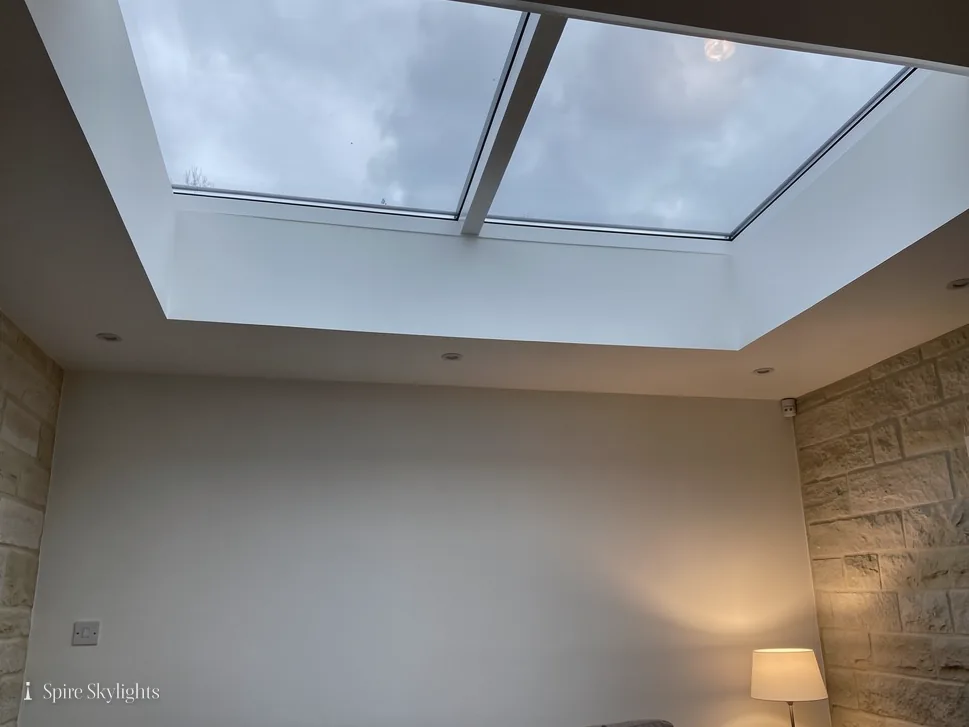
A dome usually sits above a narrow square shaft cut through the ceiling. Light enters it and has to travel down a tunnel to reach the room. When we replace the dome, we open up the ceiling hole as far as the timbers permit and bevel its sides, so the daylight spreads out and the room benefits from the whole of the new glass.
The kitchen, bathroom or hall below usually looks quite different afterwards. Walls that were in shadow pick up light, and a room that always needed the lamp on in the afternoon may no longer need it.
The edges are plastered and made good, and we leave the ceiling ready for paint.
A hall with a dome often has a staircase beside it, and the new opening can be shaped so that light travels down the stair as well as across the hall. That is a small design decision with a large effect on how the house feels when you come in.
For a kitchen, the same thinking puts the light where the worktop is. For a bathroom, we consider privacy and the glass choice, since obscured or frosted options are available.
A dome lights a shaft. A rooflight with a splayed reveal lights a room.
Plastic domes, low pitches and renting: Chelmsley Wood
Can an old plastic dome be swapped for a proper rooflight?
Yes. We remove the dome and upstand, check the deck, form a new insulated upstand, then install a flat glass rooflight on it, then widen and plaster the opening inside where the joists allow. The written quote sets out the roof work and the finish before anything starts.
My roof has a very low pitch. Is a window still possible?
Often it is, because roof windows are made for a range of pitches. We measure the angle at the survey with a gauge and choose a unit whose range includes it, with a flashing detail for a shallow slope. If a flat rooflight suits better, we say so.
I rent my home. Can you quote for my landlord?
Yes. Permission from the landlord comes first, and we are happy to provide a written quote that they can review. We can also explain the work to them directly, using the free survey as the starting point. We can also send the quote in a form that suits the landlord, and we answer their questions directly if they prefer.
We survey before we price.
Then we finish the room.
Free survey · Coventry and 30 miles around
Book your free survey
No obligation. We survey before we price.