
Skylights & rooflights in Braunstone Town
Estate roofs, red brick and Swithland slate.
Braunstone Town runs from Victorian estate cottages in red brick and Swithland slate to the shallow-pitched, flat-roofed houses of the twentieth-century estates, with the M1 at its edge.
- Blaby District Council
- Butterfield cottages, red brick and slate
- Next to M1 junction 21
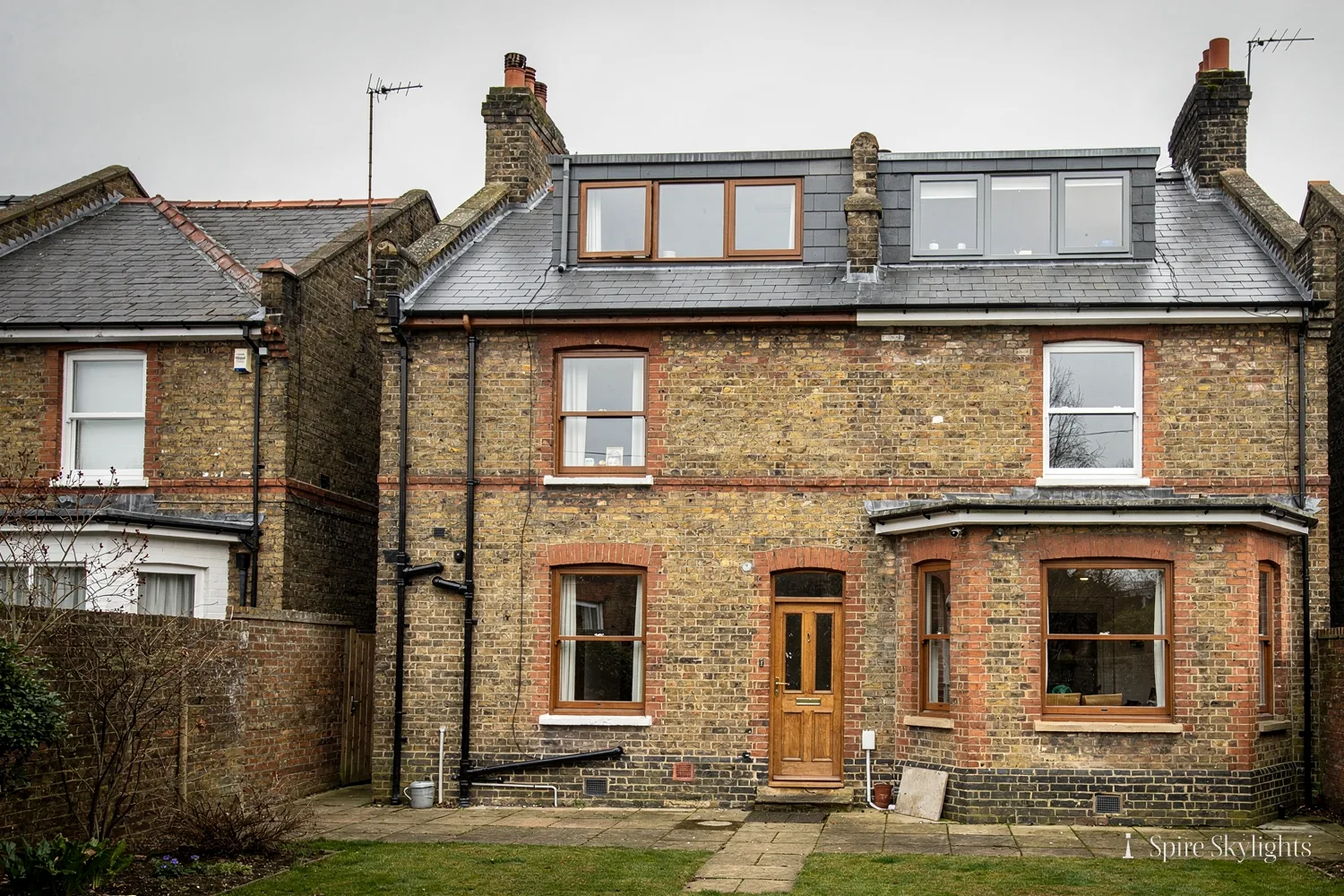
Butterfield cottages and the post-war streets beyond
Braunstone is a town and civil parish in the Blaby district of Leicestershire, with about seventeen thousand residents on the figures we have. It appears in the Domesday Book of 1086, and its modern shape owes a great deal to the twentieth century. A large council estate that once sat in this parish was detached in 1935 and became part of the county borough of Leicester, which is why the name Braunstone Town is used for the Blaby side, to tell it apart from the estate of the same name.
The older village still shows its history in the buildings. The Victorian architect William Butterfield was commissioned to design cottages for estate workers at Cressida Place and in Main Street, and he used red brick and Swithland slate, which the local record calls common local materials. The parish church is built of limestone, and over the city boundary Braunstone Hall, in Leicester's Braunstone Park, is Grade II listed.
Around those older streets sit the later housing areas. The local record names no individual estates, so we describe what homeowners here are likely to have in general terms: post-war semis and terraces with tiled roofs, often at a shallow pitch, and flat-roofed additions that have been put on over the decades. Some still carry the small plastic domes and fixed panes fitted when the extension was built, and those have aged.
Post-war houses were built for economy. The rooms are of modest size, the halls are narrow, and the stairs and landing often have no window of their own. These layouts are the perfect case for a sun tunnel or a roof window, because the problem is a lack of daylight in the middle of the plan, and the solution is in the roof.
The M1 at junction 21 runs beside the town, and the Meridian business and leisure parks, Fosse Shopping Park and the Grove Triangle retail area are all next door. There is no railway station in the parish, so frequent buses to Leicester serve the town, and for many residents the house is the base for a busy week.
The mix of old and new gives the town a useful range. The Butterfield cottages and their neighbours are the houses for conservation units on the quieter slopes, while the larger post-war areas are the ones for tunnels, flat glass and well-flashed roof windows. Both kinds of roof are within our usual work.
Braunstone Park lies just over the boundary in Leicester, and some houses look out on its trees. Rooms with a rooflight overhead catch that green light, which is easy to underestimate until you have it.
Bringing a house up to date rarely means starting again. A well-placed rooflight is a small intervention with a large effect, and on an estate house it often does more for how the home feels than a new kitchen door or a coat of paint.
Shallow pitches, dated domes and windowless halls
On a post-war estate the useful question is how shallow the roof is. A shallow pitch points to a roof window made for it, a flat extension to flat glass or a lantern, and a windowless hall to a sun tunnel. The survey tells us which, and the quote puts it in writing.
- Flat roof rooflightsReplaces the dated dome on a flat-roofed kitchen, bathroom or extension.
- Misted rooflight replacementClears a fogged sealed unit in an older frame without a new opening.
- Roof windowsBrings a shallow-pitched loft or landing into use with a window designed for the pitch.
- Sun tunnelsLights the narrow hall and landing that so many estate houses were built with.
Also fitted here
Near Braunstone Town
- Leicester Forest East8 min
- Kirby Muxloe8 min
- Enderby9 min
- Leicester12 min
Drive times from Braunstone Town centre.
Estate cottages, listed buildings and Blaby's rules
The planning authority for Braunstone Town is Blaby District Council. Most houses can take a rooflight without an application, though the town has older estate cottages and historic buildings, so we start by checking whether your house is listed, sits in a conservation area or is touched by a council restriction on permitted rights. The council can confirm any direction.
The findings go into the quote, which lets you see what was checked. Notifiable work is passed to Building Control by us. For the wider rules, see the rooflight planning guide.
A listed property is treated differently from an ordinary house and needs listed building consent. If you live in or near anything of that kind, tell us at the first call, and we will find out what the council needs before we draw up a price.
01 Post-war estates and shallow pitches
Economical roofs, narrow halls and landings with no window at all.
On the roof
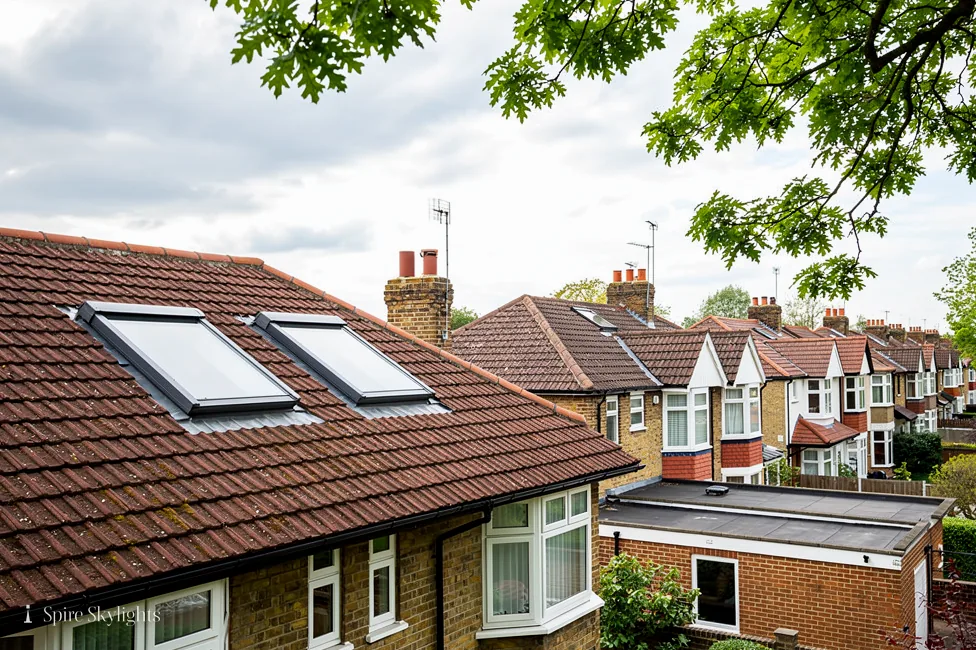
Post-war houses often have a low-pitched roof of concrete tiles, with trussed rafters set at a regular spacing. The pitch is the first thing we measure. A shallow roof demands a window designed for it, with a flashing that carries water away at a gentle angle, and we check the pitch against the unit before we propose anything.
If the roof is too shallow for an ordinary roof window, there are options. A window with a deeper frame and a different flashing can be used, or a flat rooflight on a small kerb can be set into the slope. We lay these out on the survey and say which suits your house.
The roof structure is usually trussed. The opening sits between two frames, or the frames are strengthened to a design before any timber is cut. We state the approach in the written quote, so nothing needs to be decided on the roof.
Many estate houses are semi-detached or terraced, and the roof is shared with a neighbour at the party wall. We stay well clear of it and tell the neighbour what we are doing, as a courtesy, before work begins.
Concrete tiles on a low roof need a careful flashing, and the kit supplied for the unit must match the tile profile. We confirm the match at the survey, since a mismatch is the commonest cause of a drip at the edge of a window.
Gutters and fascias on a shallow roof are close to the work. We protect them while we are on the roof and check that the new flashing does not change where water reaches the gutter.
In the room
The landing in an estate house is typically a few paces of carpet between three doors. Fitting a sun tunnel above it is among the most effective single changes: a small dome on the roof, a reflective tube through the loft, and a diffuser in the ceiling. The result is a landing lit by the sky.
The hall works the same way. If there is a loft above it, a tunnel carries light down the stairs. The route is measured and checked for joists, pipes and insulation, and the quote lists the length and the finish.
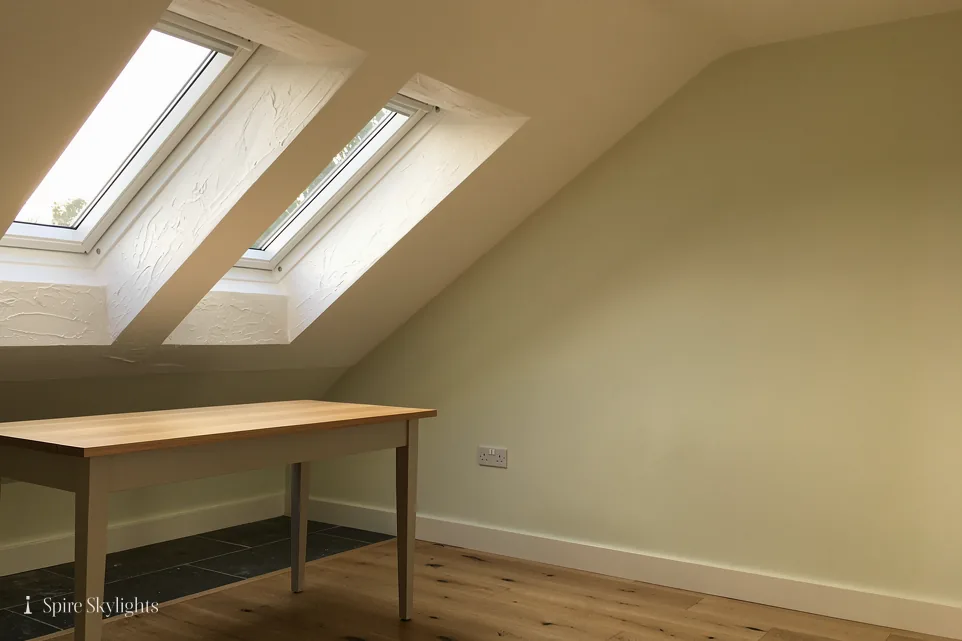
For a loft bedroom or a bathroom under a shallow roof, a roof window with a plastered, splayed reveal adds height as well as light. We line the shaft, insulate it and plaster it, leaving a crisp edge and a surface ready for paint.
Everything is cleared when we finish, including the dust in the loft.
Insulation behind the plasterboard around the shaft stops cold bridging, so the reveal stays warm and free of condensation. It takes a little extra time and makes a visible difference in winter.
If your estate house has a bedroom in the roof already, an opening window gives a proper escape of warm air in summer, and a blind makes the room usable on bright mornings.
The short version
On a post-war estate, the narrow hall and landing are the rooms a single tunnel can change.
Estate houses were built to a budget, and daylight is the cheapest way to make them feel generous.
02 Flat-roof additions and dated domes
Kitchens, bathrooms and porches under old felt and cloudy plastic.
On the roof
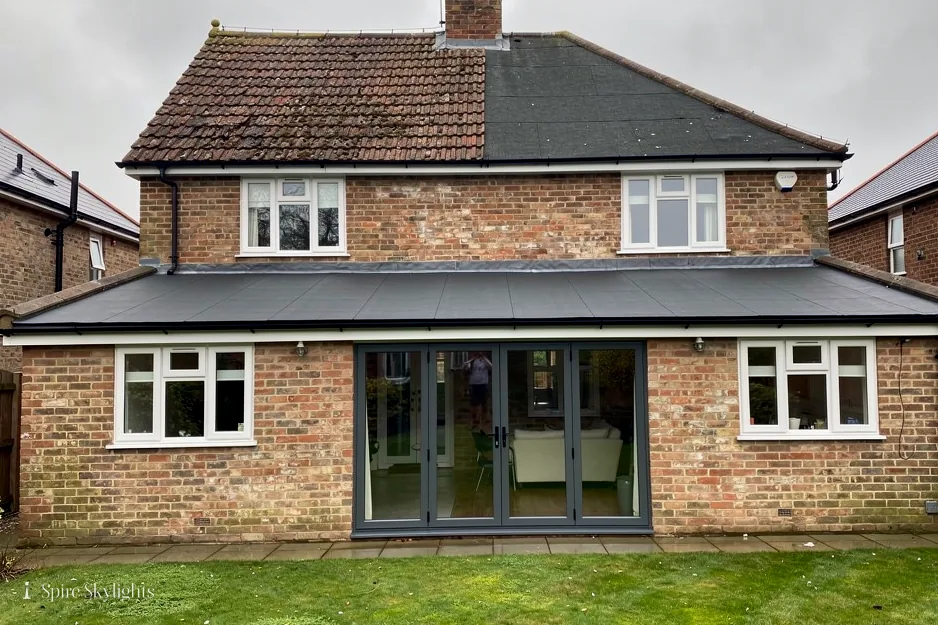
Flat-roofed additions are a feature of estates like these. A kitchen pushed out at the back, a bathroom over the porch, a garage turned into a living space: each carries a flat roof of felt or a later membrane, and often a plastic dome set into it.
After decades the dome has yellowed, crazed or cracked, and the seal at the base has failed. Replacing the lid alone does not solve this. We take off the whole unit and its upstand, check the deck for softness, and build a fresh insulated kerb. A flat glass rooflight is bedded on it, and the covering is dressed up and sealed.
Fall matters on a flat roof. We check that water leaves the roof towards the gutter, and where a roof ponds, we say so and price a remedy in the same quote.
If your dome has simply misted between its panes, a replacement unit in the existing frame may be enough. We look at both routes on the survey and explain the difference in cost and finish.
On a porch or small bathroom roof, a compact unit is enough. The principle is the same: sound deck, insulated kerb, well-formed upstand and a clean seal.
Neighbouring flat roofs are often joined at a shared wall. We take care at that junction and tell you if it needs attention, so a problem next door does not become one at your window.
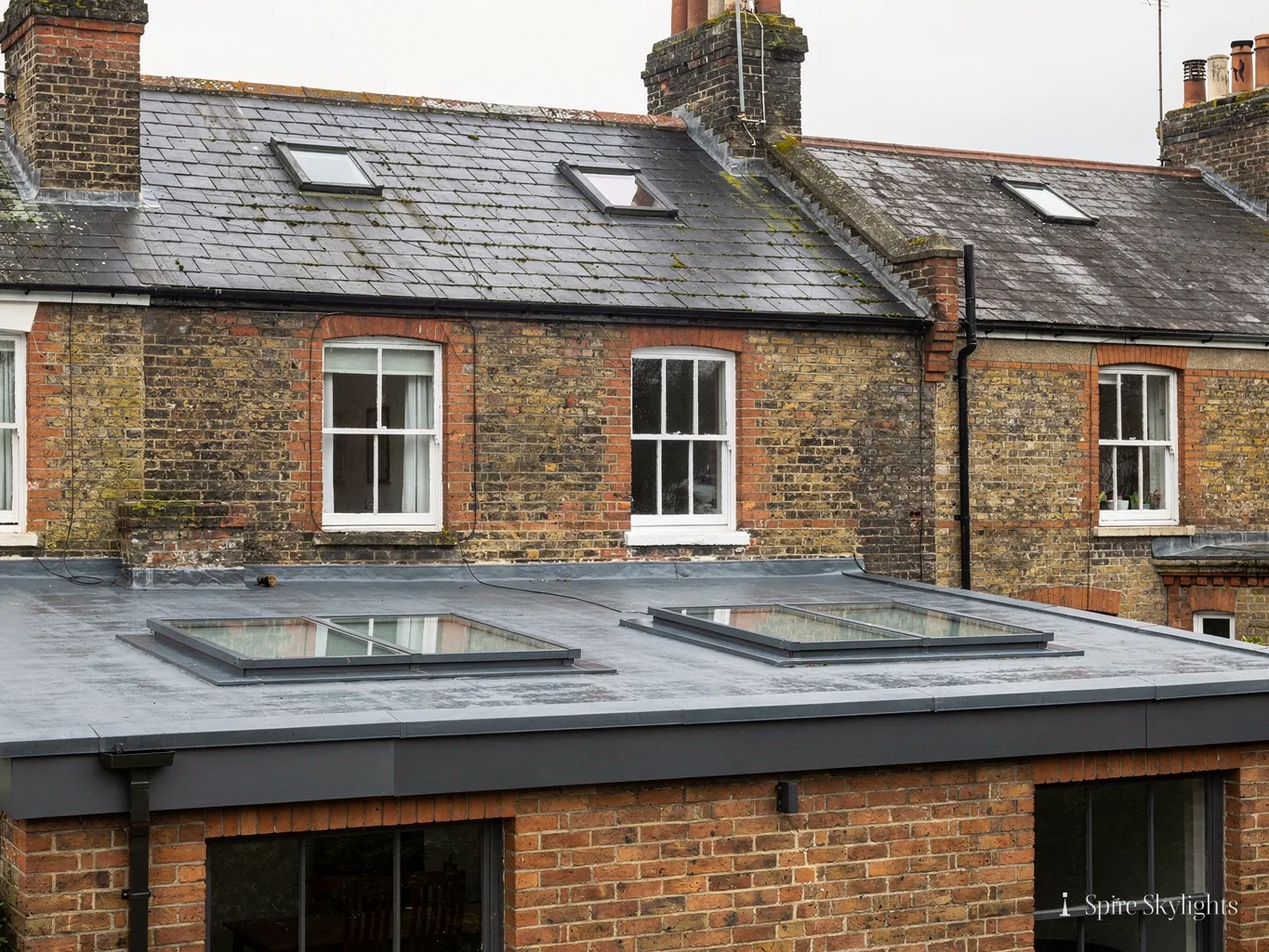
In the room
A dome sits over a narrow square shaft, so the light it gives is a small patch. When we change the unit, we widen the opening where the joists allow and splay all four sides, which turns that patch into a wash across the ceiling.
In a small kitchen, the light is aimed at the worktop. In a bathroom, an opening rooflight clears steam and a rain sensor closes it when it rains. In a porch or utility, a simple flat unit makes the space pleasant.
We coordinate any light fittings and extractor fans with your electrician, so cables are run before we plaster. The finished ceiling is smooth, clean and ready for paint.
Windows and rooflights both need cleaning, and we show you how to reach the glass from the inside.
When the work is finished, we remove the old dome and every scrap of debris, so the roof, the room and the garden are all left tidy.
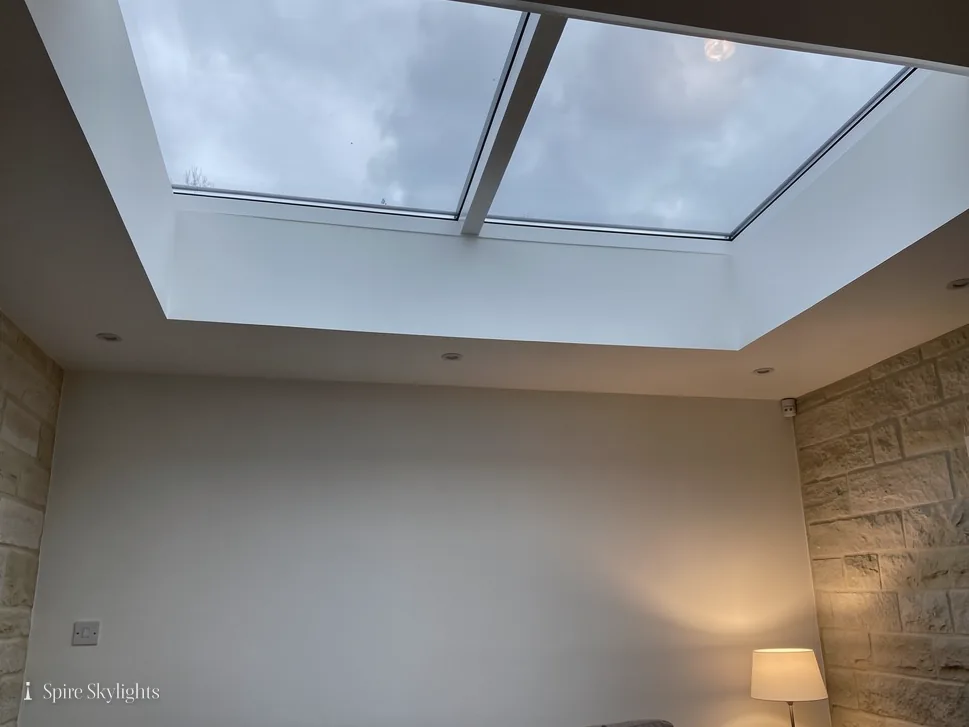
The short version
Change the whole dome assembly and widen the opening, and a forgotten corner of the house becomes a pleasant room.
Shallow roofs, dark halls: Braunstone Town asks
My roof is very shallow. Can it still take a window?
Often, yes. Shallow roofs need a unit made for the pitch, with a flashing that carries water away safely at a low angle, and sometimes a flat rooflight on a small kerb is the better choice. We measure the pitch at the survey and tell you in writing which type suits your roof. A flat unit on a kerb can also be set into a pitched roof.
What can we do about a hall and landing with no window?
A sun tunnel is the usual answer. A dome on the roof gathers light and a tube carries it across the loft space into a diffuser fitted flush in the ceiling. We check the route for joists and pipework, then give a fixed price that covers the dome, the tube and the plastered finish. The finished diffuser is flat and easy to keep clean.
Do you work in Braunstone Town as well as around Leicester?
Braunstone Town is a little over thirty minutes from us, close to junction 21 of the M1. Braunstone Town is a little over half an hour from central Coventry by road, close to junction 21 of the M1. Send the form or a WhatsApp message with your postcode and a photograph of the roof, and we will offer a survey time. We list the unit and the finish in the quote.
We survey before we price.
Then we finish the room.
Free survey · Coventry and 30 miles around
Book your free survey
No obligation. We survey before we price.