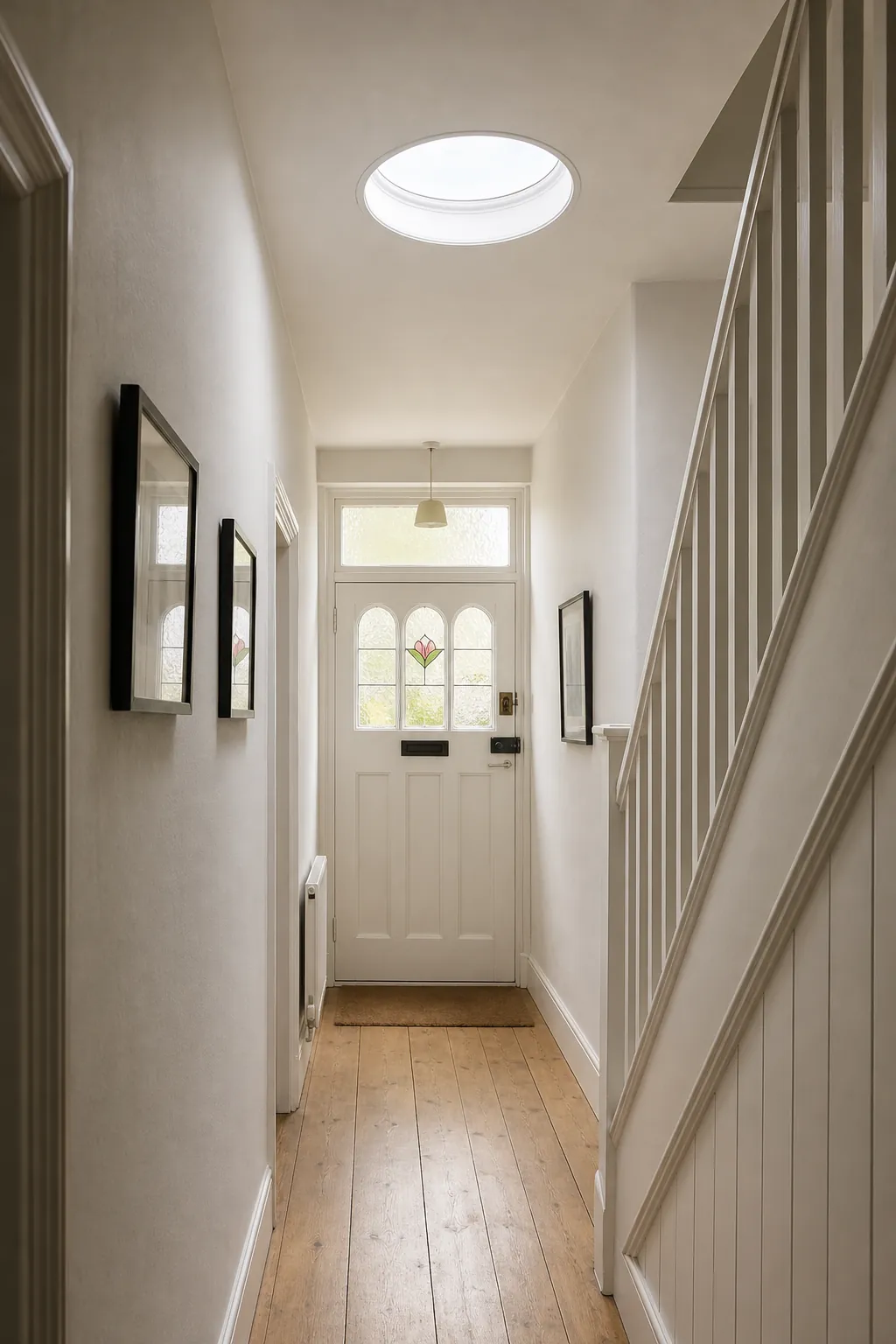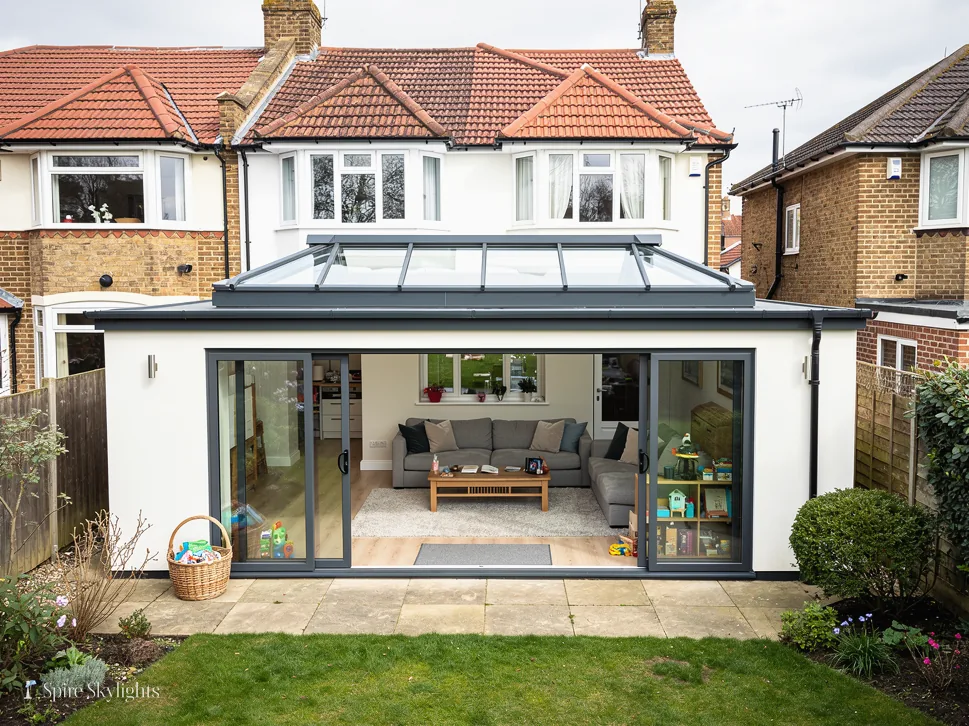
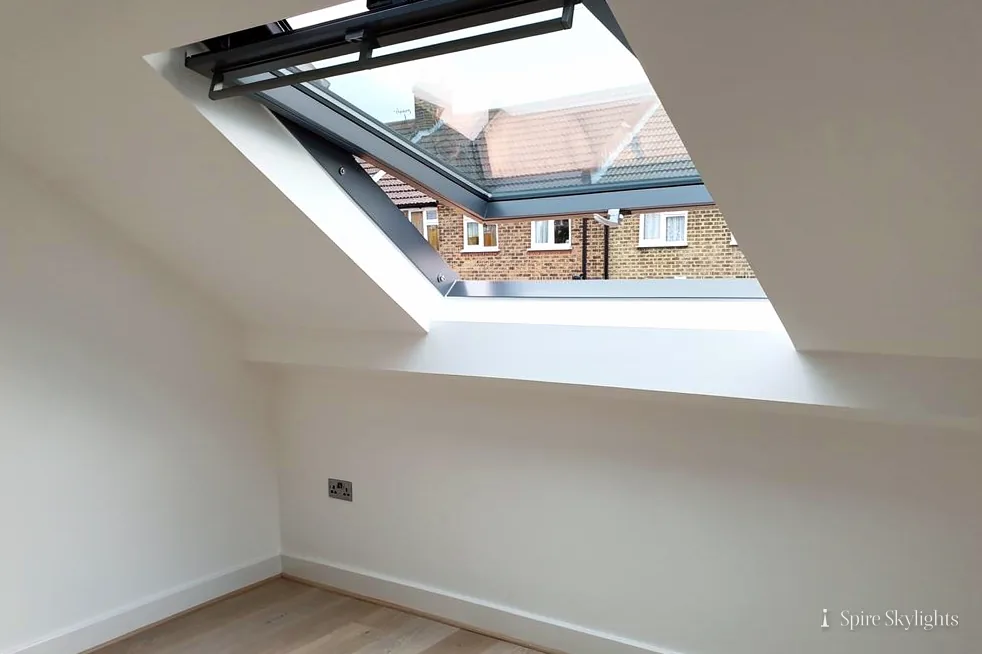
Asking what a roof lantern costs to fit is sensible, and the useful answer starts with what you are buying. A roof lantern is a raised glazed structure that sits on a flat roof, usually over an extension, kitchen or orangery. It is made to measure, delivered to site and lifted onto a prepared base. Its price is the sum of the lantern, the base it stands on, the work to fit and weather it, and the finish inside. We do not publish figures without seeing the roof, because the base alone can change the answer. We do explain every factor, so the fixed written quote we give you after a free survey is easy to read. For the wider picture of how we run lantern jobs, see our roof lantern installation service.
The four parts of a lantern quote
A complete lantern quote has four lines worth checking. The first is the lantern itself: the frame, the glazing and the finish. The second is the base: the kerb or upstand, built or adapted to carry the lantern and tied into the roof. The third is the fitting: delivery, lifting, setting, sealing and weathering. The fourth is the inside: the reveal, plastering, making good and any decoration agreed. A quote that gives only the first line is a quote for a box, not for a finished lantern.
Size and shape
Size is the biggest single driver. A larger lantern uses more frame, more glass and more material, and it is heavier to lift and to carry on the roof beneath. Shape matters as well. A simple rectangular lantern with a standard ridge is the baseline. Hipped ends, extra tiers, a pitched shape that follows a more complex plan or a tall, steep profile all need more fabrication and more careful installation. Very large lanterns may be delivered in sections and assembled on site, which adds labour.
| Factor | Higher cost | Lower cost |
|---|---|---|
| Size | Large span, tall profile | Compact, standard height |
| Shape | Hipped, multi-tier, complex plan | Simple rectangular ridge |
| Frame | Bespoke finish or colour | Standard finish |
| Glass | Solar control, laminated, self-cleaning | Standard sealed double glazing |
| Base | New kerb on new roof opening | Sound kerb already there |
Frame material and finish
Aluminium is the usual choice for lanterns, because its strength allows slim sightlines and large spans, and it holds a coloured finish well. Timber and timber-aluminium combinations are also available, for a warmer look and, in some cases, a different colour inside from outside. UPVC is used on smaller, simpler lanterns. A standard colour from the maker's range costs less than a bespoke finish, and a different colour inside and out is a further choice that adds to the unit price. Details such as ornamental ridge crests and finials are decorative extras.
Glass specification
The glass is the next lever. Standard sealed double glazing is the starting point. A solar control coating helps stop a south-facing lantern overheating the room in summer, and it is a common upgrade. Laminated or toughened inner panes add strength and safety. Self-cleaning outer glass reduces how often you need to clean the roof. Triple glazing improves winter thermal performance but also adds weight and cost. Every upgrade pays you back in comfort or convenience, so the right specification depends on how the room is used and which way it faces.
The lantern is the visible bit. The kerb, the fitting and the finish inside are what make it a finished room rather than a delivery.
The base the lantern sits on
A lantern needs a firm, level, insulated and waterproofed base. Where an extension is being built, the kerb is part of the new roof, and it is built to suit the lantern. Where a lantern is going into an existing flat roof, a new opening has to be formed, with joists trimmed and the roof structure checked for the extra load. The structural work in the roof is often the surprising part of a lantern job, which is why we measure it up at the survey and put it into the written quote as its own line.
Replacing an existing lantern is simpler where the base is sound and the new lantern matches its footprint. Our answer on replacing a rooflight on the same kerb explains how we judge that.
Access, lifting and weathering
A lantern cannot be carried up a ladder. Access may need scaffold, and the lift may need two or more people or lifting equipment, especially for larger units. The roof must be protected while the opening is formed, and the covering has to be weathered back to the lantern base once it is set. Where a crane or telehandler is used, it is a line in the quote rather than a surprise. A lantern craned into a back garden over a house is a different job from one handed up through the open back of a new extension.
Finishing inside
Inside, the lantern opens onto a framed shaft. The depth of that shaft decides how much of a reveal there is to finish. Roof depth allowing, it is splayed, plastered and made good, so that the light reaches the room instead of being lost in a dark well. A deeper, splayed and plastered reveal costs more than a simple lining. It is also what turns a lantern into a feature of the ceiling.
Thermal performance and running costs
A lantern is a lot of glass, and glass loses heat faster than an insulated roof. That is why the glazing specification and the frame design matter to your energy bills as well as to the purchase price. A thermally broken aluminium frame limits heat flow through the metal. A well-made double or triple glazed unit with a warm-edge spacer and low-emissivity coating keeps the room comfortable in winter. A solar control coating reduces heat gain in summer. We give you the stated U-value from the maker for the exact lantern in the quote, so you can set the extra upfront cost against the comfort you get from it. A bigger lantern in a south-facing extension is exactly where the glass choice repays the thought.
The type of room it is going over
The room under the lantern changes the specification. A kitchen extension with bifold doors may want a lantern sized to line up with the opening below, so the line of the room reads cleanly. An orangery usually has a larger lantern in a more traditional style, with a ridge detail to suit. A Victorian or period house may call for slimmer sections and a colour matched to the existing windows. A flat roof over a hallway or bathroom suits a smaller lantern. Each of these choices has a knock-on effect on cost, and the survey is where we pin them down.
Strength, security and safety glazing
Lanterns are designed to carry wind and snow loads, and the maker states the glazing specification and load performance. Laminated inner panes are a common choice for security and for safety if a pane were ever broken. If anyone will be working on the roof near the lantern, the glass is not a step, and access to the roof should be arranged separately. Where this matters for your house, we say so at the survey.
Maintenance and lifespan
A lantern that is well fitted and well sealed needs very little. The glass should be washed occasionally, and a self-cleaning coating helps between washes. The seals and flashings are looked at from time to time, and any build-up of leaves or moss near the base is cleared. The frame finish is built to last, and the manufacturer states the guarantee on the frame and the glass. Over the life of a lantern, the cost of cleaning and attention is small beside the fitting cost, and it is the quality of the fitting that decides how trouble-free it is. If you are worried about water, our answer on whether roof lanterns leak explains what to look for.
Timing and deposits
Because lanterns are made to order, the quote includes the lead time between confirming the size and the fitting date. The programme, and any staged payment tied to ordering the unit, is set out in writing before you commit. If you change the specification after the order, the quote changes in writing, and nothing is added without your agreement. We also tell you if a maker confirms a longer lead time than expected, so the fitting date never drifts without you hearing about it first.
Value and what you get back
A lantern changes how a room feels more than almost any other single addition. The extra height and overhead light make a dark rear extension feel generous. That is a benefit you notice every day, though we make no claim about what it does to your property value, because that depends on the house and the market. What we can promise is that the lantern is fitted to current Building Regulations, finished inside and out, and backed by our 10-year workmanship guarantee.
Building Regulations and the fixed quote
A new lantern or a replacement is building work and is notifiable. The lantern must meet Part L, which for a rooflight or lantern in an existing dwelling is 2.2 W/m²K, and the new opening must be structurally sound. We handle the Building Control notification wherever the work needs it, and it is included in the quote.
After a free survey, you receive a fixed written quote before any work starts. It lists the lantern specification, the base, the fitting, the finish inside and the notification. The figure is fixed for that scope. If you change the size, glass or finish, we re-quote in writing and you decide. Our work carries a 10-year workmanship guarantee, and the lantern comes with the maker's own warranty, detailed in the quote.
How to compare lantern quotes fairly
- Check that each quote names the same size, frame, colour and glass.
- See whether the base and kerb work are included or left out.
- Look for lifting, scaffold and access costs.
- Check that plastering and making good inside are described.
- Ask who handles the Building Control notification.
Where one quote is much shorter than another, the difference is nearly always the scope, not a saving. The question to ask is what has been left out.
Is a lantern the right choice at all?
Many people start with the lantern they have seen in a magazine and then adjust once they see how much roof and room they actually have. That is a perfectly good way to work, and the survey is the place to do it.
Before comparing quotes, it is worth deciding whether a lantern is what you need. A flat rooflight can bring in a lot of light for less structure, and a lantern adds height, shape and a sense of volume. Our guide on choosing between a roof lantern and a flat rooflight weighs the two. If you are ready to price the job, ask for a survey and quote and we will arrange a visit.