
Skylights & rooflights in Glen Parva
Rooflights for homes beside the Sence and the canal.
Glen Parva grew up around a ford on the River Sence, with the Grand Union Canal and the Soar close by, and its roofs now run from older village cottages to flat-backed extensions on later streets.
- Blaby District Council
- Water close to the south
- Rail line on one side
A ford on the Sence, then suburb on either side
Glen Parva lies about twenty-four and a half road miles north-east of central Coventry, a drive of around thirty-six minutes. It is a civil parish in the Blaby district of Leicestershire, and the village itself began beside a ford on the River Sence, locally called Glen Ford. That origin matters to a roofer, because a settlement that grew around water tends to hold a long run of building ages side by side: the oldest cottages near the ford, then later streets pushed out towards the edges of the parish.
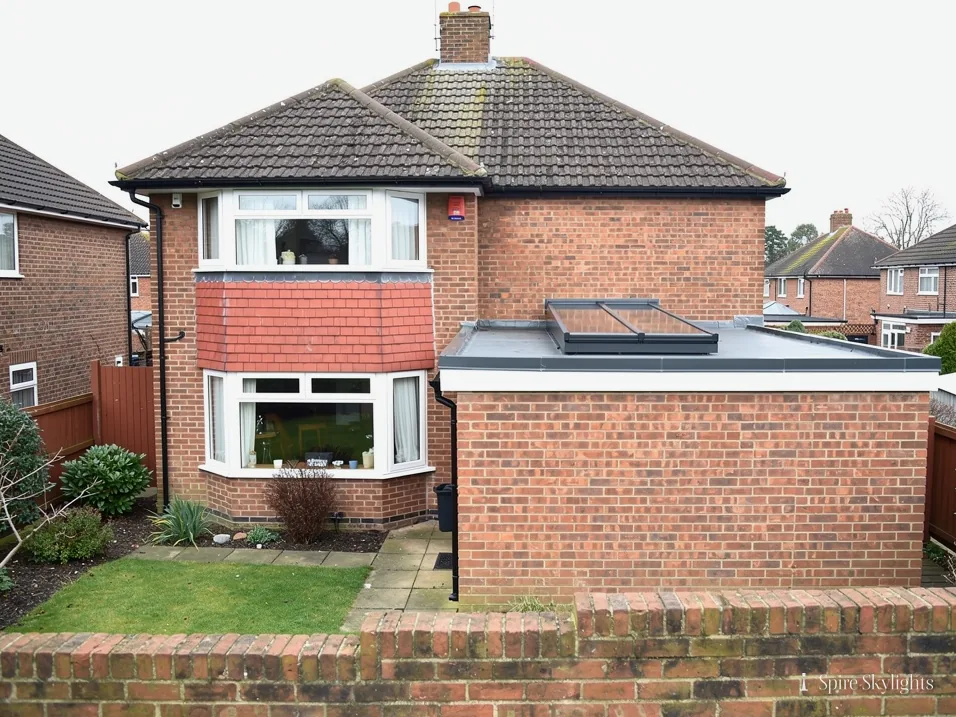
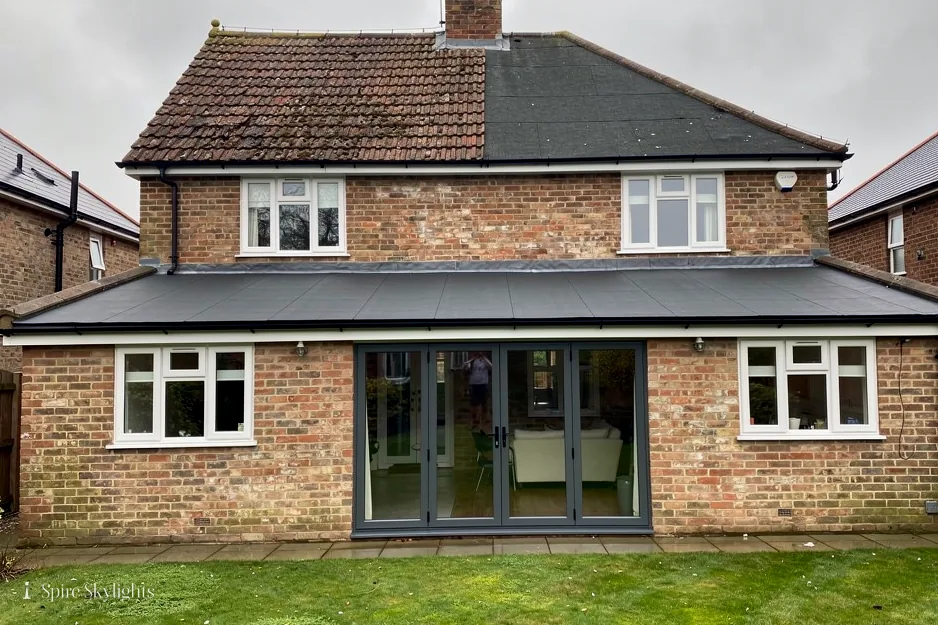
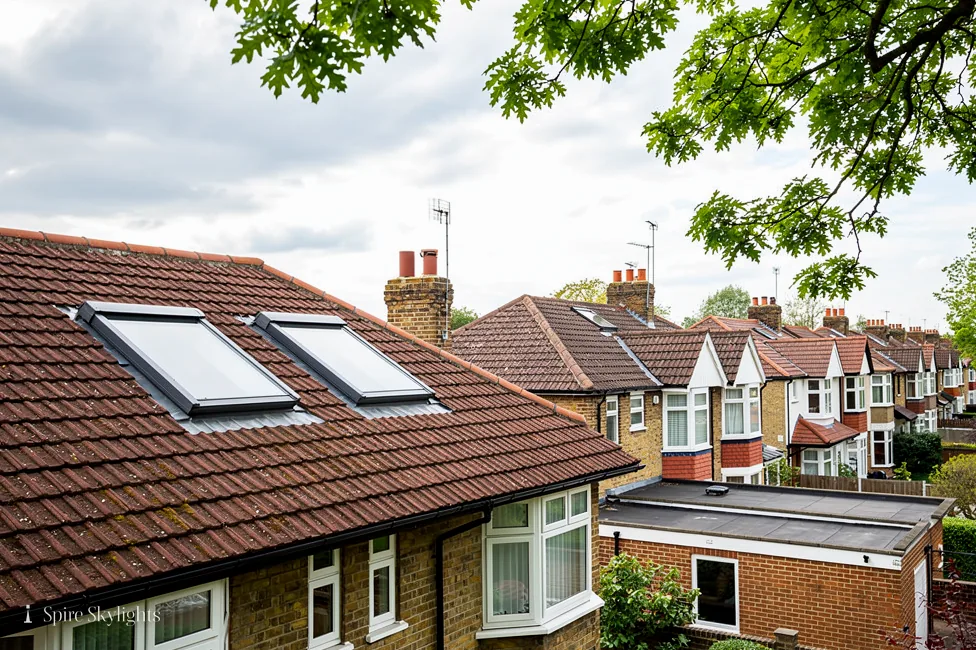
To the north the parish runs into Aylestone, and to the east into South Wigston, so the housing on those sides reads like Leicester suburb: semis and terraces with pitched tiled roofs, lofts of varying depth, and the usual single-storey additions at the back. Those additions are where a rooflight often earns its place, because a kitchen or dining room built out into the garden can end up lit only from the old window behind it.
The Grand Union Canal and the River Sence both pass to the south of the village, and the River Soar lies to the west. Houses near water often carry a few extras: converted outbuildings, garden rooms, and rear roofs that have been patched and re-covered over the years by different hands. When we survey, we read the roof as it actually is, not as the street frontage suggests.
A railway line, the Birmingham to Peterborough route, once split part of the old parish from the main village, and a footbridge still crosses it. Streets either side of a line like that were built at different times, so two neighbours can have quite different roof construction. We measure first, then recommend the unit that suits that roof and the room underneath.
The parish has a military past as well: Glen Parva Barracks opened in 1881, became an important installation in the 1960s, and HMP Fosse Way opened in the parish in 2023. Land that changes use like that leaves its mark on the housing around it, with buildings of different ages and purposes sitting close together. For a rooflight that means very little can be assumed from the street. We go up, look, and measure, and the quote you receive describes the roof in front of us.
Lit from one side: kitchens that need the sky
Glen Parva’s mix of village cottages, suburban semis and flat-roofed rear extensions means several of our products can apply. A lit-from-one-side kitchen usually points to a flat rooflight or lantern, a loft to a roof window, and an older tiled roof to something low-profile. Tell us which room is the dark one and we will work back from there to the right unit for that roof.
- Flat roof rooflightsFor the flat-roofed kitchen and utility extensions common at the back of Glen Parva semis, where a single window leaves the middle of the room dim.
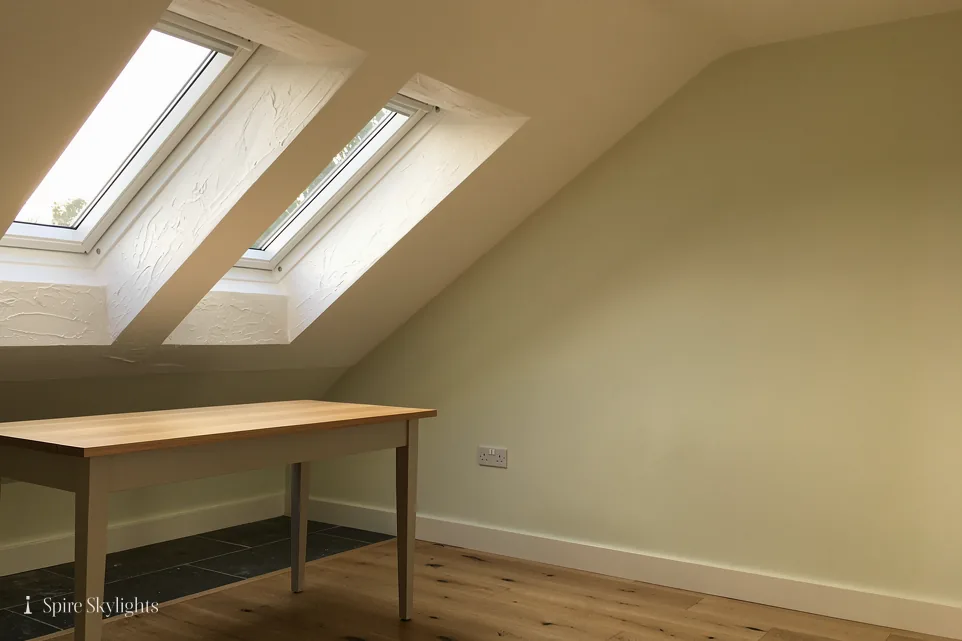
- Roof windowsFor lofts above the later suburban streets, fitted between the rafters and finished with a splayed, plastered reveal.
- Misted rooflight replacementFor older units close to the water where the seals have let moisture between the panes and the glass has gone cloudy.
- Roof lanternsFor a larger rear extension where you want light from above and from every side of the room.
Also fitted here
Near Glen Parva
- Blaby3 min
- Whetstone5 min
- Countesthorpe7 min
- Wigston6 min
Drive times from Glen Parva village.
Blaby is the council; conservation comes first
Blaby is the council you deal with for anything planning-related in Glen Parva. A rooflight on an ordinary house is generally a simple matter, yet the details depend on the building, which is why a conservation area check comes first for us, along with any limits the council has placed on the house itself.
Notifiable work goes through Building Control as part of our service. For the wider picture, read our rooflight planning guide; Blaby can speak to the specifics of your address. A flat or listed building follows a different route, so mention it when you get in touch and we can plan for it from day one.
01 Homes beside the water
A ford, a river, a canal: how living near all three shapes what goes on the roof.
On the roof
Properties near the Sence and the Grand Union Canal take the same weather as any roof, and the edges show it first. We look hard at how the edges of an existing roof have been finished before we cut into it, because a rooflight is only as sound as the roof it joins.
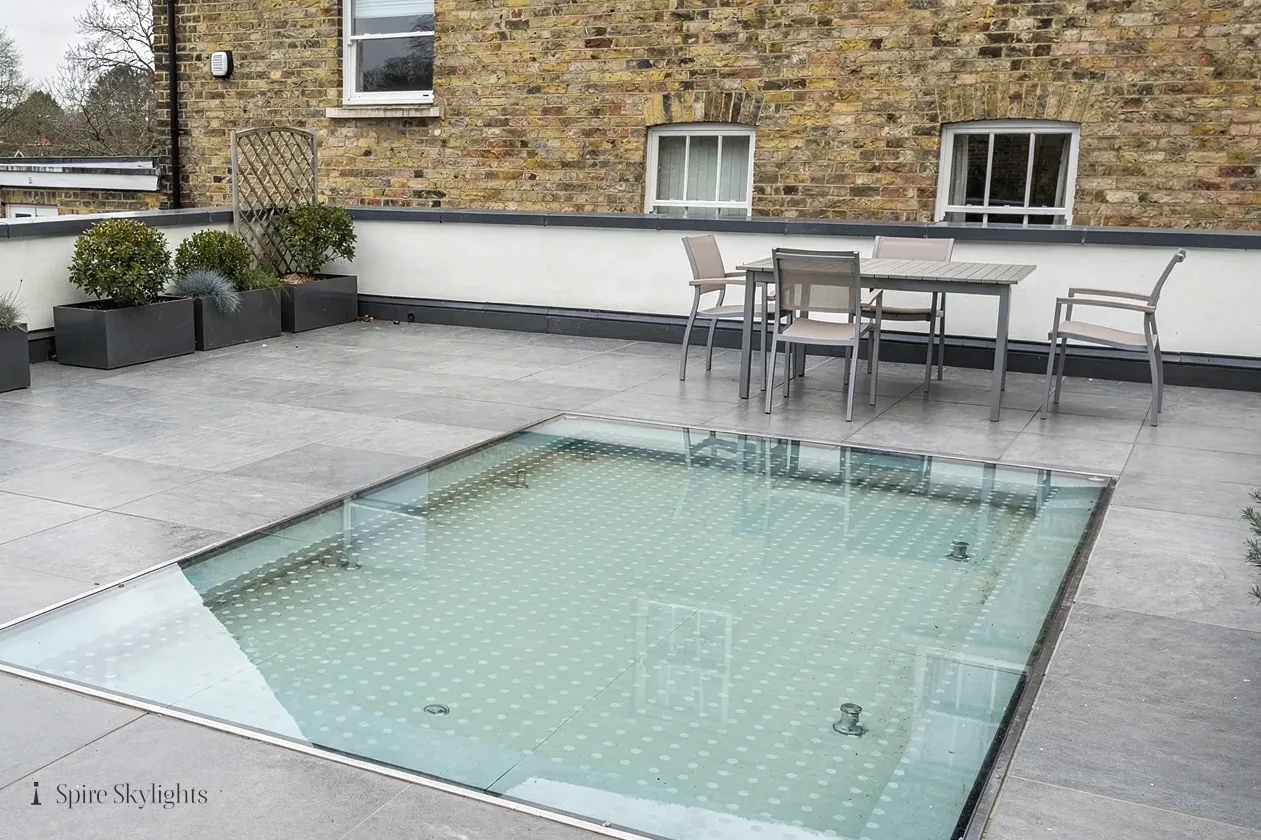
On a pitched tiled roof we fit the unit with flashings matched to the tile profile, lapped so that water is led over the joint and away. On a flat roof we build an insulated upstand and carry the waterproof layer up and over it, so there is no seam at the lowest point where water would gather.
Older outbuildings and garden rooms in this part of the parish sometimes have thin decks or mixed materials from several rounds of work. If a deck is soft or a fall is wrong, we tell you at the survey, and any extra work around the opening goes into the fixed written quote so nothing turns up as a surprise on the day. The glass itself is toughened and laminated on the inner pane, and the frames are chosen for the exposure of the site.
Fitted properly, a unit near water stays dry inside and stays quiet in rain, which is what people notice first after the scaffolding has gone.
Where an older unit is being replaced, we also look at what sits underneath it. A kerb that has rotted at the base, or an upstand whose felt has lifted, will let a new unit down, so we rebuild those at the same visit. You get one fixed price for the whole opening and one day of work on the roof, instead of a new window on a tired base.
In the room
A bright room feels drier and more open. Daylight from above reaches the middle of a floor that side windows never touch, and that makes a real difference in a kitchen built out at the back of a semi.
Once the unit is in, we frame the opening inside, line it with insulated plasterboard and skim it. Where the depth of the roof allows, the reveal is splayed so the light spreads across the ceiling and down the walls instead of dropping in a hard column.
The finish matters because the reveal is what you look at every day. We take it to a clean paint-ready edge, with no gaps at the ceiling line and no stained timber showing. If the ceiling around the opening needs a patch skim to blend, that is part of the job, not a separate trade to arrange.
Condensation is the other thing people near water ask about. A modern sealed unit with a warm-edge spacer keeps the inner pane warmer than an old single-glazed one, so the glass is less likely to run with moisture on a cold morning. Together with a properly insulated reveal, that keeps the ceiling edge dry and the paint intact for years.
The short version
Close to water, the weather detail on the roof decides how long the room underneath stays dry.
A ford made the village; a good flashing keeps it dry.
02 Flat backs and cottage fronts
Where the old village meets the later streets, and the roofs change within a few doors.
On the roof
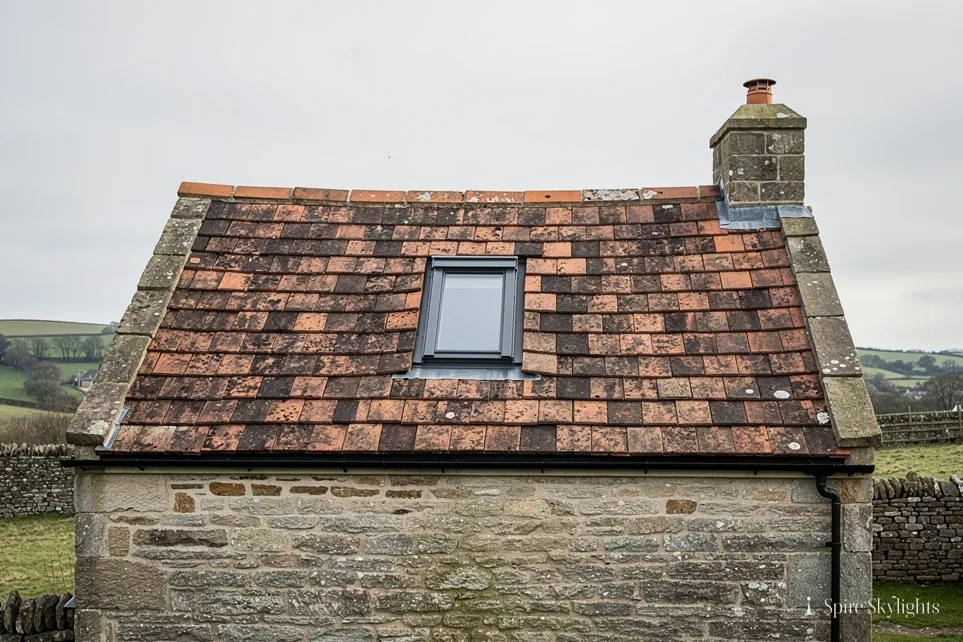
Between the oldest part of Glen Parva and the streets built towards Aylestone and South Wigston, the roofs change quickly. A cottage may have an old tile roof with irregular rafters; a semi two streets away may have trussed rafters and a modern concrete tile. Each takes a different approach to the opening.
On older roofs we work to the rafters you have, trimming only where we must and framing the opening with new timber sized for the load. On trussed roofs we size the unit to sit between the trusses unless a structural design says otherwise.
The flat rear roofs are the commonest job. A single-storey extension may still carry a plastic dome from when it was built, now yellowed and cracked. We take the dome and its upstand away, rebuild an insulated kerb, fit flat glass and weather the roof up to it, then check the fall so rainwater runs off rather than sitting round the edge.
The installation meets current Building Regulations, and the Building Control notification is made by us where required.
Loft roofs on the later streets are a different job again. A roof window goes between the rafters at a height you can see out of while standing or sitting, with the flashing kit made for your tile profile. We set the top of the window so the head lines up neatly with the existing ridge-side battens, which keeps the line of the roof tidy from the pavement.
In the room
Replacing a dome is the moment to improve the room, because the ceiling is opened anyway. Most domes sit over a tight square shaft that throws light straight down in a small patch. We widen the opening where the joists allow and angle the splay towards the place that needs the light, such as the table or the worktop.
In a cottage, the ceiling may be plaster over lath that cracks if cut carelessly. We cut back to sound edges and skim across, so the old surface and the new reveal read as one.
The result is a room that feels deeper and brighter without any change to its walls. You live with a fixed, clean reveal rather than an obvious patch, and the guarantee on the workmanship runs for ten years from the day we finish.
In a loft room the reveal on a sloping ceiling is usually splayed, flat along the top edge and vertical down the bottom edge, so the light falls into the room and not on the sill alone. We fit insulation behind the board, plaster to a smooth edge, and leave the sill ready for paint or a shelf, as you prefer.
The short version
A dome swap is the best moment to widen the ceiling opening and aim the light.
Canal, Sence and clouded glass: Glen Parva asks
Is it a problem fitting a rooflight to a roof near the canal or the Sence?
No. A roof near water is fitted the same way as any other, with extra attention to flashings, upstands and how the edges are sealed. We check the condition of the deck at the survey, tell you in writing about anything that needs work around the opening, and include it in the fixed quote before we start. Glen Parva is a short run for us, about thirty-six minutes, so a survey is easy to arrange and the quote comes back in writing the same week.
Who decides whether a Glen Parva house needs consent for a rooflight?
Blaby District Council is the planning authority, so it has the final word. We check for conservation areas and any restriction on the house before we quote. Our planning guide covers the general rules, and the council can confirm anything specific to your address.
Can you replace a clouded rooflight on a Glen Parva extension?
Yes. If the glass has misted because the seals have failed, we fit a new sealed unit, and if the frame or kerb is tired too we replace those together. We make good the reveal inside, then give you a fixed written quote beforehand. Because the kerb and ceiling are opened anyway, it is usually worth asking whether the opening can be made a little larger at the same visit, since the extra light costs very little more once the work is under way.
We survey before we price.
Then we finish the room.
Free survey · Coventry and 30 miles around
Book your free survey
No obligation. We survey before we price.